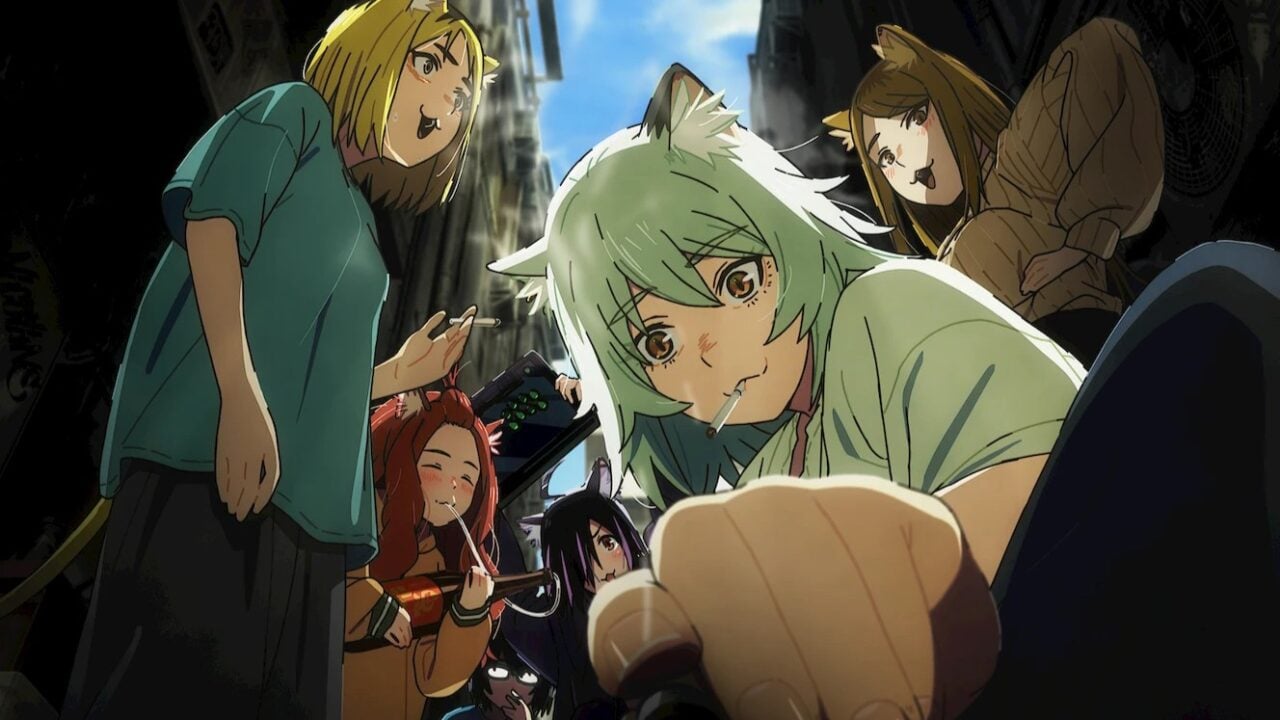
Japan's BPO youth committee has raised concerns regarding 'Chainsmoker Cat' following scenes depicting illegal drug use and self-injection in the new anime adaptation.
Key Takeaways
- Japan's BPO is investigating 'Chainsmoker Cat' for controversial content.
- The primary concern involves a scene depicting 'self-injection' of an unknown substance.
- The committee viewed the content as potentially within 'freedom of expression' due to its late-night slot.
The 292nd Youth Committee meeting of Japan’s Broadcasting Ethics & Program Improvement Organization (BPO) has brought the anime 'Chainsmoker Cat' (known as 'Yani Neko' in Japan) into the spotlight. The investigation centers on the depiction of "illegal drug use," specifically a scene featuring what appears to be "self-injection."
Produced by Bibury Animation Studios and based on NyanNyanFactory’s 2023 manga, the series follows a cat-girl character. While fans initially feared heavy censorship due to the manga's themes of addiction and adult content, the anime's release on July 3rd revealed a largely uncensored approach, leading to formal scrutiny by the watchdog.
Why This Matters
BozokMedia analysis shows that this controversy highlights the growing tension between creative autonomy in animation and the regulatory standards of broadcasting ethics. Although the BPO did not name the series explicitly, their description of a "late-night weekday anime set in a society where humans and beastmen coexist" clearly points to the production in question.
The boundary between gritty realism and the glorification of illegal activities remains a critical debate in modern animation.
The controversial scene occurs in the second episode, featuring the character Yakuko, who is shown injecting a needle into her arm. In a moment of dark humor, when confronted, the visibly intoxicated Yakuko claims, "This is a vaccine!" While the original manga establishes her as a drug user, the anime avoids naming the specific substance used.
Historical Background
In Japan, the BPO serves as a vital regulatory body that monitors broadcasting standards. Anime, often pushing the boundaries of storytelling, frequently finds itself at the center of debates regarding what is appropriate for television vs. what is protected under freedom of expression.
Frequently Asked Questions
Q1: Has the anime been banned?
No, the BPO committee indicated the scene might be acceptable within the limits of freedom of expression given its late-night broadcast time.
Q2: What specifically was the issue in the episode?
The issue was a scene where a character performs a self-injection, which viewers flagged as a depiction of illegal drug use.