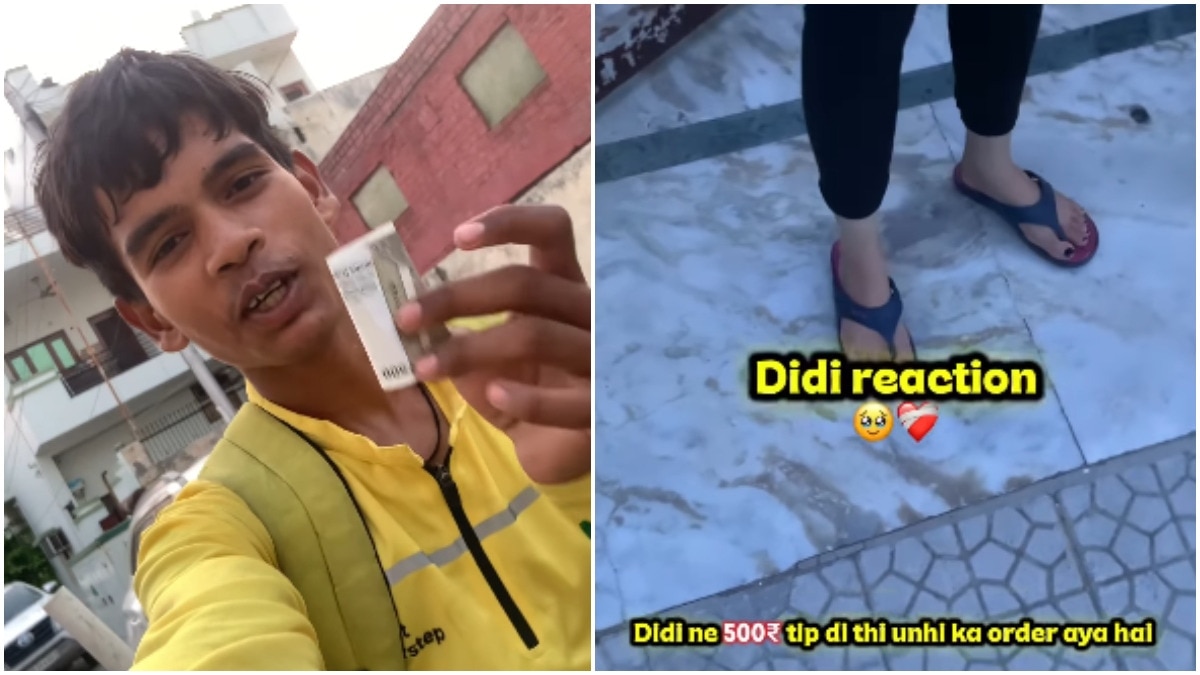
After being accused of faking a heartwarming video, a Blinkit delivery partner has revealed the true identity of the customer who rewarded him with a ₹500 tip.
Key Takeaways
- A Blinkit rider faced heavy criticism and 'fake' allegations regarding a recent reel.
- The rider successfully proved the authenticity of the interaction.
- The customer, referred to as 'Didi', rewarded the rider with a generous ₹500 tip.
In an era dominated by scripted content, a Blinkit delivery partner recently found himself at the center of a social media storm. After posting a video about a generous tip received from a customer, the rider was met with a wave of skepticism, with many users labeling the heartwarming moment as 'fake' or 'staged' for views.
The Reveal
Refusing to let the allegations stand, the rider took a stand by introducing the customer—whom he respectfully calls 'Didi'. By sharing more details of the encounter, he proved that the interaction was entirely genuine. The lady in question had expressed her appreciation for his hard work by handing him a ₹500 note, a significant gesture for a delivery professional.
Why This Matters
BozokMedia analysis shows that this incident highlights the growing crisis of trust on social media platforms. As users become increasingly cynical, genuine acts of kindness are often met with suspicion. This story serves as a vital reminder that human connection and spontaneous generosity still exist amidst the digital noise.
The backlash against this rider reflects a cynical digital culture where authenticity is often sacrificed at the altar of skepticism.
The incident has sparked a larger conversation about how we perceive service workers and the importance of validating stories before joining a bandwagon of criticism.
Frequently Asked Questions
Q1: Why did people call the video fake?
A: Many users believed the rider was staging the event solely to gain social media followers and engagement.
Q2: How did the rider respond to the trolls?
A: He provided further context and introduced the customer to validate the truth of the event.