Renowned designer Anita Dongre has responded to allegations of creative similarities between her latest 'Love All' campaign and the work of independent designers Mehar Toor and Sachi Raval.
- Independent designers Mehar Toor and Sachi Raval flagged similarities between their work and Anita Dongre's 'Love All' campaign.
- The debate centers on the ethical absorption of ideas from small labels by major fashion houses.
- Anita Dongre defended the campaign as an independent creation rooted in her brand's long-standing theme of love.
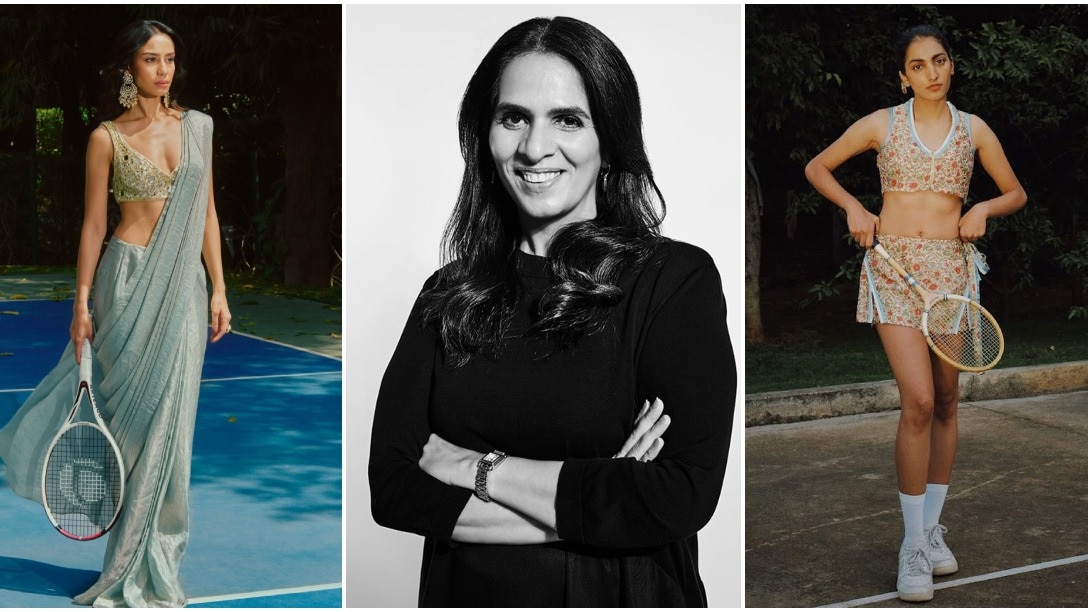
Fashion mogul Anita Dongre has broken her silence following a public outcry from two independent designers who pointed out striking similarities between their previous campaigns and Dongre’s latest project, “Love All.” The controversy ignited on Instagram, where Mehar Toor of Ada by Mehar and Sachi Raval of Same Sisters shared reels highlighting perceived overlaps in visual language and conceptual execution.
Mehar Toor was careful not to use the word "plagiarism," stating instead that she felt Dongre’s campaign was "inspired" by her own, which launched in March. She pointed to the composition and framing of the shoots. To Mehar, the core issue is the power imbalance; when a global label adopts the aesthetic of a burgeoning brand, the smaller designer loses the visibility they spent significant capital and effort to build.
Sachi Raval’s concerns were more specific. Her brand, Same Sisters, had released a 2023 collection also titled “Love All,” which explored the intersection of tennis and Indian couture. More unsettlingly, Sachi revealed that a member of Dongre’s creative team had previously sought athleisure recommendations, during which references to Same Sisters’ work were shared and acknowledged.
BozokMedia analysis shows that this incident highlights a systemic issue in the creative industries known as "aesthetic harvesting." When legacy brands mirror the innovations of niche designers without attribution, it stifles the growth of independent talent. This case serves as a catalyst for discussions on creative ethics and the necessity of credit in the age of digital transparency.
"The line between inspiration and appropriation is thin, but in the luxury sector, transparency regarding influences is the only way to maintain professional integrity."
Responding to the traction of these videos, Anita Dongre issued a personal statement. "I hear you, I see you, and I understand why you feel the way you do," she wrote, acknowledging the struggles of women entrepreneurs building brands from the ground up. She explained that the "Love All" concept was based on the idea that lasting love is rooted in equality, using the tennis volley as a metaphor for two people starting on equal ground.
Dongre further argued that the theme of love has been a cornerstone of her brand for nearly a decade, citing previous collections like Love Notes, Epic Love (2016), and Jaipur Love (2019). She maintained that the current campaign was the result of an independent creative process developed over several months.
| Perspective | Independent Designers' View | Anita Dongre's Response |
|---|---|---|
| Creative Origin | Similar framing and thematic overlaps | Part of a long-term brand narrative |
| Naming | Prior use of 'Love All' title | Standard tennis terminology used as metaphor |
| Industry Ethics | Lack of credit for small labels | Independent creative process |
1. Did the independent designers formally accuse Anita Dongre of plagiarism?
No, both Mehar Toor and Sachi Raval avoided direct accusations of plagiarism, focusing instead on the lack of acknowledgement and the influence of their work.
2. What was the inspiration behind Anita Dongre's 'Love All' campaign?
Dongre stated the campaign is a metaphor for equality in love, utilizing the sport of tennis to represent two individuals on equal footing.