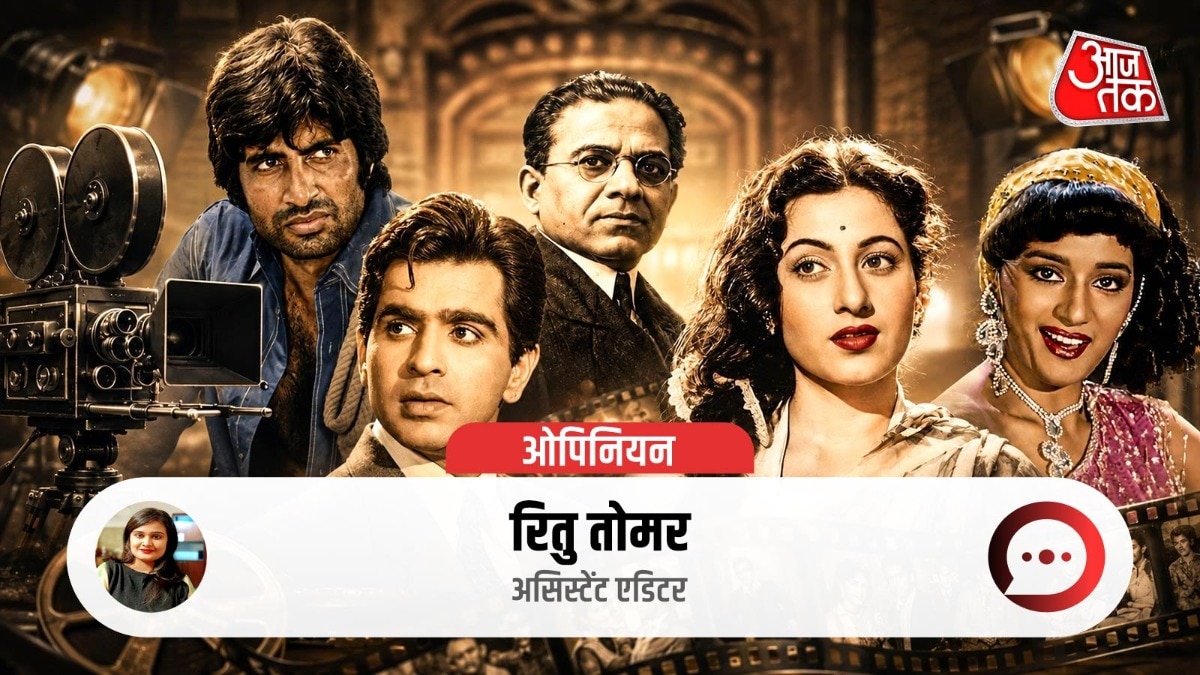
Indian cinema has been more than mere entertainment; it has acted as a mirror to the nation's social and political transformations. From Dadasaheb Phalke to Satyajit Ray, the screen captured the evolving spirit of India.
Key Takeaways
- Indian cinema began with the Lumière brothers' screening on July 7, 1896.
- Dadasaheb Phalke laid the foundation of feature films with 'Raja Harishchandra' in 1913.
- The film 'Alam Ara' (1931) introduced sound and music, becoming a permanent part of cinema's DNA.
- Post-independence (1950s-60s), cinema focused on poverty, class struggle, and nation-building.
The story of Indian cinema does not begin on August 15, 1947. Long before India gained independence, a cinematic world was taking shape on the soil of a colonized nation, preparing to influence the imaginations and emotions of millions. On July 7, 1896, the magic of moving images first touched Indian shores at Watson's Hotel in Mumbai, courtesy of the Lumière brothers' representatives.
The true bedrock of Indian filmmaking was established in 1913 by Dadasaheb Phalke with 'Raja Harishchandra'. At the time, the lack of infrastructure and severe social constraints meant that acting was not considered acceptable for women. Consequently, male actors played female roles. It is a profound irony that a medium which later championed social liberation began in a deeply conservative environment.
Why This Matters
BozokMedia analysis shows that cinema has consistently evolved as a tool for questioning power, caste, and gender. It is not just a collection of stories but a historical archive. During the freedom struggle, films like 'Achhut Kanya' and 'Aurat' brought marginalized voices to the forefront, challenging the status quo of the colonial era.
"The DNA of Indian cinema is woven with music and social consciousness, granting it a unique identity on the global stage."
Following independence, the 1950s and 60s marked a pivotal era. Filmmakers like Raj Kapoor, Guru Dutt, and Bimal Roy shifted the focus to the common man. Masterpieces such as 'Mother India', 'Do Bigha Zamin', and 'Pyaasa' explored the dichotomy of poverty and the dream of a new nation. The protagonist was no longer a superhero but a rickshaw puller, a farmer, or an unemployed youth fighting the system.
| Era | Key Characteristics | Notable Film/Personality |
|---|---|---|
| Silent Era | Mythologicals, Social Constraints | Raja Harishchandra (D. Phalke) |
| Talkie Era | Introduction of Dialogue & Music | Alam Ara (1931) |
| Golden Era | Social Realism, Nation Building | Mother India, Pather Panchali |
Frequently Asked Questions
Q1: Which was the first sound film in India?
A: 'Alam Ara', released in 1931, was the first Indian talkie.
Q2: Who played female roles in the early days of Indian cinema?
A: Due to social restrictions, male actors performed the roles of female characters.