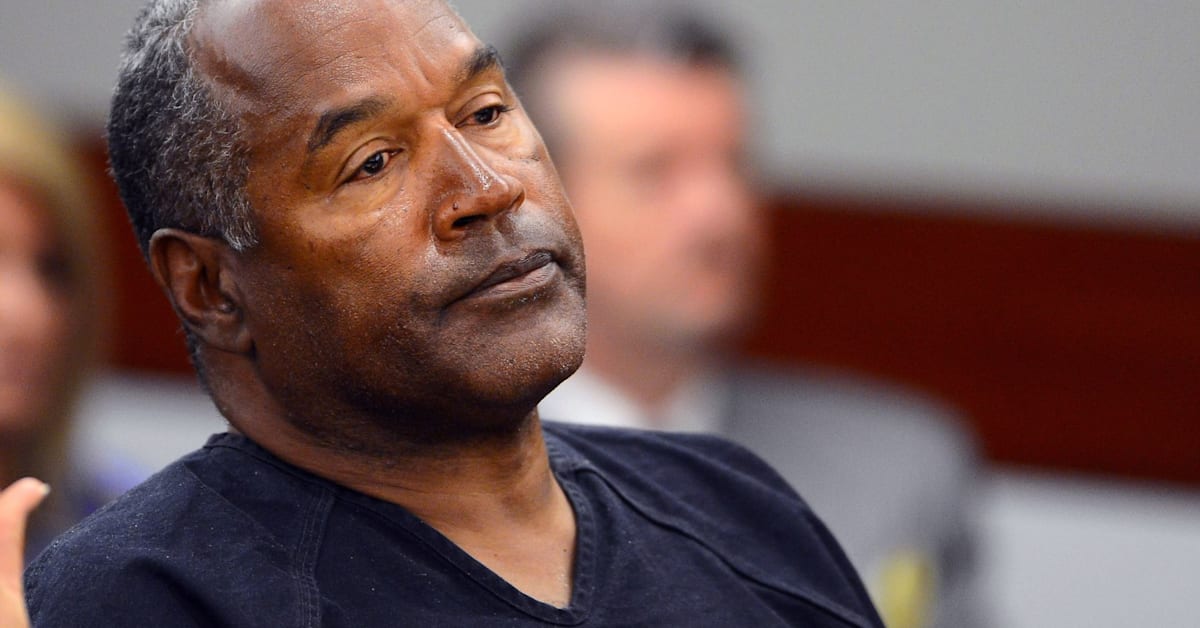
A new Investigation Discovery series, 'O.J. Unseen: Exploitation of Evil,' revisits Simpson's 2006 prank show, suggesting it was actually a sophisticated operation designed to elicit a murder confession.
- Investigation Discovery's 'O.J. Unseen' analyzes the failed 2006 prank show 'Juiced'.
- New footage suggests the show served as a cover to trick Simpson into confessing his crimes.
- The series highlights the tension between Simpson's athletic legacy and his criminal notoriety.
A surreal and unsettling chapter of O.J. Simpson’s post-NFL existence is being reopened. Investigation Discovery’s upcoming four-part docuseries, 'O.J. Unseen: Exploitation of Evil,' is diving deep into 'Juiced,' Simpson’s short-lived 2006 hidden-camera prank show. While originally viewed as a desperate attempt at a celebrity comeback, new interviews and unseen footage suggest the production had a much more sinister purpose.
Released as a pay-per-view special a decade after his acquittal in the murders of Nicole Brown Simpson and Ronald Goldman, 'Juiced' was Simpson's answer to 'Punk'd.' The show featured Simpson in various disguises—ranging from Elvis Presley to a janitor. In one of the most provocative segments, Simpson pretended to sell a white Ford Bronco, openly mocking the vehicle that became the symbol of the 1994 police chase that captivated the world.
Why This Matters
BozokMedia analysis shows that 'Juiced' represents a unique intersection of exploitation and investigative ambition. The docuseries posits that the show was not merely entertainment, but a "front" to get Simpson to lower his guard. By creating a relaxed, prank-oriented environment, producers allegedly hoped to catch Simpson in a moment of vulnerability. The revelation that the show may have been a psychological trap adds a layer of complexity to Simpson's legal history.
"There’s no way anybody with half a brain cell thought a show about O.J. Simpson pranking people would be a good idea." - Jemele Hill, Former ESPN Anchor
The series contrasts these bizarre antics with Simpson's towering athletic achievements. As the NFL’s first 2,000-yard rusher in 1973 and a Pro Football Hall of Fame inductee, Simpson was once an American icon. However, the 1994 tragedy permanently shifted his public persona from a sports hero to a figure of enduring controversy, despite his criminal acquittal.
Simpson's later years were marked by further legal turmoil, including a nine-year prison sentence in Nevada for armed robbery and kidnapping in 2007. Even after his death from cancer in April 2024, his legacy remains a battleground. The Buffalo Bills recently sparked protests by excluding him from the legends honored at the new Highmark Stadium, illustrating the ongoing struggle to separate the athlete from the man.
| Era | Achievement/Controversy | Outcome |
|---|---|---|
| Sports Peak | NFL 2,000-yard rusher | Hall of Fame Induction |
| 1994-1997 | Double Murder Trial | Acquitted (Criminal), Liable (Civil) |
| 2006-2017 | 'Juiced' & Robbery Conviction | 9 Years Imprisonment |
Frequently Asked Questions
1. What is the premise of the 'O.J. Unseen' docuseries?
It explores the behind-the-scenes reality of O.J. Simpson's 2006 prank show, suggesting it was a tool used to try and obtain a confession for his past crimes.
2. Why is the Buffalo Bills stadium honor controversial?
Some fans believe his football records should be honored regardless of his personal life, while others believe his crimes make him unfit for such a legacy.