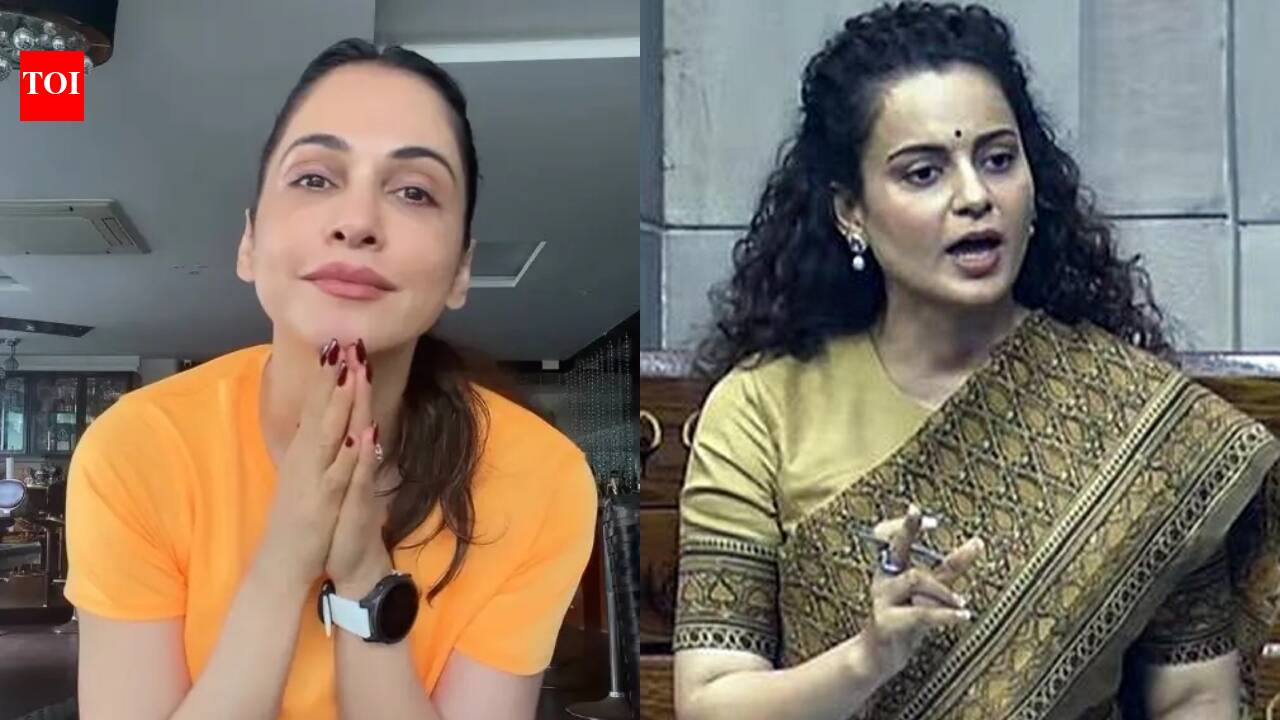
Actress Kangana Ranaut has voiced her support for Isha Koppikar's decision to call herself a 'devotee' of the nation, sharing her own history of standing up against injustice.
- Isha Koppikar redefined 'Andhbhakt' as devotion to the nation rather than a political party.
- Kangana Ranaut shared personal stories of protesting against school violence and national tragedies.
- The controversy highlights a shift in how celebrities engage with political terminology.
In a significant move that bridges celebrity influence with nationalistic sentiment, actress and BJP MP Kangana Ranaut has come out in support of Isha Koppikar. The conversation was ignited after Koppikar shared a video on Instagram, where she described herself as a proud 'andhbhakt' (blind devotee)—not of any political entity, but of the Indian nation.
Kangana Ranaut, known for her outspoken nature, shared Koppikar's video on her Instagram stories, adding deep personal context. Ranaut revealed that her spirit of protest dates back to her school days. She recounted how she once stood up against a teacher who physically assaulted children with a stick during assembly. Furthermore, she highlighted her stance against the 26/11 Mumbai attacks and the Nirbhaya brutality, emphasizing that her activism has always been rooted in justice rather than partisan politics.
Why This Matters
BozokMedia analysis shows that this interaction is more than just celebrity gossip; it is a strategic reappropriation of political language. By reclaiming the term 'andhbhakt' to mean 'unwavering patriotism,' these figures are attempting to shift the narrative from political blind faith to civic devotion, potentially influencing public discourse on social media.
'Patriotism is not just a sentiment; it is the active pursuit of a better nation through both support and critique.'
Isha Koppikar's original statement clarified the intent behind her controversial label. "If it is bhakti to love your country and want to see it progress, then yes, I am proud to be a bhakt... andhbhakt," she stated. She emphasized that being a patriot does not preclude one from questioning government policies or disagreeing with the administration.
This development follows a period of intense scrutiny for Kangana Ranaut. The actress recently faced backlash for her comments regarding 'Gen Z' protesters at Jantar Mantar, whom she labeled as 'Generation Gutter.' While she later clarified that her remarks were directed at specific individuals rather than the entire youth population, the incident underscored the polarized nature of celebrity commentary in India.
Frequently Asked Questions
1. What did Isha Koppikar mean by calling herself an 'andhbhakt'?
She meant she has blind devotion to the progress and well-being of India, not to any political party.
2. How did Kangana Ranaut connect this to her own life?
She mentioned that she has always protested against injustice, from school-level bullying to major national crimes.