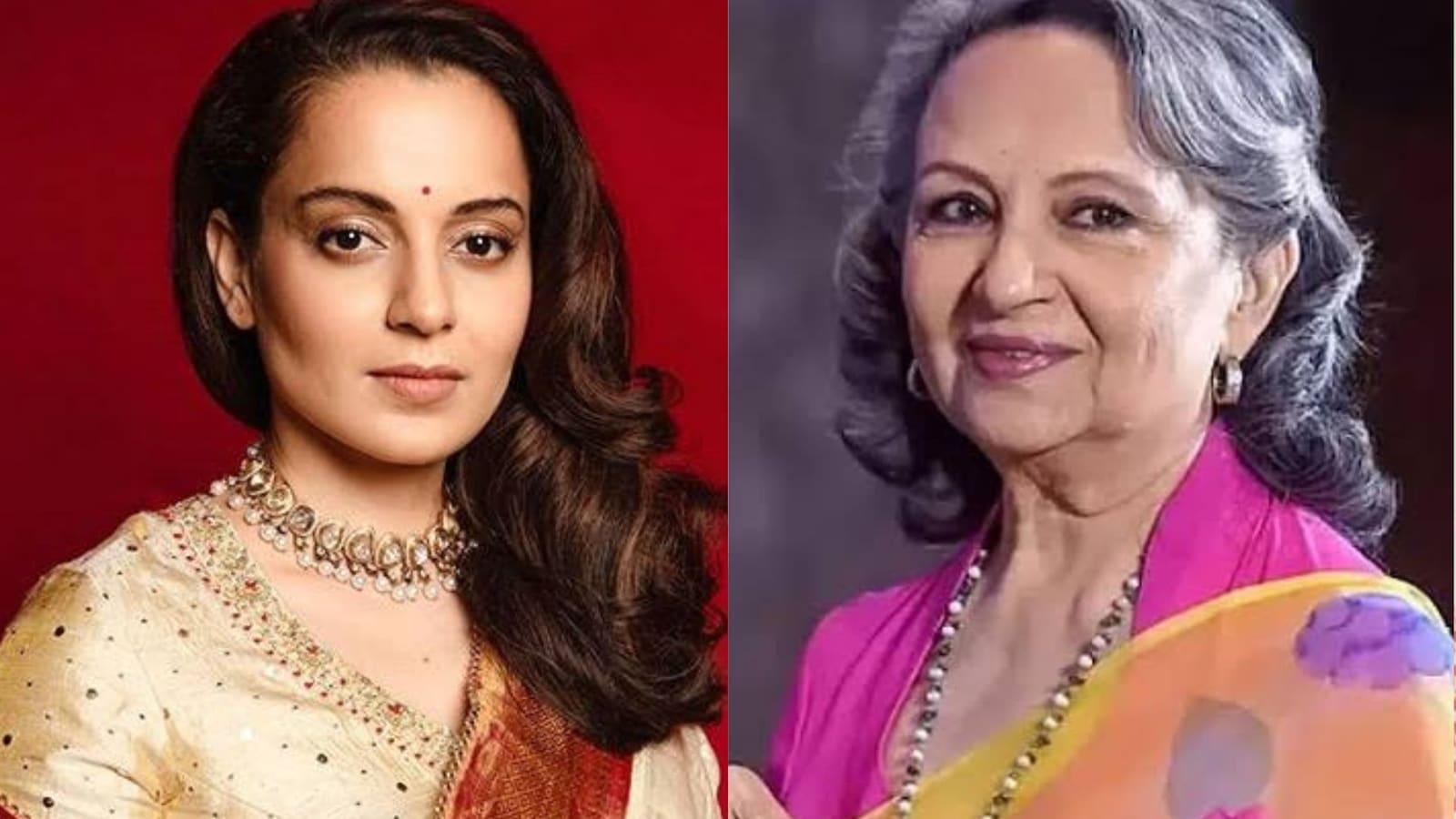
Actress Kangana Ranaut has launched a scathing critique against veteran Sharmila Tagore following her comments regarding the religious nuances of the national song, Vande Mataram.
- Sharmila Tagore expressed reservations about multi-deity references in Vande Mataram.
- Kangana Ranaut defended the song as a metaphor for the freedom struggle.
- The debate highlights the friction between religious interpretation and artistic expression.
A heated debate has erupted in the Indian film industry following controversial remarks made by veteran actress Sharmila Tagore regarding the national song, Vande Mataram. The controversy centers on the interpretation of the song's religious imagery and its alignment with monotheistic beliefs.
During a recent interaction, Sharmila Tagore suggested that certain stanzas of Vande Mataram, which invoke multiple deities like Kali and Durga, might be difficult for people who follow a single God. She remarked that while the first two stanzas are widely acceptable, the references to various gods could create a sense of disconnect for monotheistic followers.
Why This Matters
BozokMedia analysis shows that this controversy transcends entertainment, touching upon the sensitive intersection of national identity, religious sentiment, and artistic freedom. It raises a fundamental question: should national symbols be interpreted through a theological lens or a historical-metaphorical one?
To reduce a monumental piece of art like Vande Mataram to mere religious practice is to strip it of its revolutionary essence.
Responding to these comments via her Instagram Stories, Kangana Ranaut expressed her shock at Tagore's perspective. "I am shocked as an artist how her views on art/poetry can be so limiting and contrived," Ranaut stated. She emphasized that in poetry, words function as metaphors and that Bankim Chandra Chatterjee was using imagery to awaken the 'Shakti' (power) within the nation during the freedom struggle.
Ranaut further urged citizens to move beyond a "Hindu-Muslim mindset," noting that even in science and medicine, 'Shakti' is a term used to describe power and energy. She argued that the song is the spirit of the independence movement and should not be confined to religious rituals.
Historical Background
Written by Bankim Chandra Chatterjee, Vande Mataram served as a rallying cry during the Indian independence movement. It became a symbol of resistance against British rule, embodying the spirit of patriotism and the struggle for sovereignty.
Frequently Asked Questions
1. What was Sharmila Tagore's specific concern?
She felt that the mention of multiple gods in the song might not align with the beliefs of those who follow monotheism.
2. How did Kangana Ranaut defend the song?
Kangana argued that the song is a poetic metaphor for national strength and that reducing it to religious practice limits its artistic and historical value.