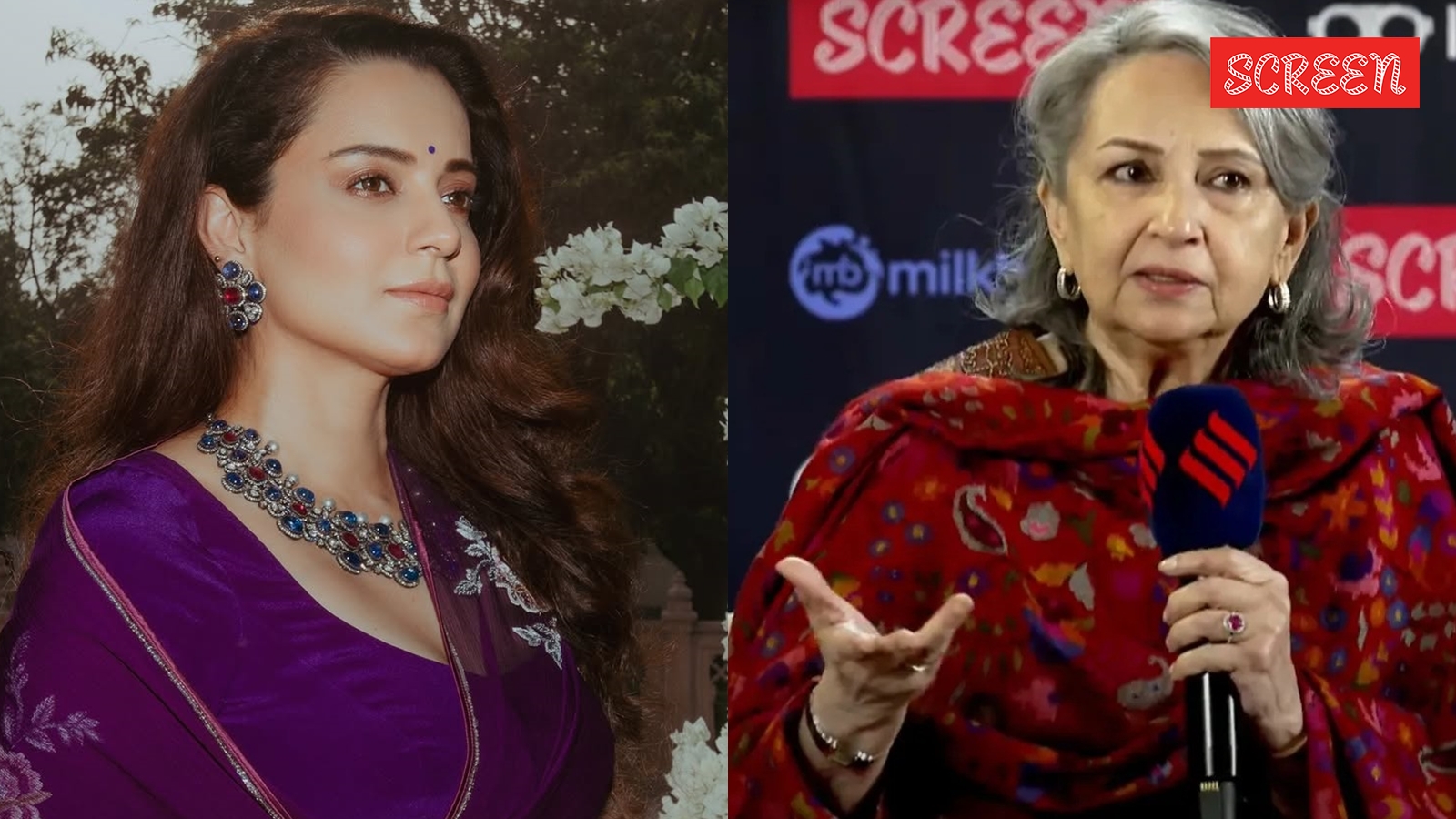
Kangana Ranaut has launched a scathing attack on veteran actress Sharmila Tagore following her remarks on the rendition of 'Vande Mataram'. The clash highlights a deep divide over art, religion, and national identity.
- Sharmila Tagore suggested singing only the first two stanzas of Vande Mataram to avoid religious discomfort.
- Kangana Ranaut criticized this view as a 'Hindu-Muslim mindset' and a limitation on art.
- The dispute centers on the invocation of deities like Durga and Kali in the national song.
- Recent legislative changes have criminalized attempts to prevent the full singing of the song.
A heated debate has erupted in the Indian entertainment industry as actress Kangana Ranaut responded sharply to veteran actor Sharmila Tagore regarding the singing of the national song, 'Vande Mataram'. The controversy stems from Tagore's suggestion that only the first two stanzas should be performed to remain inclusive of all faiths.
Taking to Instagram, Ranaut expressed her shock, stating that Tagore's views on art and poetry were "limiting and contrived." Kangana argued that in poetry, words serve as metaphors. She emphasized that Bankim Chandra Chatterjee's masterpiece was intended to awaken the 'Shakti' (power) within the nation during the freedom struggle, rather than serving as a specific religious ritual.
Why This Matters
BozokMedia analysis shows that this confrontation is not merely celebrity gossip but a reflection of the intensifying cultural discourse in India. As the lines between national symbols and religious sentiments blur, the interpretation of patriotic anthems becomes a battleground for identity politics.
To reduce a revolutionary anthem to a mere religious practice is to strip it of its historical potency.
The root of the disagreement lies in Tagore's recent comments to IANS, where she noted, "It is difficult for those who believe in one religion to say, ‘Vande Kali, Vande Durga’. Therefore... the first two stanzas are very good [for everyone]." She advocated for a version that does not conflict with monotheistic beliefs.
Ranaut countered this by asserting that 'Shakti' is a universal concept of power, not just a religious noun. She suggested that restricting the song based on religious comfort is a selective issue that fails to grasp the essence of artistic interpretation and the spirit of the freedom movement.
Historical Background
Written by Bankim Chandra Chatterjee in the 1870s and published in his novel Anandamath in 1882, 'Vande Mataram' became the rallying cry of the Swadeshi movement. While it was accepted as the national song in 1950, it has historically faced scrutiny from groups who viewed its imagery as problematic.
Frequently Asked Questions
1. Why did Sharmila Tagore suggest limiting the song?
She believed that the mentions of multiple goddesses might make people from monotheistic faiths feel uncomfortable.
2. What was Kangana Ranaut's core argument?
She argued that the song uses metaphors to represent national strength and that religious interpretations should not limit artistic and patriotic expression.