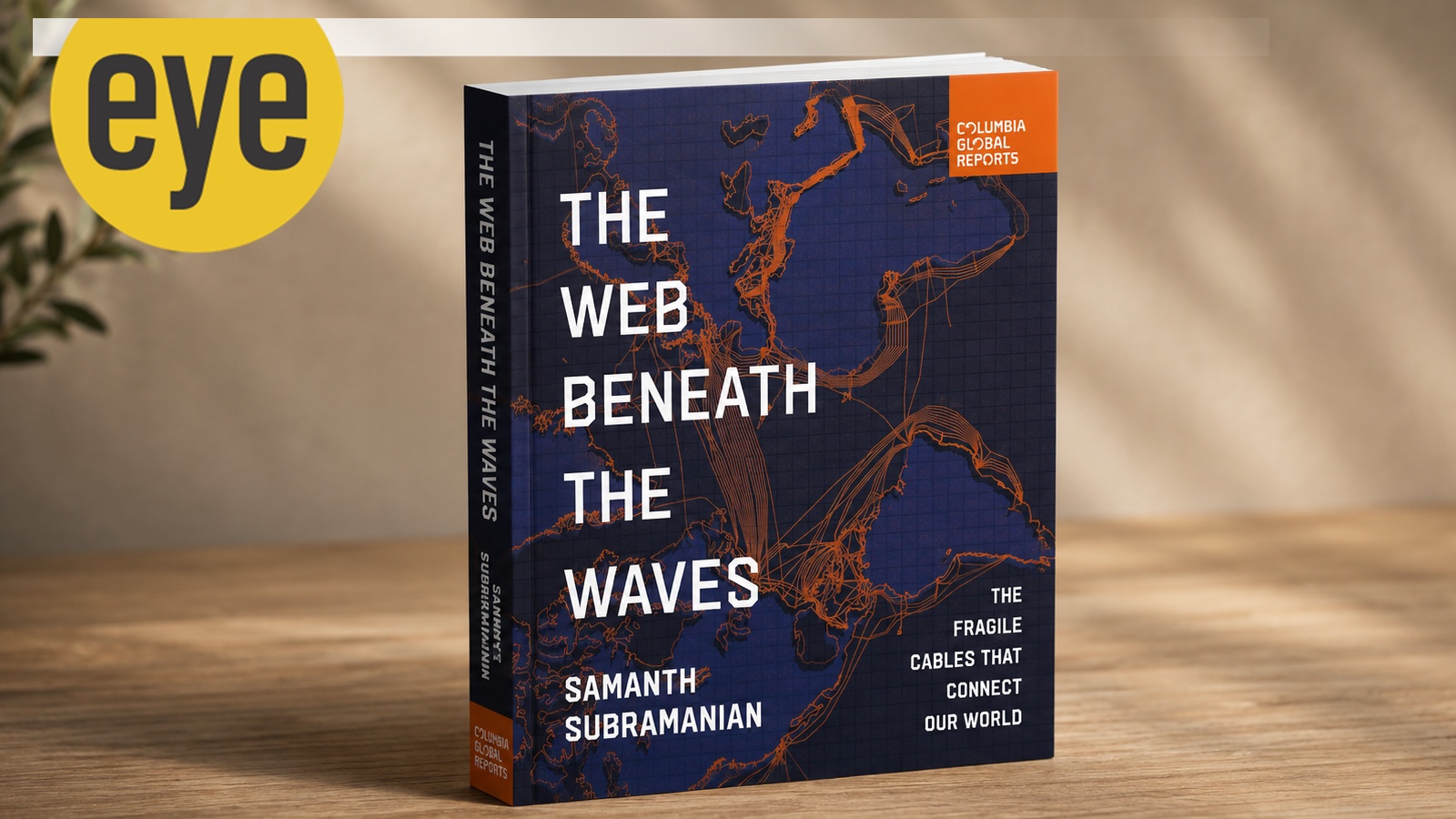
In his wide-ranging collection 'The Web Beneath the Waves', journalist Samanth Subramanian connects everyday objects like paper towels and swimming pools to the massive political, technological, and historical forces shaping our planet.
- 'The Web Beneath the Waves' is a profound collection of reportage by Samanth Subramanian.
- The book explores the intersection of mundane objects and global geopolitical forces.
- Key themes include undersea internet cables, colonial legacies, and India's linguistic diversity.
Renowned journalist Samanth Subramanian has delivered a masterclass in observational storytelling with his latest collection, 'The Web Beneath the Waves'. The book serves as a bridge between the seemingly trivial aspects of our daily lives and the colossal, often invisible, structures of power, history, and technology that govern them.
The Digital Lifeline: Undersea Cables
The titular essence of the book is captured in its closing chapters, which dive deep into the complex web of undersea cables that facilitate the modern internet. Subramanian provides a granular look at how these cables are laid, how they transition from the seabed to land, and the high-stakes world of the people—from engineers to 'Meta' billionaires—who control this vital infrastructure. He highlights the vulnerability of this web in an increasingly polarized world.
Subramanian’s storytelling arc proves that even a volcanic eruption can redefine the geopolitical isolation of an entire nation.
Colonial Echoes and Social Identity
BozokMedia analysis shows that Subramanian excels at finding political subtext in social institutions. A striking example is his exploration of Mumbai's Breach Candy Club. By examining a swimming pool shaped like the map of India, he uncovers a history of colonial exclusivity and the long, arduous struggle for Indian inclusion. The pool becomes a metaphor for India itself—a country striving to reclaim its own identity from its colonial past.
The Economics of Aspiration and Language
From the 'audacity' of Lalit Modi and the financial tide of the IPL to the artificial sprawl of real estate in Gurgaon and Noida, Subramanian dissects the mechanics of Indian aspiration. He critiques the 'development' that often feels more like a mirage of promised townships and half-finished infrastructures.
Furthermore, the book pays homage to the linguistic struggle through the work of Ganesh Devy. Subramanian explores the existential threat to India's kaleidoscopic linguistic diversity, noting that the coexistence of many languages has historically been an indispensable strength of the nation.
Frequently Asked Questions
1. What is the central theme of the book?
The central theme is the interconnectedness of mundane, everyday occurrences with larger geopolitical and historical narratives.
2. Who is the author?
Samanth Subramanian is an acclaimed Indian journalist known for his deep-dive reportage and analytical storytelling.