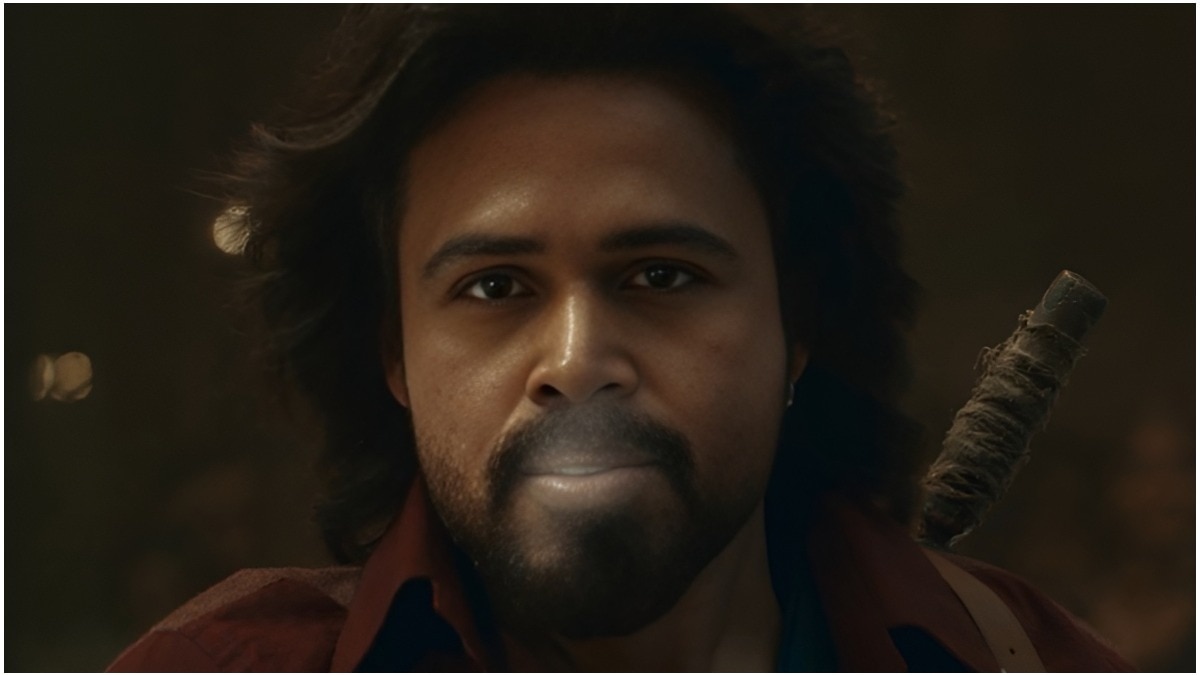
Rajkumar Santoshi's 'Batwara 1947' brings together Sunny Deol and Shabana Azmi in a poignant Partition-era drama based on Asghar Wajahat's play. The film masterfully challenges sectarian division through human empathy, subverting Deol's traditional action-hero persona.
- Director Rajkumar Santoshi adapts Asghar Wajahat's famous play 'Jis Lahore Nai Vekhya O Janmeya Nai' into a powerful humanistic film.
- Sunny Deol delivers a career-defining, vulnerable performance, moving away from his aggressive, loud action persona.
- Shabana Azmi's brilliant portrayal of an elderly Hindu widow left behind in Lahore adds deep emotional gravity.
In a cinematic landscape dominated by polarized, 'us versus them' period pieces, Rajkumar Santoshi serves a humanistic counter-narrative this partition day. Based on Asghar Wajahat’s seminal play Jis Lahore Nai Vekhya O Janmeya Nai, the film poignantly handles the play’s core ideological conflict and subverts Sunny Deol’s popular persona to underline that human empathy and shared grief can outlast any artificial border.
A Muslim refugee family from Meerut is allocated a Lahore haveli vacated during Partition, only to discover an elderly Hindu woman, Durga Devi or simply Mai (Shabana Azmi), refusing to leave. Having just survived the horrific communal violence, Sikandar Mirza (Sunny Deol) and Hamida (Preity Zinta) arrive in Lahore carrying immense psychological trauma. To them, the allocated haveli is a hard-earned refuge and a rightful compensation for everything they lost in India.
When they discover Mai hiding in the house, they don’t see a helpless old woman who lost her everything to communal mayhem. To them, she represents the 'other', the very people who slaughtered their neighbours and relatives and forced them to flee. However, as time passes, it is hard to maintain burning communal hatred when the enemy is a fragile grandmother making tea and offering home remedies. Despite opportunistic neighbours, a radicalised son (Karan Deol), and communal rhetoric, Sikandar gradually discovers that trauma has no religion.
Why This Matters
BozokMedia analysis shows that 'Batwara 1947' represents a crucial cinematic shift in South Asian cinema. By repurposing a mass action star like Sunny Deol for a message of peace and communal harmony, the film directly challenges the contemporary trend of highly polarized, jingoistic historical epics. It bridges the gap between artistic, message-driven theater and mainstream commercial cinema.
"By stripping away the screaming jingoism of the post-Gadar era, Santoshi successfully channels Sunny Deol's raw, explosive intensity into a righteous, emotional interrogation of societal apathy."
This film marks the long-awaited reunion of Santoshi and Deol, who previously defined 90s gritty cinema with classics like Ghayal, Ghatak, and Damini. Santoshi tunes his typical high-pitched directorial style to slow-burning, emotionally driven storytelling. The film features a moving Ram bhajan sung by Mai, written by Javed Akhtar and composed by A.R. Rahman, which beautifully blurs the lines of religion and blood.
| Character | Actor | Core Conflict / Role |
|---|---|---|
| Sikandar Mirza | Sunny Deol | A traumatized Muslim refugee torn between past grief and moral duty to protect. |
| Durga Devi (Mai) | Shabana Azmi | An elderly Hindu widow refusing to leave her Lahore home, symbolizing unconditional love. |
| Hamida | Preity Zinta | Sikandar's wife, dealing with immense psychological trauma of Partition. |
| Karan Mirza | Karan Deol | The radicalized young son influenced by local extremist rhetoric. |
Stage plays rely on clear archetypes to quickly establish a moral universe. Santoshi keeps these archetypes but tweaks them to suit his star power. By preserving the play’s theatrical, slightly stylized nature, and combining it with Santosh Sivan's atmospheric cinematography, he makes it feel like a timeless moral fable that questions the silence of virtuous civil society.
Frequently Asked Questions
Q1: Is 'Batwara 1947' based on a true story?
A1: The film is based on Asghar Wajahat's highly acclaimed play 'Jis Lahore Nai Vekhya O Janmeya Nai', which reflects the very real, poignant human experiences and communal struggles of the 1947 Partition.
Q2: Who composed the music for the film?
A2: The film's soulful music is composed by the legendary A.R. Rahman, with deeply moving lyrics penned by Javed Akhtar.