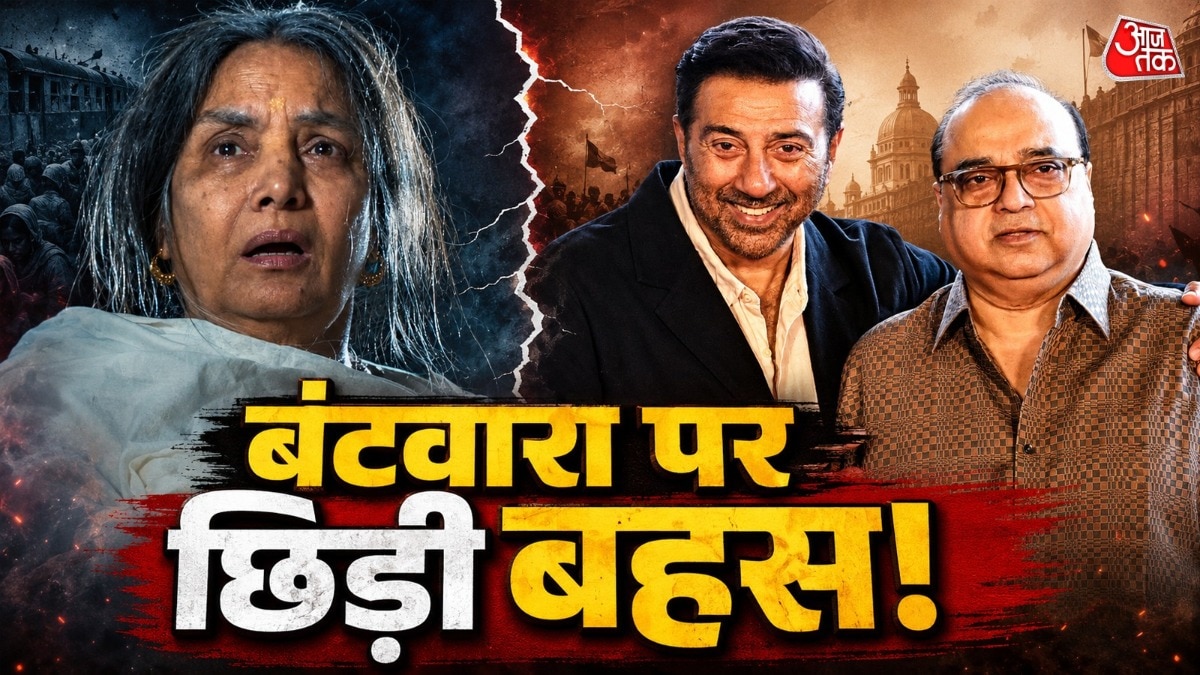
A heated debate has erupted between director Rajkumar Santoshi and actress Shabana Azmi over the film 'Batwara 1947'. Azmi blamed the film's failure on Sunny Deol's Muslim character, prompting a sharp rebuttal from the director.
- Shabana Azmi linked the failure of 'Batwara 1947' to audience discomfort with Sunny Deol's Muslim role.
- Director Rajkumar Santoshi rejected the theory, citing Amitabh Bachchan's career as a counter-example.
- Santoshi expressed concern over the decreasing tolerance and inclusivity in modern society.
A significant controversy has emerged within the Indian film industry regarding the film 'Batwara 1947'. While the film was one of the most anticipated releases, its box office performance and critical reception have become the center of a clash between veteran actress Shabana Azmi and director Rajkumar Santoshi.
The crux of the argument lies in the portrayal of Sunny Deol in a Muslim character. In a recent interview, Shabana Azmi suggested that the film failed to resonate with the audience because they could not reconcile Sunny Deol's established 'action patriot' persona with a Muslim identity. She noted that while actors like Amitabh Bachchan seamlessly played Muslim roles in classics like 'Deewaar' and 'Coolie', the current social climate seems different.
Why This Matters
BozokMedia analysis shows that this debate transcends cinema; it touches upon the shifting socio-religious sensibilities of the Indian audience. It highlights a growing tension between artistic freedom in character portrayal and the perceived religious expectations of the masses.
Director Rajkumar Santoshi has vehemently dismissed Azmi's claims. Speaking to 'Variety India', Santoshi argued that there is no logic in her stance. "Amitabh Bachchan played a Muslim hero in 'Coolie'. Did we reach a stage where we cannot accept a hero from another community? We are intelligent, good, and educated people," Santoshi remarked. He questioned why the audience's inability to accept a character should be labeled as a flaw in the filmmaking.
"As a society, we have become much less tolerant and inclusive." - Rajkumar Santoshi
During the same discussion, Santoshi voiced a deeper concern regarding societal regression. Referencing his film 'Lajja', he noted that modern society has become less inclusive. He emphasized that as a Hindu, he believes in the inclusive nature of his faith, stating that religions should promote equality rather than exclusion, and urged viewers to focus on the filmmaker's intent rather than religious labels.
Historical Background
Historically, Indian cinema has often used superstars to bridge communal divides through character roles. In the 1970s and 80s, it was common for leading men to play diverse religious characters without significant backlash. The current friction suggests a departure from this era of cinematic pluralism, as audiences become more polarized along religious lines.
Frequently Asked Questions
1. Why did Shabana Azmi blame Sunny Deol's character for the film's failure?
She argued that audiences were uncomfortable seeing the 'action patriot' Sunny Deol in a Muslim role, unlike the seamless acceptance seen with Amitabh Bachchan in the past.
2. How did Rajkumar Santoshi respond to the criticism?
He rejected the idea, citing historical precedents of superstars playing diverse roles and expressing concern over declining social tolerance.