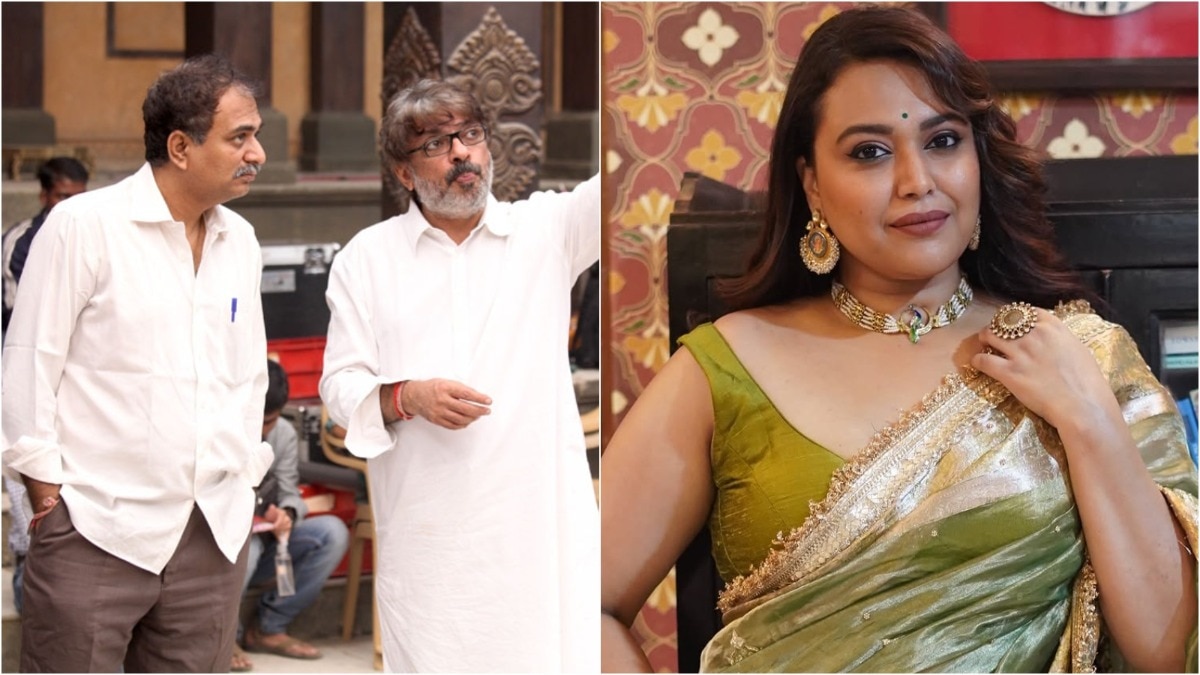
The co-writer of the magnum opus 'Padmaavat' has strongly defended the film's controversial 'jauhar' (self-immolation) scene. Responding to actress Swara Bhasker's viral open letter, the writer emphasized that the climax depicted historical reality rather than glorifying the regressive practice.
- Padmaavat screenplay writer defends the climax scene depicting 'jauhar' as a historical reality.
- Actress Swara Bhasker had heavily criticized the scene in an open letter, stating she felt reduced to a "vagina".
- The makers clarify that the film was a cinematic adaptation of Malik Muhammad Jayasi's epic poem and did not intend to promote self-immolation.
The debate surrounding Sanjay Leela Bhansali’s magnum opus Padmaavat has been reignited as the film's screenwriter, Prakash Kapadia, came forward to defend the controversial jauhar (mass self-immolation) climax. The scene, which features actress Deepika Padukone as Rani Padmavati leading hundreds of women into a fiery pit to escape captivity by Sultan Alauddin Khilji, had sparked intense national debate upon its release.
Actress Swara Bhasker had penned a scathing open letter to Bhansali, expressing her deep disappointment. She argued that the grand, aestheticized portrayal of jauhar glorified a patriarchal and regressive custom, making her feel "reduced to a vagina." Her critique divided the film industry and audiences alike, with many accusing the filmmakers of glorifying widow burning.
Addressing these allegations, Kapadia clarified that the scene was a representation of historical narratives and Malik Muhammad Jayasi's 16th-century epic poem Padmavat. "It was the reality of that era," Kapadia stated, arguing that erasing or altering the climax would be a disservice to the historical context of the narrative. He emphasized that the film aimed to portray the courage and tragic choices of the Rajput queens rather than endorsing the practice in modern times.
Why This Matters
BozokMedia analysis shows that the intersection of historical representation and modern feminist sensibilities in Indian cinema remains highly volatile. Filmmakers often walk a tightrope between creative freedom, historical fidelity, and contemporary social responsibility.
"Cinema is a mirror of the past, not a manual for the present; depicting a historical tragedy is not synonymous with glorifying it." - Dr. Aradhana Sen, Film Historian.
| Aspect | Jayasi's Epic Poem (1540) | Bhansali's Padmaavat (2018) |
|---|---|---|
| Core Focus | Spiritual allegory and Sufi mysticism | Visual grandeur, Rajput valor, and cinematic drama |
| Jauhar Depiction | Narrated as a tragic sacrifice to preserve honor | Highly stylized, dramatic, and emotionally charged climax |
Frequently Asked Questions
Q1: Why did Swara Bhasker criticize the movie Padmaavat?
A1: Swara Bhasker criticized the film's climax, arguing that the grand and celebratory depiction of 'jauhar' glorified a regressive practice and reduced women's agency to their physical purity.
Q2: Who wrote the screenplay for Padmaavat?
A2: The screenplay for Padmaavat was co-written by Prakash Kapadia and the film's director, Sanjay Leela Bhansali, based on the epic poem by Malik Muhammad Jayasi.