Renowned poet Tishani Doshi challenges the narrative of poetry's decline, arguing that in an era of war and ecological crisis, verse is more essential than ever.
- Global poetry sales are seeing a significant surge, contradicting claims of its 'death'.
- Tishani Doshi emphasizes poetry's role during life's most intense transitions and crises.
- Poetry acts as a tool for 'slowing down' in an age of rapid information consumption.
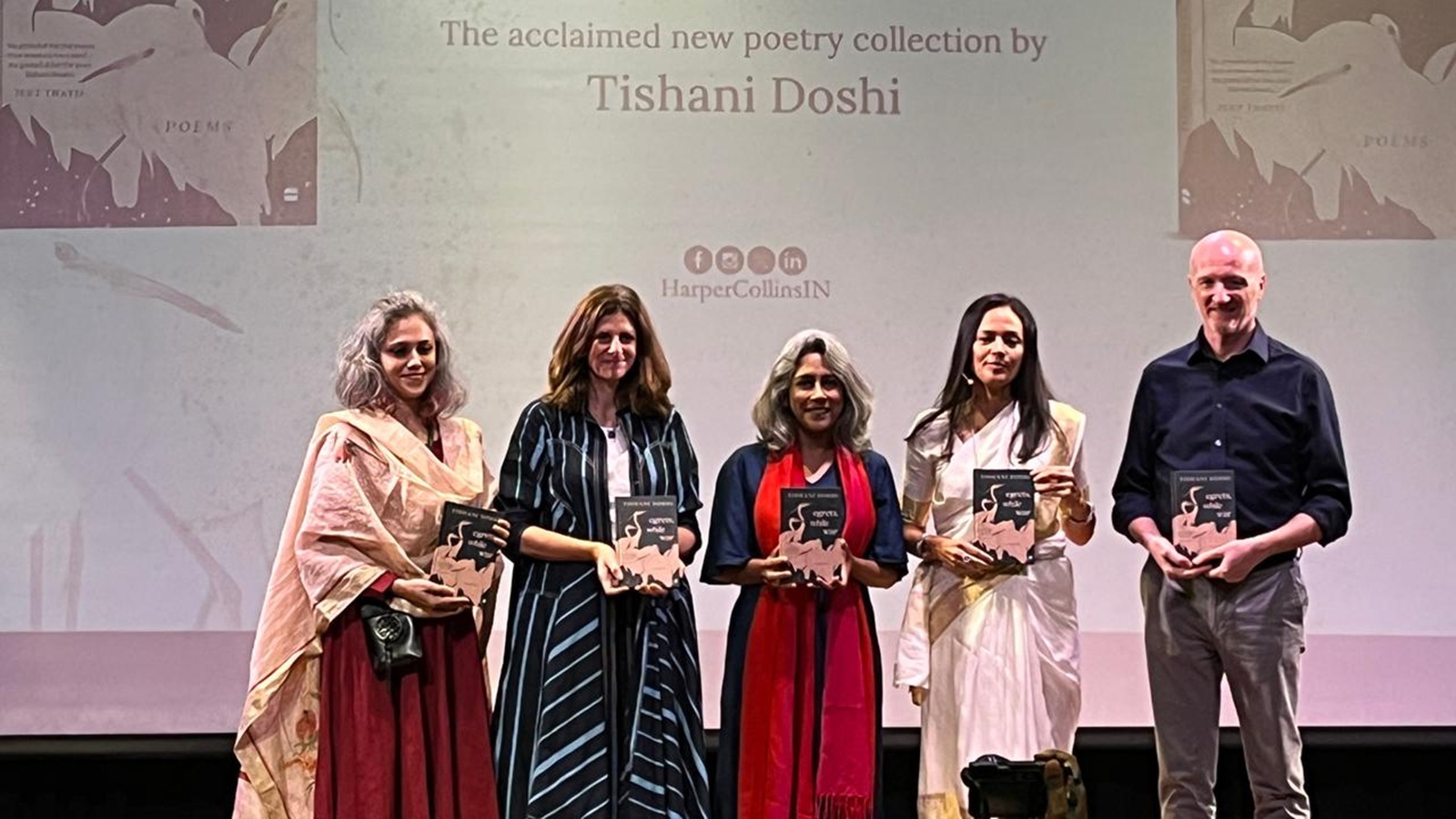
While critics and pundits frequently write obituaries for poetry, acclaimed poet Tishani Doshi asserts that the medium is far from dead. In a profound conversation with novelist Anuradha Roy regarding her new collection Egrets, While War, Doshi argued that poetry remains an indispensable human necessity, especially in a world grappling with war, climate anxiety, and relentless catastrophe.
The Paradox of Complexity and Necessity
Poetry is often perceived as an intimidating or obscure literary form, frequently viewed as less 'useful' than prose. However, Doshi points out a beautiful contradiction: when ordinary language fails to capture the weight of human experience, poetry steps in. From the collective trauma of the COVID-19 pandemic to the intimate milestones of birth and marriage, humans instinctively turn to verse to make sense of existence.
Doshi’s own journey—from her award-winning debut 'Countries of the Body' to her explorations of gender and mortality—reflects a deep understanding of poetry as an embodied experience. Influenced by her background in dance, she views poetry not just as text, but as something physical and rhythmic.
Why This Matters
BozokMedia analysis shows that the resurgence of poetry is a direct response to the 'information overload' of the digital age. As society moves faster, the demand for a medium that requires stillness and deep contemplation grows. Poetry provides a sanctuary for attention in an attention-deficit economy.
Poetry is not simply words and language: it is spell-making, it is prayer, it is mysterious.
Doshi’s work often collapses the boundaries between time zones, weaving the past into the present to address contemporary horrors. Her poetry engages with the news, not as a detached observer, but as someone who feels the weight of environmental destruction and political violence deeply.
Comparison: Prose vs. Poetry
| Feature | Prose | Poetry |
|---|---|---|
| Narrative Style | Sustained and linear | Fragmented and evocative |
| Primary Goal | Information/Storytelling | Emotional/Sensory resonance |
| Reader Engagement | Active following of plot | Slow, meditative interpretation |
Frequently Asked Questions
1. Why is poetry considered 'difficult' by some?
Because it often prioritizes sound, rhythm, and ambiguity over direct, literal meaning.
2. How does Tishani Doshi connect poetry to the environment?
She uses verse to mourn ecological loss and to bridge the gap between ancestral history and modern climate crises.


:max_bytes(150000):strip_icc():focal(749x0:751x2)/Alix-Earle-Tom-Brady-090326-b1f4074a10e5432293eaec7da19616ac.jpg)