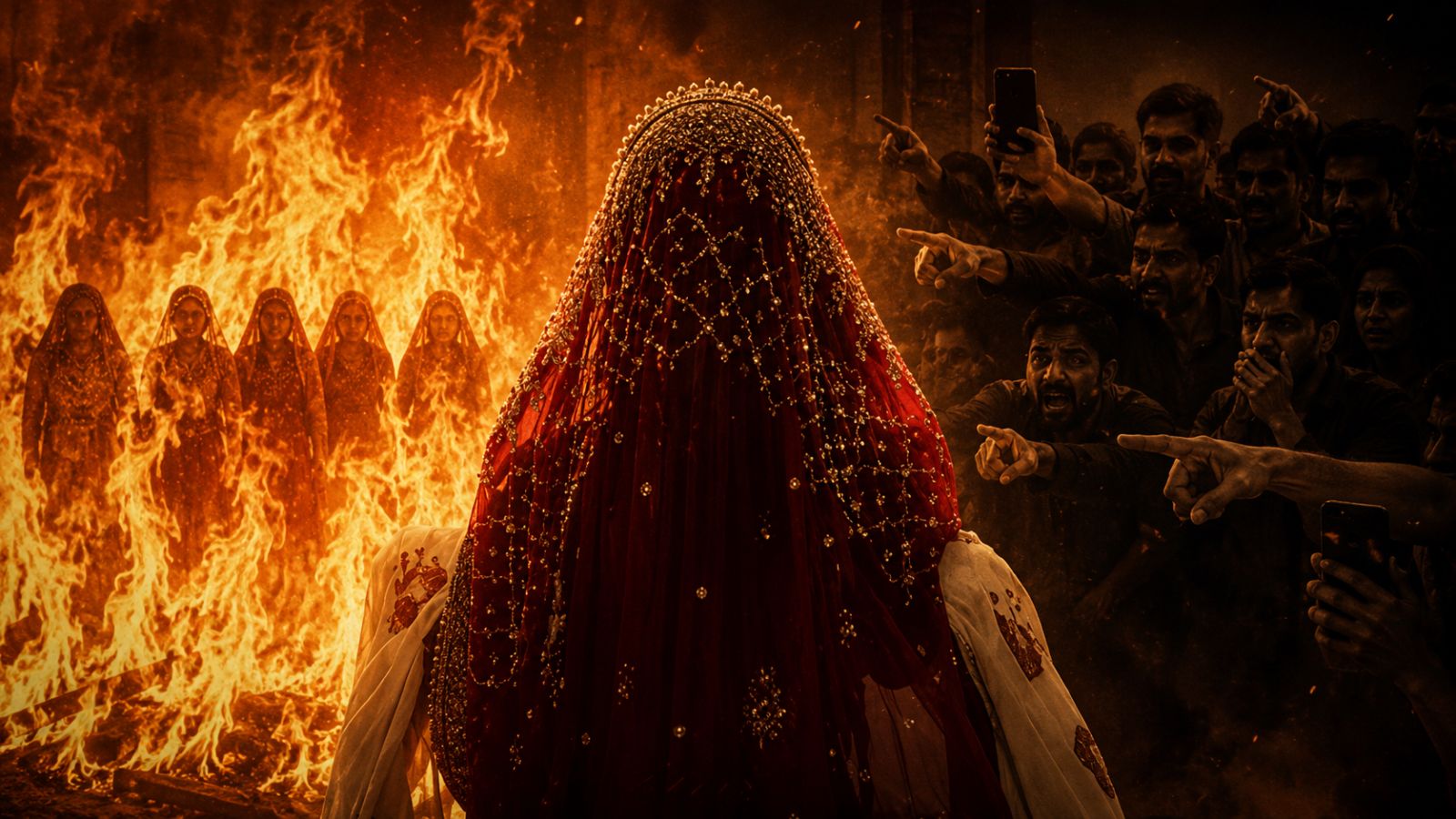
Actress Swara Bhasker's critique of the romanticization of Jauhar has reignited a fierce debate regarding how society views women's agency versus their 'honour'.
- Swara Bhasker questions the glorification of Jauhar as a romanticized act of sacrifice.
- The debate shifts focus from the act of bravery to the patriarchal circumstances that mandated it.
- Analysis highlights a societal tendency to judge women's responses to violence rather than the violence itself.
The backlash surrounding the 2018 film 'Padmaavat' remains etched in collective memory—protests, threats, and intense scrutiny over historical accuracy. Fast forward to 2026, and the conversation has resurfaced, not through a cinematic lens, but through the provocative words of actress Swara Bhasker.
By questioning the traditional glorification of Jauhar, Bhasker has forced a confrontation with an uncomfortable truth: why is the romantic language of 'honour' used to describe what was essentially a desperate response to systemic violence? Her comments have ignited a firestorm, with critics accusing her of disrespecting Rajput history, while supporters argue she is highlighting the lack of agency women held in medieval times.
Why This Matters
BozokMedia analysis shows that the controversy is less about history and more about how modern India perceives women's bodies and their choices. We often find ourselves dissecting a woman's decision to stay, leave, or die, while remaining strangely silent about the violence that necessitated those choices in the first place.
Jauhar was an act of extraordinary courage, but it was also a product of a world where women had no control over their own existence.
The crux of the argument lies in the distinction between bravery and choice. While the women who underwent Jauhar undoubtedly displayed immense courage, Bhasker argues that turning their deaths into a shiny, heroic legend strips away the horror of the circumstances. It asks a fundamental question: why was death considered the only honourable way to preserve dignity?
Two Forms of Defiance
The film 'Padmaavat' provides a perfect case study for this complexity. It presents two distinct archetypes of female strength. Queen Padmavati represents the choice of death over enslavement, a path widely mythologized and celebrated. Conversely, the character of Mehrunissa represents a different kind of courage—the courage to live, to defy, and to navigate a dangerous world through agency.
| Attribute | The Path of Padmavati (Jauhar) | The Path of Mehrunissa (Defiance) |
|---|---|---|
| Core Choice | Death over Enslavement | Survival through Resistance |
| Perception | Glorified as Supreme Sacrifice | Often viewed with Scrutiny |
| Nature of Agency | Finality and Exit | Ongoing Struggle and Presence |
Frequently Asked Questions
1. Is Swara Bhasker criticizing the bravery of Rajput women?
No, the critique is directed at the romanticization of the circumstances that made such extreme bravery necessary.
2. How does this debate connect to modern issues?
It mirrors current societal patterns where women's responses to trauma are often judged more harshly than the acts of violence committed against them.
:max_bytes(150000):strip_icc():focal(1091x373:1093x375)/oj-simpson-9426-788a2ce1a51b49a88b954c783c616a62.jpg)

