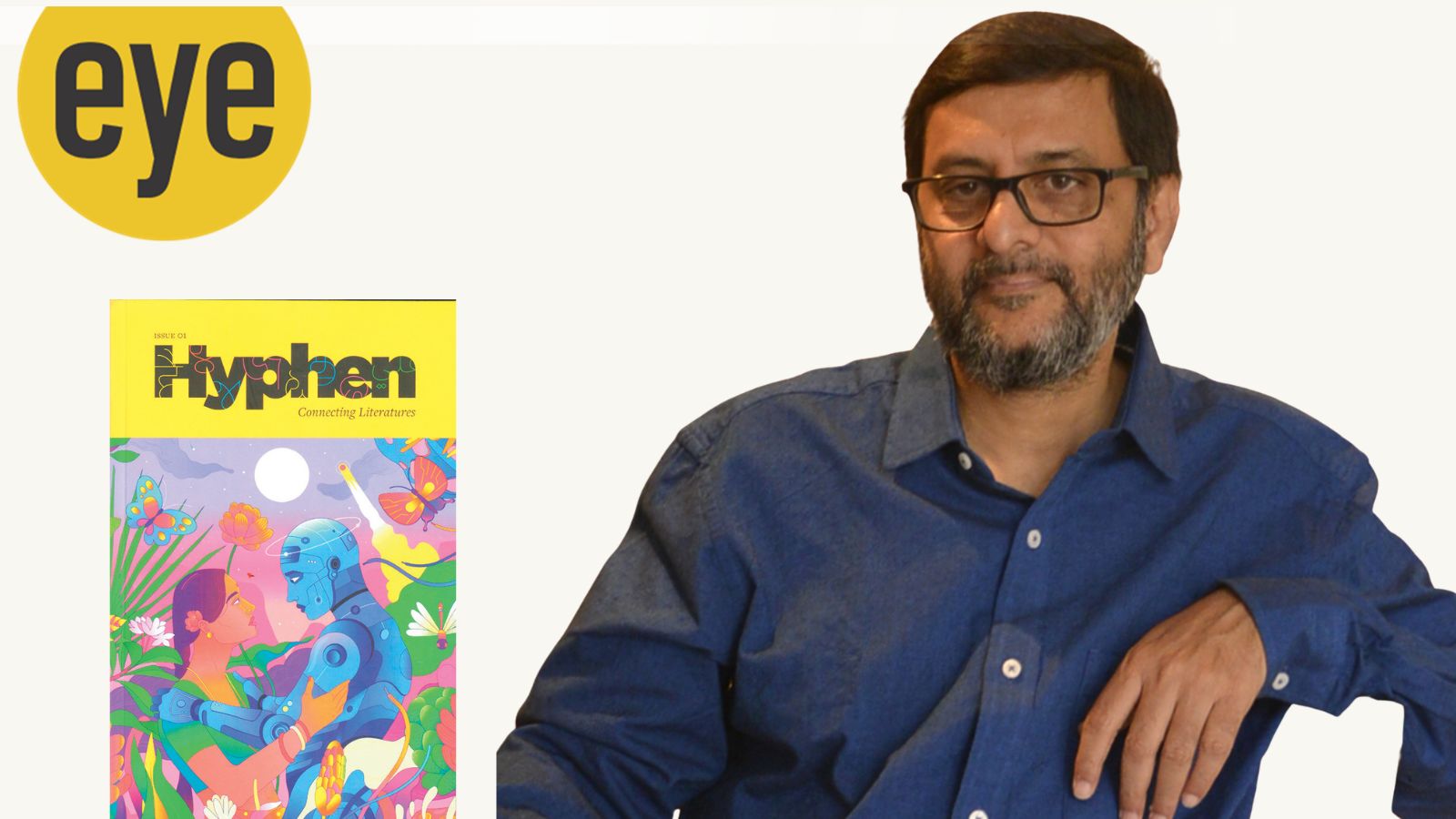
Acclaimed Kannada author Vivek Shanbhag has launched 'Hyphen,' a multi-faceted literary platform comprising a journal, publishing house, and digital space to bring Indian-language literature to a global audience via English translations.
- Vivek Shanbhag has launched 'Hyphen,' a comprehensive literary ecosystem.
- The platform includes a print journal, a publishing house, and a digital interface.
- The goal is to elevate Indian-language writing to a global standard through English translation.
Renowned Kannada novelist and playwright Vivek Shanbhag, the author of the critically acclaimed 'Ghachar Ghochar', has unveiled a transformative initiative called 'Hyphen'. This new venture aims to redefine how Indian-language literature is perceived and consumed globally by presenting it not merely as translated text, but as profound literature in its own right.
Hyphen operates as a tripartite institution under the Bahuvachana Trust, encompassing a literary journal, a publishing house, and a digital platform. Shanbhag’s vision is to create a seamless bridge between the rich, diverse linguistic traditions of India and the wider English-speaking world, ensuring that masterpieces from regional languages do not remain confined within linguistic borders.
A Vision Born from Decades of Engagement
This initiative is not a sudden impulse but the culmination of decades of literary engagement. Shanbhag’s tenure as the editor of the Kannada magazine 'Desha Kaala' played a pivotal role. During his seven years there, he discovered immense talent across Tamil, Hindi, Bengali, and Marathi literatures, but also faced the frustration of how slowly these voices reached a global audience.
Shanbhag notes that many writers championed by regional magazines often take decades to find an English-speaking readership. Hyphen seeks to accelerate this process, turning what was once a slow trickle of recognition into a steady stream of global literary conversation.
Why This Matters
BozokMedia analysis shows that as the global appetite for diverse narratives grows, the infrastructure for high-quality translation becomes critical. Hyphen is positioning itself as the essential conduit for India's intellectual and creative output, moving beyond the 'translation success story' trope to establish a permanent literary presence.
We should read writing from Indian languages the same way we read Russian or Latin American literature—as literature.
The timing of Hyphen's launch is significant, following high-profile international recognitions such as Geetanjali Shree winning the International Booker Prize for 'Tomb of Sand' and Banu Mushtaq gaining global attention. However, Shanbhag warns against relying solely on award cycles, emphasizing that lasting impact requires consistent access to a wide array of writers and their unique worldviews.
Frequently Asked Questions
1. What makes Hyphen different from a traditional publishing house?
Answer: Unlike traditional publishers, Hyphen is a hybrid model that combines a journal for reflection, a digital platform for rapid engagement, and a publishing house for long-form works.
2. Why is English the focus for these translations?
Answer: As direct translations between various Indian languages have declined, English has emerged as the most effective lingua franca to connect diverse linguistic communities with the world.