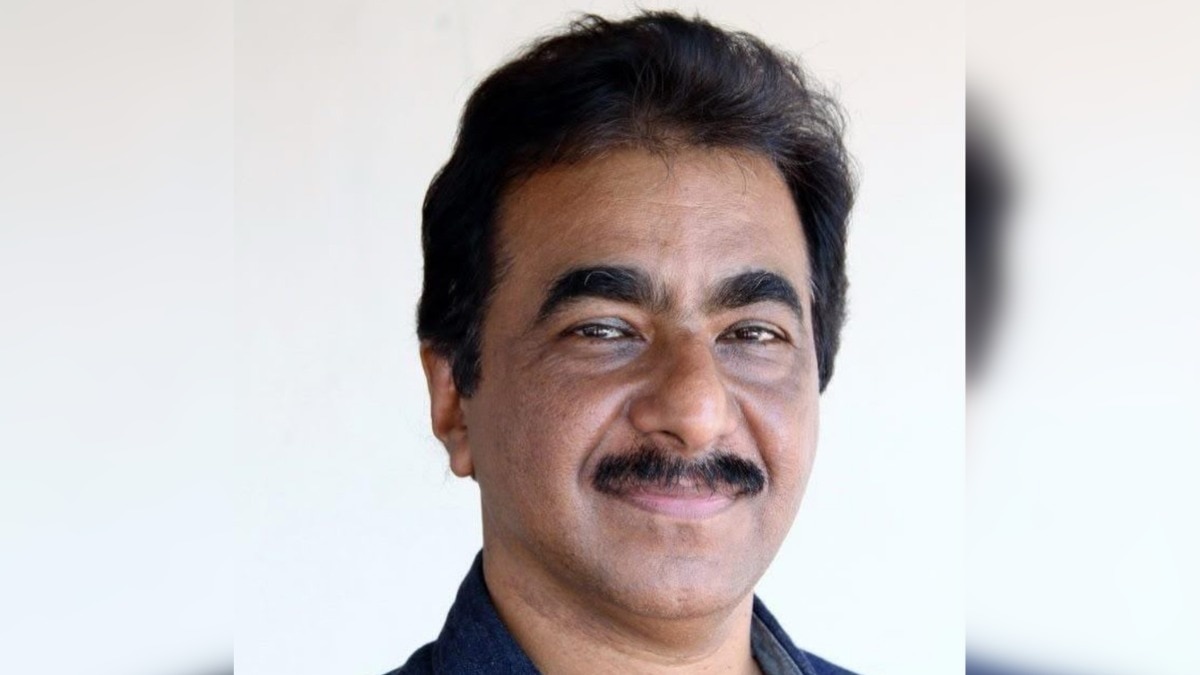
Acclaimed Malayalam filmmaker and mural artist R Sarath has passed away at the age of 65 in Trivandrum. Renowned for his masterpiece 'Sayahnam' and international projects like 'The Desire', his demise marks the end of an era for socially conscious parallel cinema.
- Award-winning Malayalam filmmaker R Sarath passed away at 65 while undergoing treatment at a private hospital in Trivandrum.
- He was best known for his landmark debut feature 'Sayahnam' (2000) and the internationally acclaimed film 'The Desire'.
- Beyond feature films, Sarath was a celebrated documentary maker, mural artist, and former journalist.
Distinguished Malayalam filmmaker and visual artist R Sarath passed away on Monday at a private hospital in Trivandrum while undergoing treatment for age-related and health ailments. He was 65. His demise has sent shockwaves across the South Indian film fraternity and art circles.
His family members informed the Film Employees Federation of Kerala (FEFKA) Directors’ Union that his funeral ceremony would take place at Santhikavadam in Trivandrum. Sarath is survived by his wife and two sons. FEFKA expressed profound grief over his passing, offering deep condolences to his family.
Over a career spanning several decades, Sarath carved out a unique niche for himself in Malayalam cinema. His films were characterized by a deep engagement with social, cultural, and historical themes, while his off-screen work reflected a broader passion for visual arts, journalism, and social welfare.
Why This Matters
BozokMedia analysis shows that the passing of R Sarath represents a massive loss for India's parallel and realistic cinema movement. In an era increasingly dominated by blockbusters, Sarath remained committed to thought-provoking, content-driven storytelling that bridged the gap between fine arts and cinematic realism, earning accolades both nationally and globally.
Sarath’s most celebrated work, Sayahnam, released in 2000, brought him widespread national recognition. The film won the prestigious Indira Gandhi Award (National Film Award for Best Debut Film of a Director) and swept seven Kerala State Film Awards that year. He followed this success with critically acclaimed films such as Sthithi, Sheelabathi, Buddhanum Chaplinum Chirikkunnu, Swayam, and Paradise. His 2011 Indo-Chinese collaboration, The Desire – A Journey of a Woman, achieved international acclaim, winning the Best Narrative Feature Film award at the Geneva International Film Festival.
R Sarath was a rare filmmaker who saw cinema not merely as a commercial medium, but as an extension of a canvas and a platform for deep social responsibility.
In addition to feature films, Sarath’s creative pursuits spanned documentaries and visual arts. He directed a highly acclaimed documentary on the legendary paintings of Raja Ravi Varma, which received international attention. An accomplished mural artist himself, he was awarded the Central Government’s Junior Fellowship for his outstanding work in the field. He also directed Burial of Dreams, a poignant national-level documentary focusing on the aftermath of the Bhopal gas tragedy.
Born in Vilakkudy in the Kollam district, Sarath studied English at Mahatma Gandhi College in Thiruvananthapuram and pursued his post-graduation at University College. Before stepping into filmmaking, he worked as a journalist with the prominent daily Kerala Kaumudi. He later joined the Kerala Government's Public Relations Department (PRD) and retired as Deputy Director in 2021. He had also completed a Film Appreciation course at the prestigious Film and Television Institute of India (FTII) in Pune.
| Film / Project | Release Year | Key Achievements / Theme |
|---|---|---|
| Sayahnam | 2000 | Indira Gandhi Award & 7 Kerala State Film Awards |
| The Desire | 2011 | Best Narrative Feature (Geneva International Film Festival) |
| Burial of Dreams | - | Critically acclaimed documentary on the Bhopal Gas Tragedy |
Frequently Asked Questions
1. What was R Sarath's most famous movie?
His debut feature film 'Sayahnam' (2000) is widely considered his masterpiece, winning the Indira Gandhi National Award and seven Kerala State Film Awards.
2. What was R Sarath's professional background before entering cinema?
Before becoming a full-time director, Sarath worked as a journalist with Kerala Kaumudi and retired as the Deputy Director of the Kerala Government's Public Relations Department in 2021.