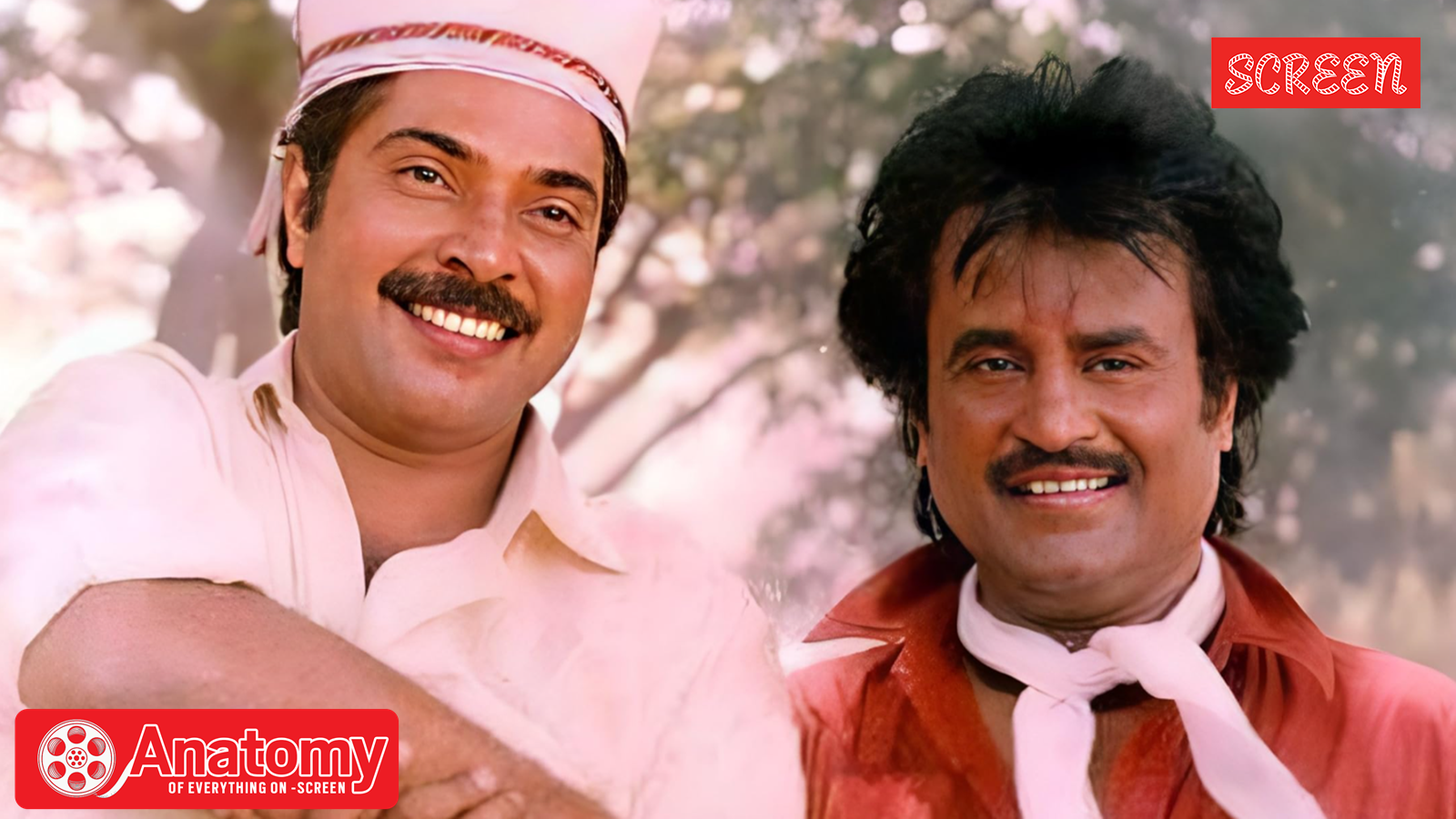
An in-depth analysis of Mammootty's nuanced portrayal of Devaraj in the cult classic 'Thalapathi' and how his understated acting balanced Rajinikanth's explosive charisma.
- Mammootty delivered a masterful, understated performance that stood toe-to-toe with Rajinikanth's massive screen presence.
- The film 'Thalapathi' serves as a modern retelling of the legendary bond between Karna and Duryodhana from the Mahabharata.
- Mammootty's character, Devaraj, used silence and intense gaze to command authority.
In the landscape of Indian cinema, especially during the 1990s, matching the sheer charisma of Rajinikanth was considered a near-impossible feat. In Mani Ratnam's seminal masterpiece 'Thalapathi' (1991), Rajinikanth was at the peak of his 'Aura.' However, Mammootty managed to do the unthinkable—he carved out a space so profound that his performance became inseparable from the film's legacy.
While Rajinikanth's character, Surya, is defined by explosive energy and emotional outbursts, Mammootty's Devaraj is a study in restraint. Using a low-register, raspy voice modulation reminiscent of Marlon Brando, Mammootty brought a sense of looming dread and quiet authority to the screen. BozokMedia analysis shows that Mammootty's brilliance lay in his ability to be minimalist when the scene demanded intensity, creating a stark contrast to the high-octane energy surrounding him.
Why This Matters
The interplay between the two leads is what elevates 'Thalapathi' from a standard gangster drama to a cinematic epic. It explores the duality of human nature—how a man can be a terrifying underworld figure to the law, yet a deeply vulnerable friend to a comrade. This balance of acting styles is a masterclass in character dynamics.
Mammootty proved that true power on screen doesn't always require a loud voice; sometimes, a single, steady glance is more commanding than any dialogue.
The film is widely recognized as a reimagining of the relationship between Karna and Duryodhana. Through this lens, Mani Ratnam explores the subjectivity of morality. To the righteous bureaucrat Arjun (Arvind Swamy), Surya and Devaraj are mere criminals. However, from their perspective, they are protectors of the marginalized, operating in a system that has failed the underprivileged.
One of the most defining moments of the film is when Devaraj asserts his dominance with a simple, chilling "Mudiyaath" (No). In that moment, Mammootty didn't need to shout; his presence alone commanded the room, effectively neutralizing the authority of the state officials present.
Frequently Asked Questions
1. What is the central theme of the movie Thalapathi?
The film explores themes of friendship, loyalty, and the subjective nature of morality through a modern retelling of the Mahabharata.
2. How does Mammootty's acting style differ from Rajinikanth's in the film?
Rajinikanth employs an explosive, high-energy style, whereas Mammootty uses a subtle, restrained, and authoritative approach.

