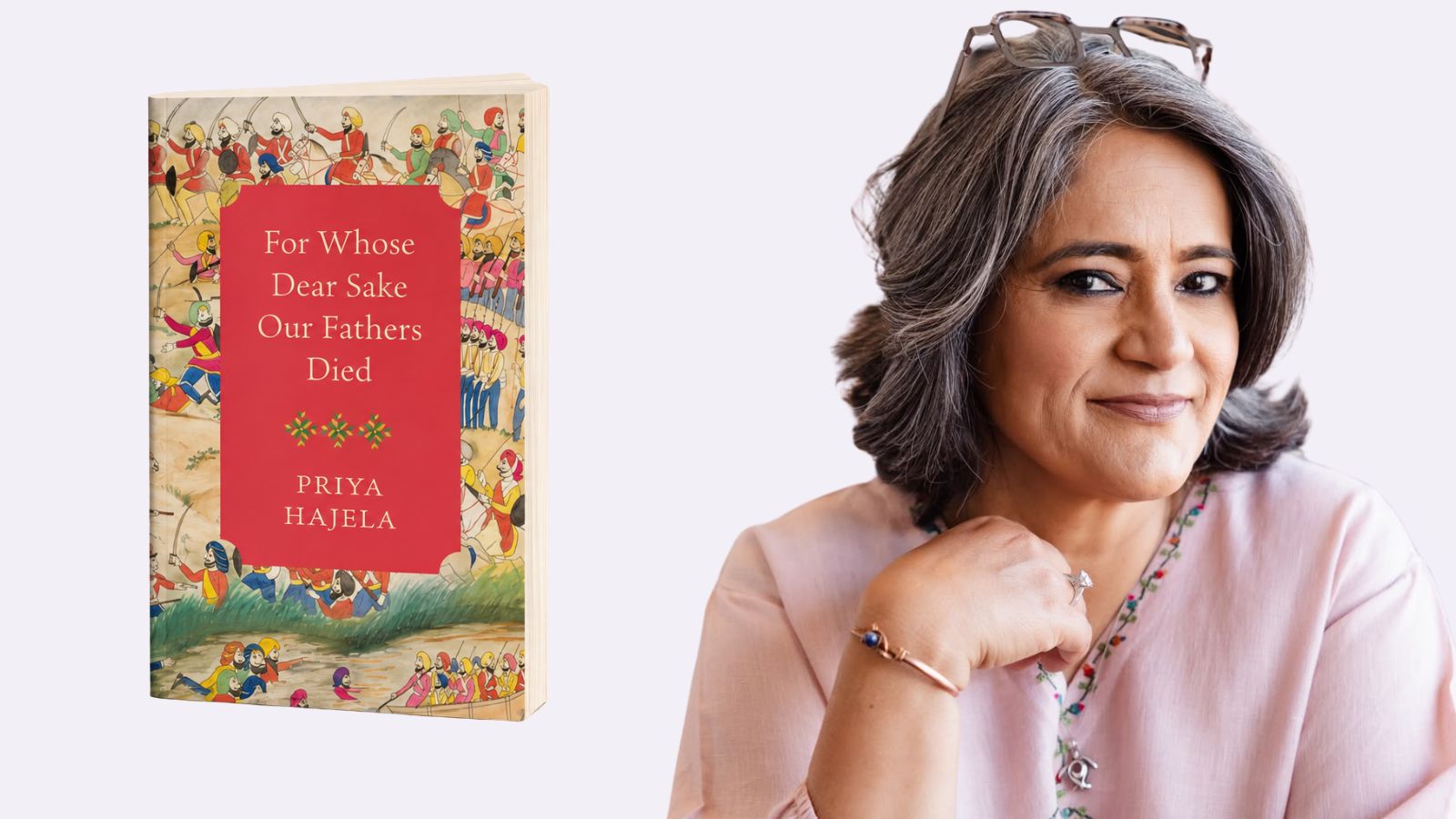
Priya Hajela's latest novel, 'For Whose Dear Sake Our Fathers Died,' delves into the complex loyalties and psychological trauma of a family navigating the turbulent eras of Anglo-Sikh Wars and the Partition.
- Priya Hajela's new novel explores the fractured loyalties of an Indian family during the colonial era.
- The narrative spans from the death of Maharaja Ranjit Singh to the Partition of India.
- The book focuses on the 'common man's' experience rather than just political leaders.
In her profound new novel, 'For Whose Dear Sake Our Fathers Died', published by Speaking Tiger, author Priya Hajela navigates the labyrinthine corridors of colonial history. The book traces the journey of the Uppal family across four generations, capturing the essence of a nation in flux during the Anglo-Sikh Wars, the 1857 uprising, and the eventual Partition.
The title itself is a haunting echo of Rudyard Kipling’s “The Children’s Song,” a poem that left a lasting impression on Hajela during her school days at The Lawrence School, Sanawar. The poem, which speaks of loyalty to a motherland and the sacrifice of fathers, serves as the emotional backbone of this sprawling historical epic.
The Human Cost of History
Hajela’s work moves beyond the grand narratives of kings and conquerors to focus on the domestic and psychological realities of the common person. Through the eyes of Beant Kaur, the protagonist attempts to reconstruct the fragmented memories of her grandfather, Balwant Singh Uppal.
History often speaks of the leaders, but it frequently ignores the profound internal conflicts of the common man caught in the crossfire.
The central tension of the novel lies in Balwant’s conflicting loyalties. While he views the East India Company as an oppressive force, he finds himself bound by duty to the British Indian Army. This duality highlights the impossible choices faced by Indian soldiers who were often ordered to suppress rebellions against people who shared their very identity, language, and faith.
Why This Matters
BozokMedia analysis shows that Hajela’s approach to historical fiction provides a necessary corrective to traditional historiography. By synthesizing British diaries with Indian-authored accounts, she creates a multi-dimensional view of a period often portrayed through a singular, biased lens.
The author’s transition from a 22-year corporate career to a dedicated novelist allowed her to approach this subject with a unique maturity. Her research involved reading against the grain of official records, ensuring that the voices of the 'losers' of history were given due prominence and dignity.
Frequently Asked Questions
1. What historical events are covered in the book?
The novel covers a century of upheaval, including the Anglo-Sikh Wars, the death of Maharaja Ranjit Singh, the 1857 uprising, and the Partition of India.
2. How does the novel differ from a standard history textbook?
Unlike a textbook, the novel focuses on the emotional and personal lives of ordinary people, exploring how large-scale political shifts impact family structures and individual identity.