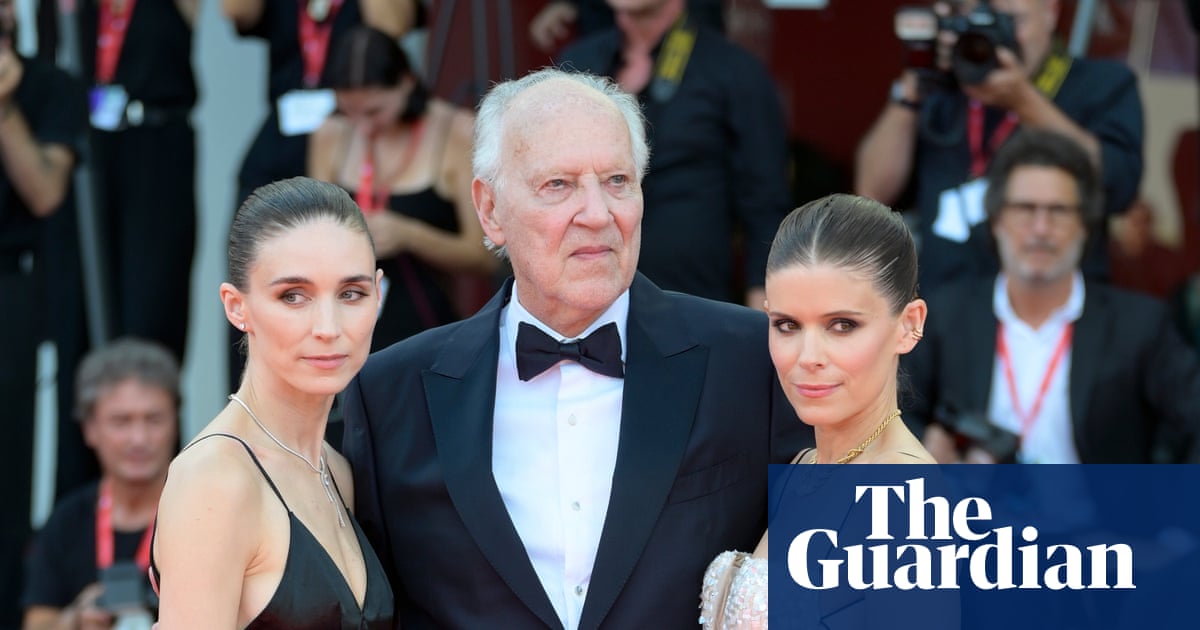
Renowned German filmmaker Werner Herzog has voiced his disdain for terms like 'neurodivergence,' calling them a form of political correctness. Speaking at the Venice Film Festival, he discussed his new film 'Bucking Fastard' and his refusal to compromise ethics for cinema.
- Werner Herzog dismissed terms like 'neurodivergence' and 'ADHD' as uncomfortable political correctness.
- His new film 'Bucking Fastard' stars real-life sisters Kate and Rooney Mara.
- The director refused to use an illegally sourced baby fox for his film production.
Legendary Bavarian auteur Werner Herzog, a man whose films often dwell on the obsessive and the monomaniacal, has sparked a conversation regarding modern psychological labels. At the Venice Film Festival, Herzog expressed his discomfort with the term 'neurodivergence', suggesting it feels more like a tool for political correctness than a biological reality. "I don’t like the term neurodivergence and ADHD, or whatever – it sounds like political correctness, which scares me under the table," Herzog remarked.
His latest cinematic offering, 'Bucking Fastard', features real-life sisters Kate and Rooney Mara as the Holbrooke twins. The characters exhibit behaviors that contemporary psychiatry might categorize as autism or ADHD hyper-focus. However, Herzog rejects these clinical interpretations, viewing their singular focus not as an aberration, but as a central part of their human essence. He argues that these labels often strip away the soul of the character in favor of trendy terminology.
Why This Matters
BozokMedia analysis shows that Herzog's stance highlights a growing tension in global culture between the clinical classification of human behavior and the traditional artistic view of the 'outsider.' As society moves toward more precise psychological labeling, veteran creators like Herzog remind us of the potential loss of nuance when we reduce complex human spirits to mere diagnoses.
"I do not relate to all these trendy terms – I just can’t hear it, it dusts out of my ears." - Werner Herzog
Beyond the philosophical debate, Herzog remains a staunch defender of ethical filmmaking. During the production of 'Bucking Fastard,' he faced an offer from an animal dealer to provide a baby fox for a scene. When the dealer hinted at questionable acquisition methods, Herzog immediately declined, stating firmly, "I’m not in this business." This reinforces his lifelong commitment to a vision that, while often bleak, remains fundamentally rooted in his own moral compass.
At 83, the director is also experiencing a surprising demographic shift in his audience. While his predecessors like Jean-Luc Godard attract older crowds, Herzog finds himself increasingly connected to a younger generation. This connection has even led him to the world of Instagram, a platform he joined at his son's suggestion to bridge the gap between his legendary status and modern viewers.
Frequently Asked Questions
1. What is the core theme of Herzog's new film?
The film explores themes of obsession, sibling attachment, and resilience through the lives of two ostracized sisters.
2. Why does Herzog reject modern psychological terms?
He views them as clinical labels that serve political correctness rather than capturing the authentic, unclassified nature of human behavior.