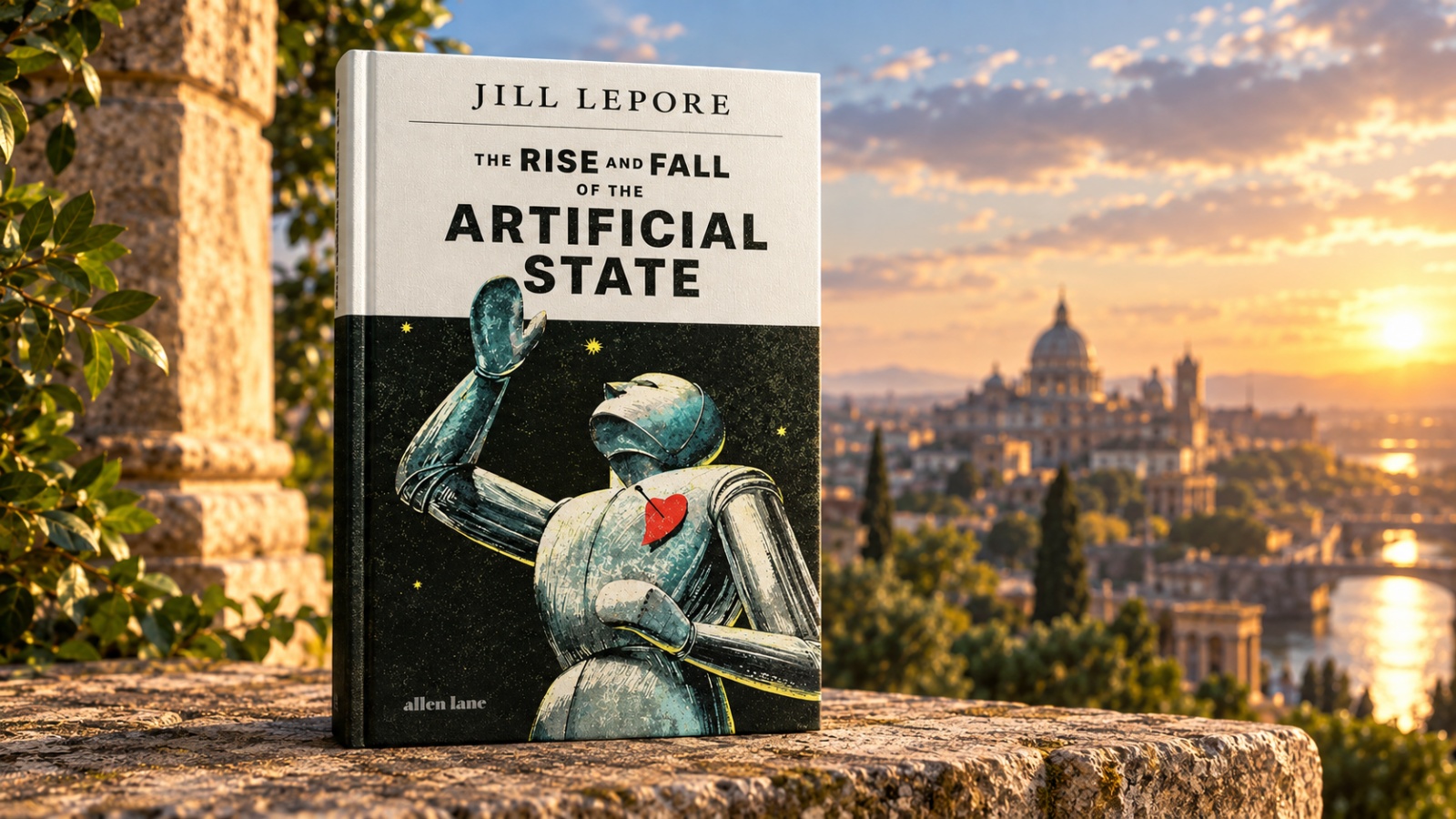
Jill Lepore’s ‘The Rise and Fall of the Artificial State’ dissects the techno‑elite’s grand fantasy and argues that democratic will can dismantle this fragile construct. The author links mid‑century sci‑fi warnings to today’s AI ambitions.
- The Artificial State is a man‑made fantasy, not an inevitable future.
- Historical sci‑fi warned tech leaders, but its cautionary messages were ignored.
- Democratic engagement can break down this fragile system.
Book Overview
Harvard historian Jill Lepore splits her 336‑page work into two parts: “Government by Machine” and “What Robots Want.” The first maps the growing grip of technology on governance, while the second traces the sci‑fi roots of the so‑called Artificial State.
Historical Background
Le pore draws heavily on Hannah Arendt’s 1951 classic The Origins of Totalitarianism, which warned that machines could render humans politically redundant. The 1950‑60s science‑fiction boom, featuring writers like Asimov, seeded the imagination of today’s Silicon Valley titans, though the genre’s warnings were largely missed.
Development of the Narrative
Le pore points out that tech CEOs—including Peter Thiel and Elon Musk—have treated sci‑fi as a product roadmap, ignoring its cautionary subtexts. Consequently, the Artificial State emerged “by accident rather than design,” a system she calls “poorly designed and badly built.”
Why This Matters
BozokMedia analysis shows that the rise of an artificial state challenges the core of democratic governance, making it imperative for policymakers to address AI’s unchecked influence before it reshapes societal norms.
“If we fail to question the tech elite, democracy itself is at risk.”
Frequently Asked Questions
Question 1: Can the Artificial State be completely dismantled?
Answer: Lepore believes that rising democratic awareness and regulatory action can gradually dismantle it.
Question 2: Which key examples does the book discuss?
Answer: The book references Silicon Valley moguls, classic sci‑fi authors, and historic philosophers to illustrate its arguments.