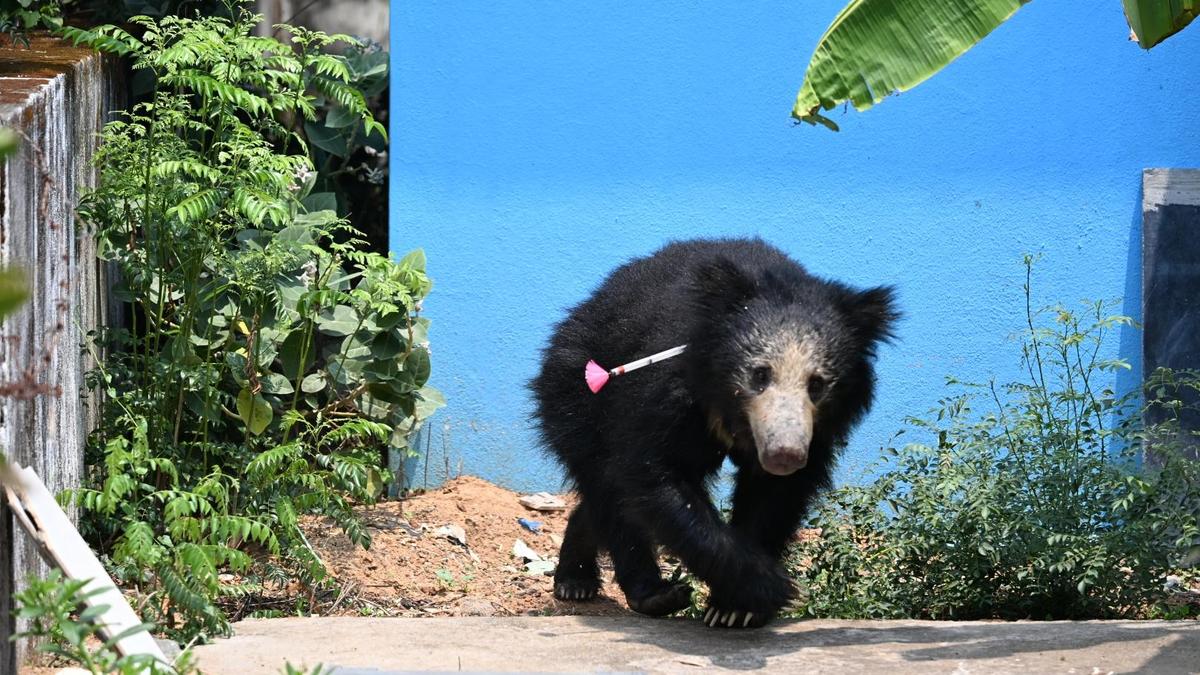
Forest staff in Tamil Nadu trapped an 8‑year‑old stray sloth bear near Kadayam village and, after a veterinary health check, released it into the dense jungles of Kalakkad Mundanthurai Tiger Reserve. The incident highlights rising human‑wildlife conflict in the region.
In the Ambur beat of Tenkasi district, a wandering sloth bear was spotted near the hamlet of Kadayam. After villagers reported the animal’s presence, forest officials set up a metal cage in Sankarapandiapuram village to contain the creature.
Containment and Initial Examination
At approximately 12:15 a.m. on Thursday, the bear—estimated to be eight years old—was successfully locked inside the cage. Forest veterinarian Manoharan performed a rapid health screening, confirming that the animal was in good condition and free from injuries.
Net Failure and Quick Response
Despite the bear’s calm demeanor, it managed to damage the metal floor of the enclosure. Personnel attempted to seal the breach with a net, but the animal tugged the net from within, neutralising the efforts of two forest staff members. Fortunately, the displaced net lodged into the gap, preventing the bear from widening the opening further.
Veterinary Clearance and Relocation
Following a comprehensive veterinary assessment that found no disease or trauma, the bear was transferred to the dense forests of the Kodamaadi area, located beyond the Servalar Dam within the Kalakkad Mundanthurai Tiger Reserve (KMTR). It was released later that afternoon, allowing it to resume its natural habits.
Broader Context and Conservation Implications
Sloth bears (Melursus ursinus) are an iconic species of South India's forest ecosystems, yet human‑wildlife encounters have risen in recent years as settlements expand near protected areas. This incident underscores the need for robust conflict‑mitigation strategies, community outreach, and real‑time monitoring to safeguard both local livelihoods and wildlife.
KMTR, renowned for its rich biodiversity and tiger conservation efforts, now adds this successful rescue to its portfolio of proactive wildlife management. Authorities have pledged to enhance early‑warning systems and strengthen collaboration with nearby villages to pre‑empt future incidents.
