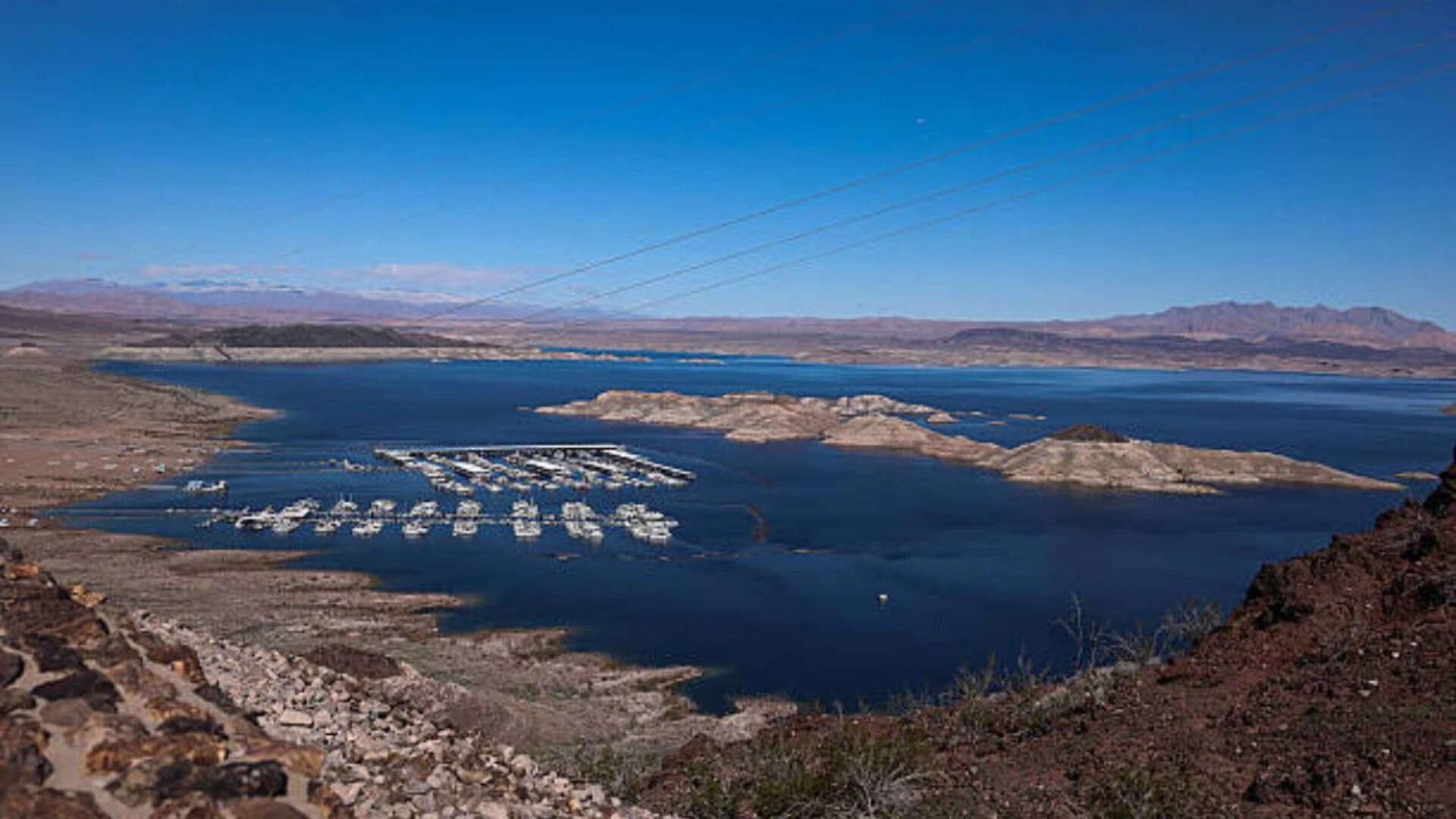
Lake Mead’s historic low water levels have put millions across several U.S. states and Mexico at risk. Federal funding will back water‑retention efforts this year and fund annual agricultural‑water‑conservation programs, yet lasting solutions will require basin‑wide cooperation among Colorado River states.
मुख्य बिंदु (Key Takeaways)
- Federal funding could deliver $65 million to California.
- Goal: retain roughly 65 billion gallons in Lake Mead.
- Long‑term water security hinges on cooperation among Colorado River Basin states.
Lake Mead, the United States’ largest reservoir, has been grappling with historically low water levels for several consecutive years. By early 2023 the lake’s storage fell to about 30 percent of capacity, jeopardising municipal water supplies, hydro‑electric generation, recreation, and downstream agriculture. The decline is driven by a combination of prolonged drought linked to climate change, reduced snowpack in the Rockies, and escalating water withdrawals along the Colorado River.
Federal Funding and California’s Role
The federal government, recognizing the emergency, has drafted a targeted funding package that could allocate up to $65 million to California. The money is earmarked for infrastructure upgrades that improve flow‑control gates, enhance hydrologic monitoring, and support water‑level management in the reservoir. In parallel, the package funds agricultural water‑conservation initiatives that aim to cut annual water use through modern irrigation technologies and best‑practice farming methods.
Agricultural Water‑Conservation Initiatives
California’s agriculture is one of the nation’s most water‑intensive sectors. The allocated funds will subsidise the rollout of drip‑irrigation, precision‑agriculture sensors, and water‑recycling systems across high‑demand crop regions. Analysts estimate that these measures could collectively save up to 1.5 billion gallons per year, directly contributing to the target of retaining 65 billion gallons in Lake Mead.
Future Outlook: Basin‑Wide Collaboration
While the immediate infusion of cash can mitigate the current crisis, a sustainable solution demands a coordinated water‑management framework among the seven Colorado River Basin states—Arizona, California, Colorado, Nevada, New Mexico, Utah, and Wyoming. Such a framework would incorporate equitable allocation formulas, shared conservation goals, and joint investment in scientific research on river health and climate resilience.
Conclusion
Lake Mead’s plight underscores the broader, global challenge of water scarcity in a warming world. The prospective $65 million grant to California represents a crucial first step, but it must be complemented by long‑term political commitment, technological innovation, and basin‑wide cooperation to secure water for future generations.



