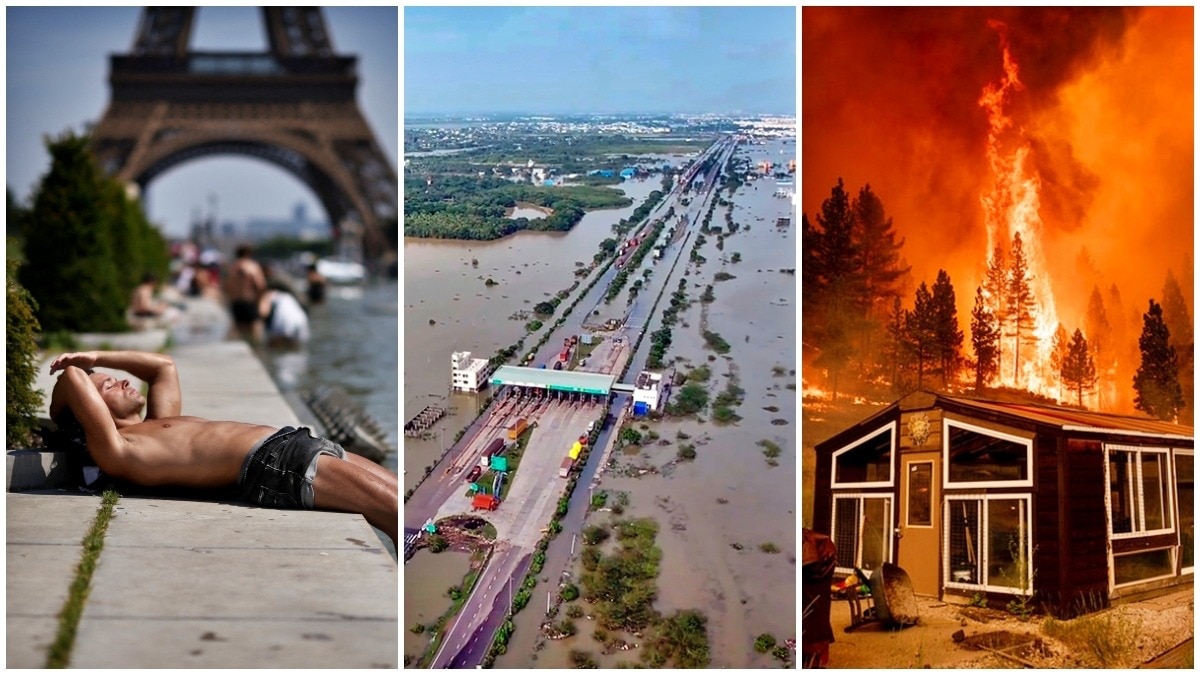
Italy, France, and Germany are battling unprecedented heat, with several cities issuing red alerts. Austria set a new temperature record while Hungary switched off street lights to conserve energy. The heatwave underscores the growing climate crisis across Europe.
Key Takeaways
- All major Italian cities placed on red alert
- Austria breaks national temperature record
- Hungary turns off public lighting to save energy
Europe is under an extreme heatwave as Italy, France, and Germany record temperatures soaring above 40°C. Italian health authorities have placed every major city on the highest "red alert," urging citizens to take extreme precautions. Similar measures are being rolled out in France and Germany, where temperatures have breached historic highs.
Austria logged a new national high of 41.5°C, while Hungary responded to the strain on its power grid by turning off street lights at night. Romania followed suit, limiting public lighting to conserve electricity. These actions highlight the dual challenge of protecting public health and managing energy demand during scorching conditions.
Historical Background
Over the past two decades, Europe has experienced a steady rise in average temperatures, leading to more frequent and intense heatwaves. The 2003 European heatwave claimed over 70,000 lives and spurred many nations to strengthen climate policies. Yet, the latest temperature records reveal that existing measures are still insufficient to combat the accelerating trend.
Why This Matters
BozokMedia analysis shows that the escalating heatwave not only threatens public health but also strains energy grids across Europe, accelerating the urgency for sustainable climate policies and infrastructure resilience.
"Such extreme temperatures cannot be ignored; they are a stark reminder of the accelerating impacts of climate change," says Prof. Maria Leone, climate science expert.
Frequently Asked Questions
Question 1: Are health risks increasing due to this heatwave?
Answer: Yes, high temperatures elevate the risk of dehydration, heat stroke, and cardiovascular issues, especially among the elderly and children.
Question 2: Will the heatwave affect energy supply?
Answer: The surge in demand for cooling systems puts additional pressure on power grids, prompting several countries to implement energy-saving measures.