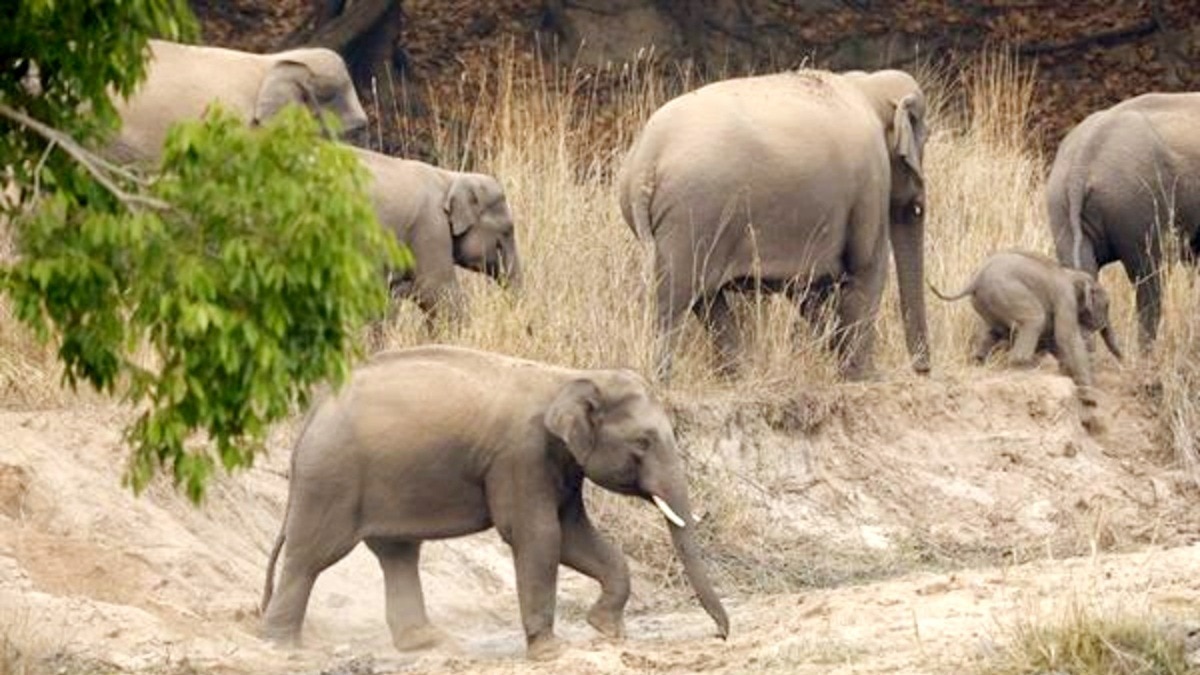
Madhya Pradesh's Bandhavgarh Tiger Reserve, famous for tigers, is rapidly becoming a major stronghold for wild elephants. Experts report a significant rise in elephant herds across the region.
Key Takeaways
- An estimated 50 to 70 wild elephants are now present in Bandhavgarh Tiger Reserve.
- A herd of approximately 25 elephants has been residing in Shahdol's Beohari area for 1.5 years.
- Elephants migrated to this region via corridors from Sanjay Gandhi Tiger Reserve.
- The Forest Department is utilizing the 'Gajrakshak App' and radio collars for monitoring.
A significant ecological shift is occurring in the heart of India. Bandhavgarh Tiger Reserve, globally renowned for its tiger population, is emerging as a preferred sanctuary for wild elephants. Recent observations indicate that elephant herds are thriving within the Bandhavgarh landscape and its surrounding areas.
According to Area Manager Anupam Sahay, the regular presence of elephants was first recorded in October 2018, when they migrated from the Sanjay Gandhi Tiger Reserve through established wildlife corridors. Since then, their territory has expanded into Khetauli, Panpatha Core, Tala, and Kallwah. The abundance of bamboo thickets, Sal forests, and mixed vegetation provides the ideal habitat for these majestic creatures.
Why This Matters
BozokMedia analysis shows that while the increasing elephant population enhances biodiversity and boosts wildlife tourism, it also necessitates heightened vigilance to prevent human-elephant conflict. The expansion of these herds signifies the success of wildlife corridors but demands robust management strategies.
The steady influx of elephants suggests that the ecological corridors in Madhya Pradesh are becoming increasingly viable and safe for megafauna.
The trend is also evident in the Shahdol district. DFO Taruna Verma of the North Forest Division noted that the backwaters of Bansagar, coupled with low human density and vast bamboo forests, have made the Beohari region a safe haven for a herd of about 25 elephants over the last 18 months.
Historical Background
Historically, Madhya Pradesh has served as a vital transit point for elephant populations. However, habitat fragmentation once posed a threat. Recent conservation efforts and the strengthening of biological corridors have allowed these herds to reclaim their ancestral roaming grounds.
Frequently Asked Questions
1. How many elephants are currently in Bandhavgarh?
It is estimated that there are between 50 to 70 wild elephants in the Bandhavgarh Tiger Reserve and its vicinity.
2. How is the Forest Department monitoring them?
The department uses the Gajrakshak App, elephant control rooms, radio collars, and scientific identification methods.


