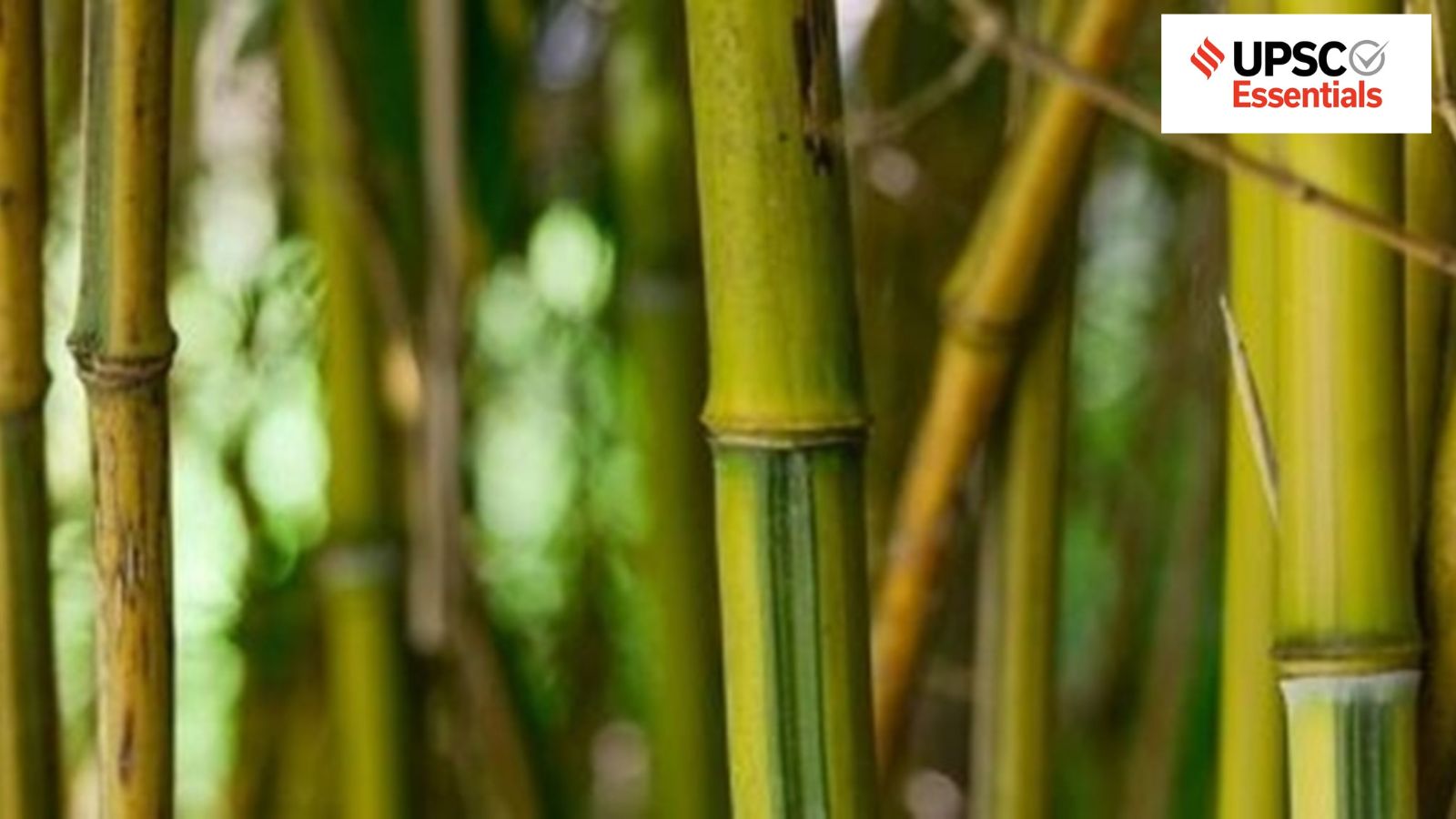
As the world's largest area under bamboo cultivation, India is positioned to lead the global ecosystem restoration movement while boosting its rural economy.
- India holds the world's largest area for bamboo cultivation, covering 13.96 million hectares.
- Bamboo acts as a vital tool for carbon sequestration and preventing soil erosion.
- The bamboo industry in India is valued at approximately ₹28,005 crore.
- Over 50% of India's bamboo is concentrated in the North-Eastern states.
Bamboo, frequently hailed as "Green Gold," is emerging as a cornerstone for both ecological restoration and economic resilience. Its ability to stabilize soil in flood-prone areas and its unmatched capacity for carbon sequestration make it a critical asset in the fight against climate change. As the world moves through the UN Decade on Ecosystem Restoration (2021-2030), India's massive bamboo reserves provide a unique strategic advantage.
Scientifically classified under the Poaceae family, bamboo is one of the fastest-growing plants on Earth, capable of increasing its height by up to 100 cm per day during peak seasons. India boasts incredible biological diversity with 136 species, including 125 indigenous varieties. This diversity allows for various applications, ranging from heavy construction to delicate textiles.
Why This Matters
BozokMedia analysis shows that the transition toward a circular economy makes bamboo an indispensable resource. Unlike traditional timber, bamboo regenerates rapidly through its rhizome system, significantly reducing the pressure on natural forests. Furthermore, bamboo interventions can increase soil organic carbon on degraded lands by up to five times, making it a dual-purpose solution for environmental and agricultural health.
The integration of bamboo into mainstream industry is not just an environmental choice, but a massive economic opportunity for India's rural workforce.
Economically, the sector is a powerhouse, estimated to be worth roughly ₹28,005 crore. It provides a lifeline to nearly 2 million artisans across the country. From biodegradable plastics and textiles to furniture and musical instruments, the versatility of bamboo is driving innovation in sustainable manufacturing. As global demand for eco-friendly alternatives to plastic rises, India's bamboo sector is poised for exponential growth.
Regional Distribution and Trends
While bamboo grows across most of India, the North-Eastern region remains its heartland, hosting over 50% of the total stock. According to the India State of Forest Report (ISFR) 2023, Madhya Pradesh leads in terms of total area, while Arunachal Pradesh has shown the most significant growth in bamboo-bearing land. Conversely, states like Karnataka have seen a decline, highlighting the need for localized conservation efforts.
| State/Region | Key Status/Observation |
|---|---|
| Madhya Pradesh | Largest bamboo-bearing area (20,421 km²) |
| Arunachal Pradesh | Highest increase in bamboo area |
| Karnataka | Highest decrease in bamboo area |
| North-East India | Home to >50% of India's bamboo |
Frequently Asked Questions
1. How does bamboo help in preventing soil erosion?
Bamboo's extensive rhizome (underground stem) system binds the soil together, preventing it from being washed away by water or wind.
2. What are the main economic uses of bamboo in India?
It is used extensively in paper production, handicrafts, construction, textiles, and as a sustainable replacement for single-use plastics.


