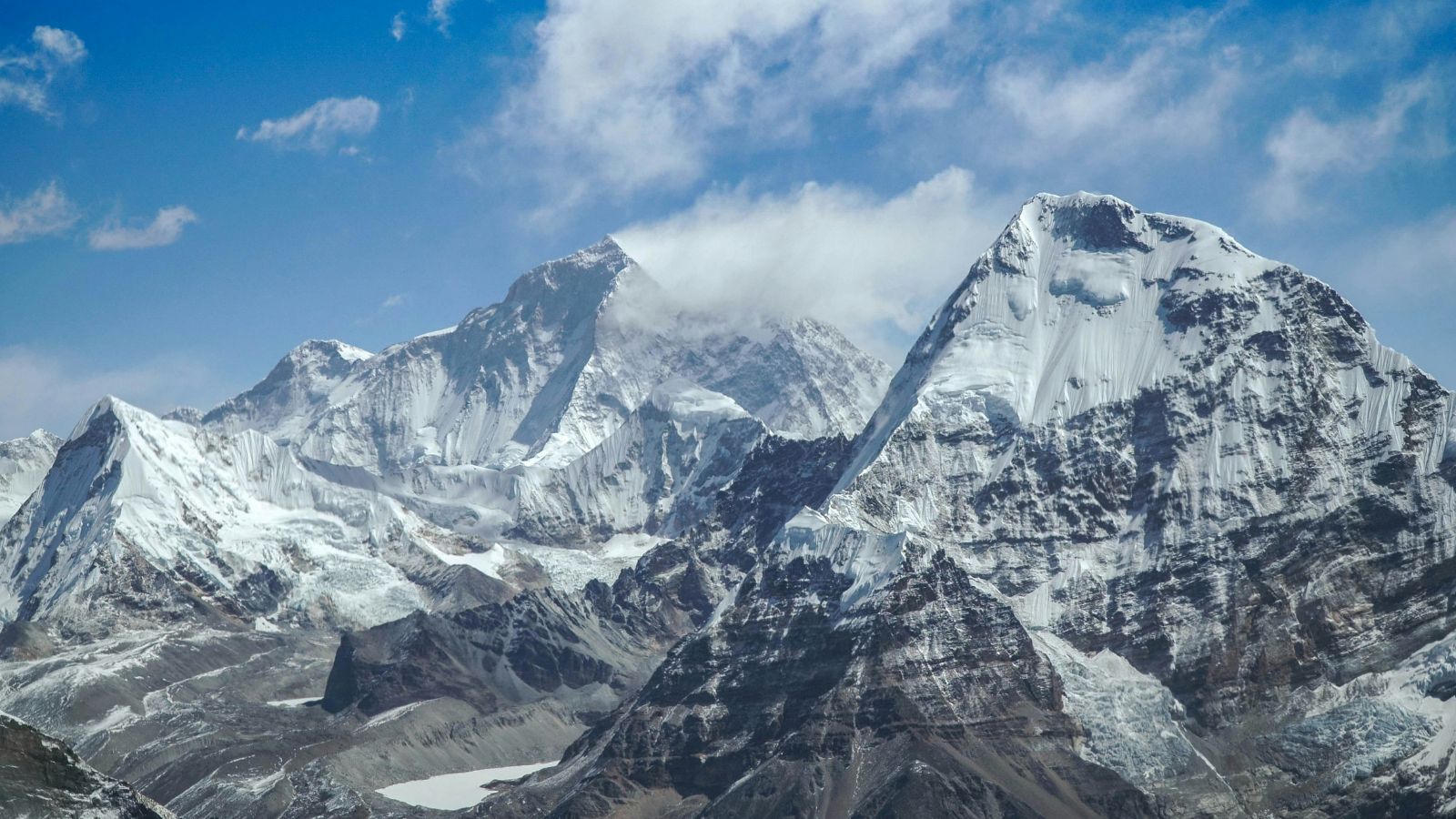
A groundbreaking study warns that the Western Himalayan region, including Ladakh and Himachal Pradesh, is warming more rapidly than other sectors, threatening massive snow loss by 2100.
- The Western Himalaya (Ladakh, J&K, Himachal Pradesh) is warming faster than central and eastern sectors.
- Winter temperatures are rising more rapidly than spring temperatures.
- Under high-emission scenarios, Western Himalayan winters could warm by over 7°C by 2100.
- Reduced snow cover creates a feedback loop that accelerates further warming.
A recent scientific study published in the Journal of Earth System Science has sounded a dire alarm for the Himalayan region. The research indicates that the Western Himalaya—encompassing Ladakh, Jammu and Kashmir, and Himachal Pradesh—is experiencing significantly faster warming compared to its central and eastern counterparts, leading to a projected steep decline in snow cover.
Regional Vulnerability and Temperature Spikes
The study was a collaborative effort involving researchers from the Birla Institute of Technology (BIT), Mesra, the Indian Institute of Tropical Meteorology (IITM), Pune, and Ashoka University. By analyzing 120 years of temperature records (1901–2020) alongside eight global climate models, scientists tracked warming trends across three distinct Himalayan sectors.
The western Himalaya consistently emerges as the most sensitive stretch. It warms the most and loses the most snow under every pathway we tested.
One of the most alarming findings is the rate of seasonal warming. The study notes that winters are warming faster than springs in the western stretches. Under a high-emission pathway, the western Himalayan winter could see a temperature surge of 7.18°C by the end of the century, compared to 6.71°C in the central sector and 5.82°C in the east.
The Albedo Effect and Snow Loss
The researchers highlighted a dangerous feedback mechanism. As snow melts, the ground surface becomes darker, which absorbs more solar radiation instead of reflecting it. This increased heat absorption further accelerates the melting process. Parthasarathi Mukhopadhyay of Ashoka University noted that warmer winters mean less snow is 'banked' to sustain river flows during the subsequent melt months.
Why This Matters
BozokMedia analysis shows that this is not just an environmental issue but a humanitarian crisis in the making. The Himalayas house over 15,000 glaciers that feed the Indus, Ganges, and Brahmaputra rivers. These water bodies are the lifelines for approximately 1.5 billion people. Rapid snow loss in the west directly threatens the water security of the entire Indian subcontinent.
Historical Context of Warming
While the Himalayas are often treated as a monolithic system, historical data proves otherwise. The study reveals that warmer-than-normal years have transitioned from being exceptions to becoming the norm over the last 20–30 years. Most of the significant temperature shifts have occurred very recently, indicating an accelerating trend.
Frequently Asked Questions
1. Which specific regions are most at risk in the Western Himalaya?
Ladakh, Jammu and Kashmir, and Himachal Pradesh are identified as the most vulnerable regions.
2. How does the warming of winters affect summer water supplies?
Warmer winters lead to less snow accumulation; without a sufficient snowpack, there is less gradual meltwater available to feed rivers during the summer months.


