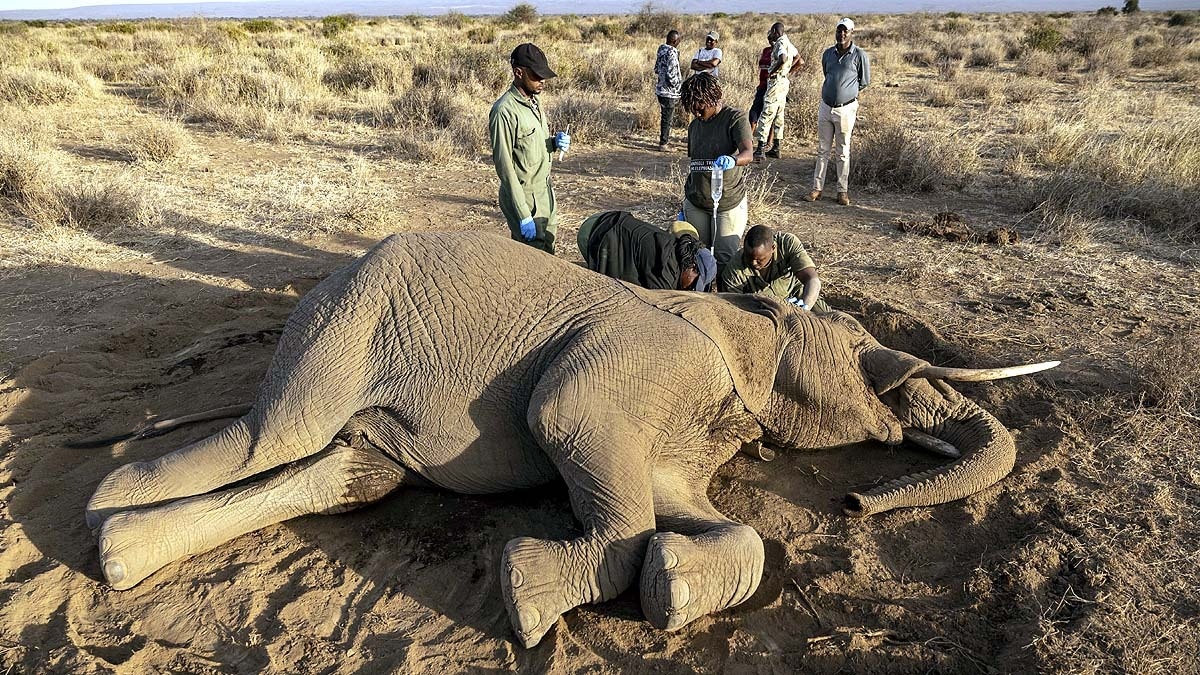
A wave of mysterious deaths has struck Kenya's Amboseli region, claiming at least 20 elephants since June 2026. Experts are investigating whether poisoning or an unknown disease is responsible.
- At least 20 elephants have died mysteriously in the Amboseli region since June 2026.
- Common symptoms include sudden weakness, inability to walk, and paralysis.
- Initial tests found traces of cyanide, but the lack of scavenger deaths suggests a disease might be involved.
The Amboseli region in Kenya is currently facing a biological crisis. Since June 2026, a series of mysterious deaths has claimed the lives of at least 20 elephants, predominantly females and younger males. This unfolding tragedy near the border of Tanzania and the foothills of Mount Kilimanjaro has sent shockwaves through the global conservation community.
Veterinary experts and wildlife officials have noted a disturbing pattern in the deceased animals. The victims exhibited sudden physical debilitation, loss of motor functions, and symptoms resembling paralysis. Many elephants were observed collapsing mid-stride, unable to regain their footing before ultimately succumbing to their condition.
Why This Matters
BozokMedia analysis shows that the stability of the Amboseli ecosystem is vital for East African biodiversity. As a premier destination for global wildlife tourism, any decline in elephant populations poses a significant threat to Kenya's economy and the delicate balance of the savanna.
The contradiction between detected cyanide levels and the survival of scavengers presents a profound scientific puzzle.
During preliminary forensic examinations, the Kenya Wildlife Service detected elevated levels of cyanide in some carcasses. This has led to strong suspicions of intentional poisoning. However, a critical question remains: if the deaths were caused by potent toxins, why have the vultures and other scavengers feeding on these carcasses not shown similar mortality rates?
This discrepancy has kept the possibility of an unidentified disease on the table. While investigators have yet to find evidence of a highly contagious pathogen spreading rapidly through the herds, the scientific community remains cautious. The investigation is currently pivoting to examine soil, water sources, and local vegetation for traces of pesticides or chemical contaminants.
The loss of these majestic creatures is not just a biological loss but a cultural and economic blow to Kenya. The Amboseli elephants are a primary attraction for international tourists, and the ongoing uncertainty threatens the stability of local wildlife-based livelihoods.
Frequently Asked Questions
Question 1: What are the primary symptoms observed in the dead elephants?
Answer: The elephants displayed sudden weakness, difficulty walking, and symptoms consistent with paralysis.
Question 2: Is poisoning the confirmed cause of death?
Answer: While cyanide was found in some samples, the lack of deaths among scavengers means poisoning is not yet the definitive conclusion.


