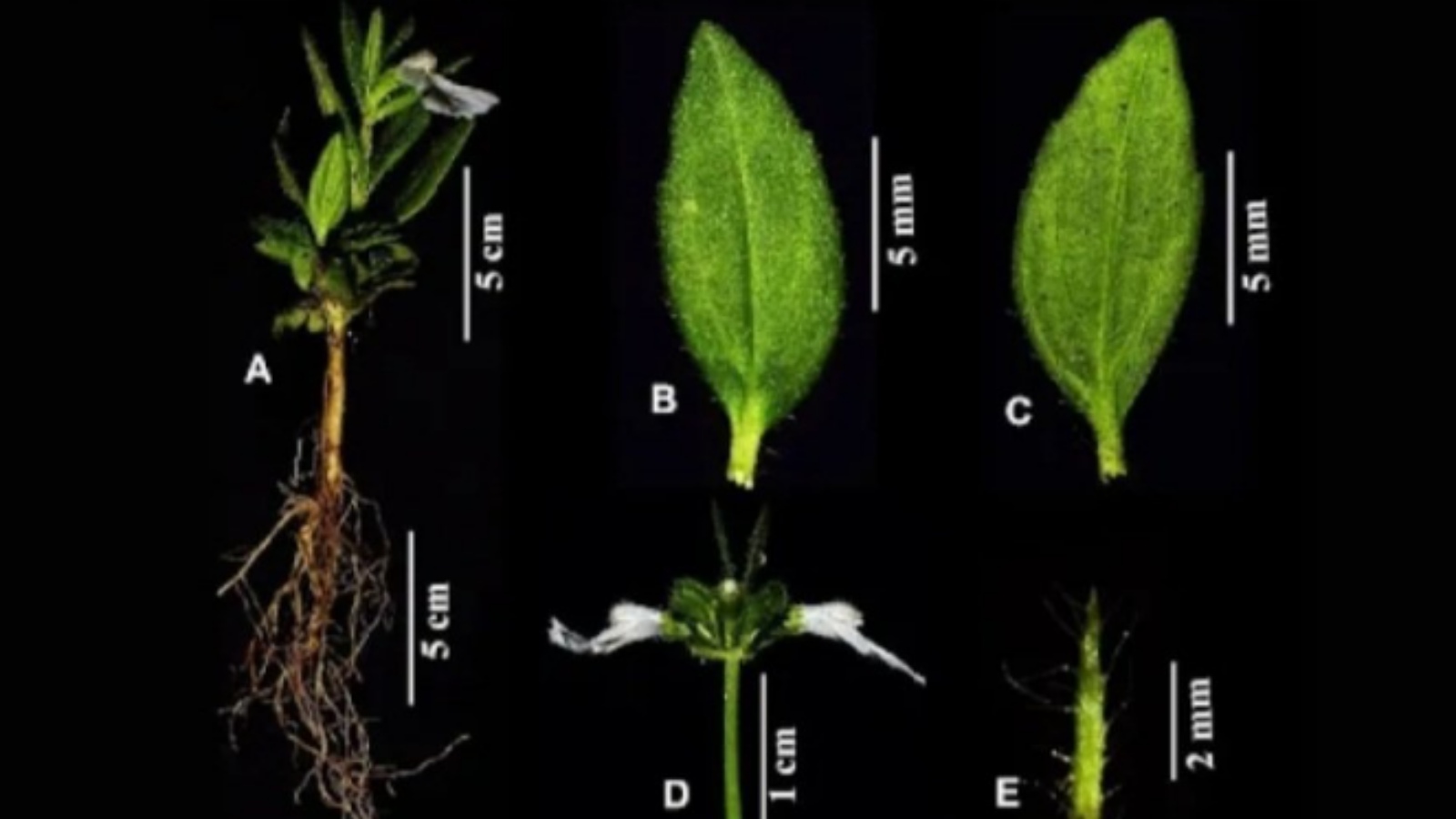
A rare new herb, Leucas droupadiae, has been discovered along the Coromandel Coast in Tamil Nadu. Named after President Droupadi Murmu, the find highlights the hidden biodiversity of India's fragile coastal dunes.
- A new herb species, Leucas droupadiae, has been identified in Cuddalore, Tamil Nadu.
- The plant is named in honor of Indian President Droupadi Murmu.
- It features unique shallow, web-like roots and distinctive golden-yellow spotted fruits.
- The species is currently classified as 'Data Deficient' due to habitat threats.
In a significant boost to India's botanical records, a new herb species has emerged from the sandy dunes of the Coromandel Coast in Tamil Nadu. Discovered during a survey in the Cuddalore district, the plant has been officially named 'Leucas droupadiae', a tribute to the President of India, Droupadi Murmu.
The discovery sheds light on the overlooked biodiversity thriving in environments that often appear barren. Environmentalist Jasmit Singh Arora, popularly known as the “Gutli Man of India,” emphasized that this finding is crucial for understanding the fragile ecosystems of coastal dunes that support highly specialized plant life.
What Makes It Unique?
While it may appear as an ordinary small herb, Leucas droupadiae possesses striking botanical characteristics. Unlike its relatives in the Leucas genus that rely on deep taproots, this species utilizes a unique, shallow, web-like root system to survive in sandy soils. It grows on a single, unbranched stem roughly 15 cm in length and produces distinctive golden-yellow fruits marked with dark brown spots.
This discovery shows that India’s coastal sand dunes hide unknown life, even in poor, sandy soil.
Why This Matters
BozokMedia analysis shows that such discoveries are vital indicators of ecosystem health. Coastal dunes are not merely wasteland; they serve as natural barriers against coastal hazards and storm surges. The presence of specialized flora like Leucas droupadiae indicates a complex biological web that requires immediate conservation attention to prevent ecological collapse.
However, the species faces significant anthropogenic threats. The expansion of Eucalyptus plantations—which are notoriously thirsty and deplete soil moisture—and uncontrolled animal grazing are putting the habitat at risk. Consequently, scientists have currently labeled the species as 'Data Deficient,' meaning more research is needed to assess its true extinction risk.
| Feature | Typical Leucas Species | Leucas droupadiae |
|---|---|---|
| Root System | Deep Taproots | Shallow, Web-like Roots |
| Fruit Color | Varies | Golden-yellow with dark spots |
| Stem Type | Various | Single, unbranched (15cm) |
Frequently Asked Questions
1. Why is the plant called 'Data Deficient'?
It is labeled this way because there is currently insufficient data regarding its total population size and distribution to accurately predict its extinction risk.
2. What are the primary threats to its habitat?
The main threats include habitat loss due to eucalyptus plantations and grazing by domestic animals.

