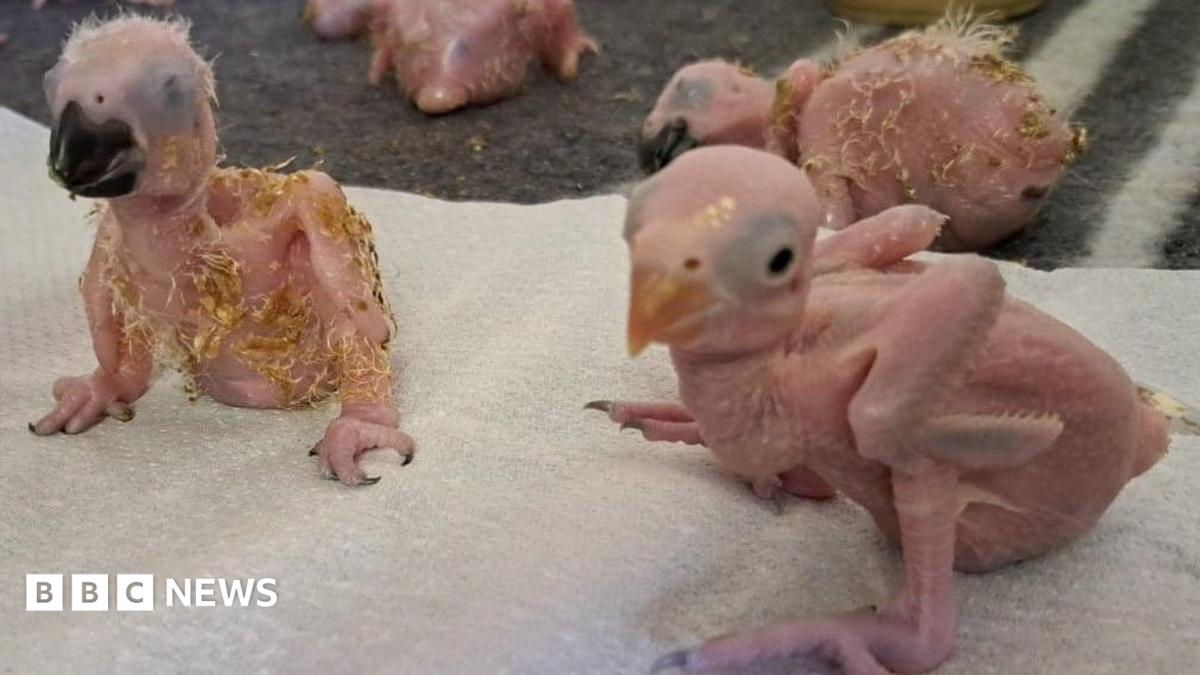
A 50-year-old Thai national was intercepted at Johannesburg airport with endangered parrot eggs in a homemade incubator; many have now successfully hatched.
- A 50-year-old Thai suspect was arrested at Johannesburg's OR Tambo International Airport.
- Approximately 50 endangered parrot eggs were found in a homemade incubator bag.
- Many eggs have successfully hatched and are under intensive care.
- The suspect faces up to 10 years in prison and massive fines.
In a remarkable turn of events, several endangered parrot eggs intercepted during a wildlife smuggling attempt at South Africa's main airport in Johannesburg have successfully hatched. The operation, which took place last Thursday, led to the arrest of a 50-year-old Thai national attempting to transport the eggs as hand luggage.
According to the Department of Forestry, Fisheries and the Environment (DFFE), the suspect utilized a "homemade incubator bag" to keep the eggs viable during transit. This sophisticated yet dangerous method highlights the growing risks posed to wildlife embryos by transnational criminal networks.
Why This Matters
BozokMedia analysis shows that wildlife trafficking is evolving from traditional methods to more improvised, technical setups to bypass customs. The use of homemade incubators underscores the desperation of traffickers to keep high-value, endangered species alive for the international black market, even at the cost of the animals' welfare.
Illegal wildlife trafficking can only be challenged by a co-ordinated defence of our natural heritage.
Environment Minister David Maynier praised the joint operation conducted by the DFFE, the specialized Green Scorpions enforcement unit, and local police. He specifically lauded the staff at the National Zoological Garden in Pretoria for their tireless efforts in providing specialized care to the newly hatched chicks to maximize their survival rates.
Historical Background
South Africa remains a critical hotspot for biodiversity, making it a prime target for illegal wildlife trade involving elephants, pangolins, and now, rare avian species. This incident follows a similar arrest in July, where a 23-year-old Thai citizen was caught with 418 parrot eggs. These recurring incidents have prompted the South African government to implement a multi-agency strategy to dismantle illicit trade networks.
Frequently Asked Questions
Question 1: What are the legal consequences for the smuggler?
Answer: If convicted, the suspect faces a fine of up to 10 million rand ($626,000) and/or up to 10 years in prison.
Question 2: Where are the hatchlings being kept?
Answer: The hatchlings are receiving intensive care at the National Zoological Garden in Pretoria, South Africa.


