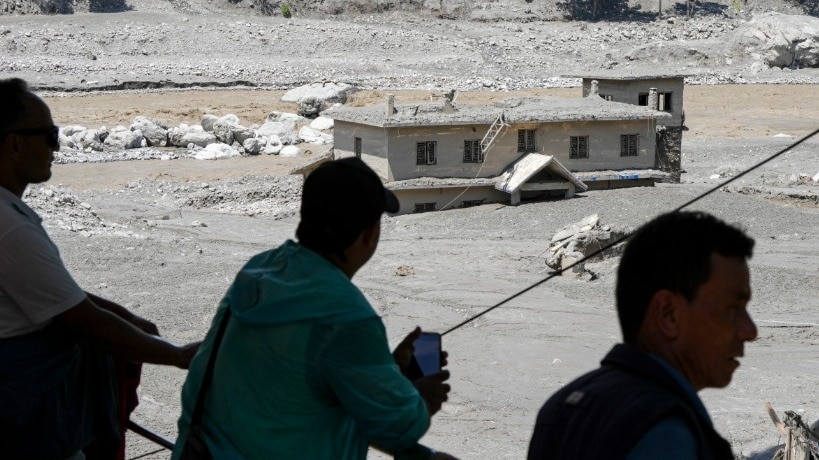
A new report warns that the Himalayas are warming twice as fast as the global average, threatening Nepal, India, and Tibet with catastrophic floods and avalanches.
- The Himalayan region is warming at twice the global average rate.
- Nepal has lost one-third of its ice cover in the last 30 years.
- Glacial melting accelerated by 65% between 2011 and 2020 compared to the previous decade.
- Human activities like hydropower dams are destabilizing fragile mountain slopes.
A recent scientific report has sounded a massive alarm regarding the impact of climate change on the Himalayan mountain range. The region is currently warming at twice the global average rate, creating a high-risk environment for Nepal, Tibet, and India. The rapid melting of glaciers is significantly increasing the frequency of devastating events such as avalanches, flash floods, and cloudbursts across the subcontinent.
The data regarding Nepal is particularly staggering. Over the last thirty years, the country has lost approximately one-third of its total ice cover. The acceleration is evident in the recent decade; between 2011 and 2020, glaciers disappeared 65% faster than they did in the preceding ten-year period. This rapid loss of ice threatens the long-term water security of the entire region.
Why This Matters
BozokMedia analysis shows that the Himalayan river systems are the lifeblood of South Asia. The instability of these glaciers doesn't just threaten local villages; it poses a systemic risk to the agricultural, economic, and hydroelectric stability of major nations like India. A sudden release of water from glacial lakes could lead to catastrophic downstream flooding on an unprecedented scale.
The accelerating melt rate in the Himalayas is no longer a future projection; it is a current reality that demands immediate transboundary policy intervention.
Out of more than 2,000 glacial lakes in Nepal, 21 have been classified as 'extremely dangerous.' The recent catastrophic flooding in the Bhote Koshi region serves as a grim reminder of this vulnerability. Interestingly, experts noted that recent tremors in the area were likely caused by avalanches rather than seismic activity, highlighting the physical instability of the terrain.
Beyond the direct impact of rising temperatures, anthropogenic factors are exacerbating the crisis. Unregulated construction and the proliferation of large-scale hydropower dams are weakening the already fragile mountain slopes. This combination of natural warming and human-induced structural instability is creating a perfect storm for natural disasters.
Frequently Asked Questions
Question 1: How does Himalayan melting affect India?
Answer: It affects the flow of major rivers like the Ganges and Brahmaputra, leading to initial flood risks followed by long-term water scarcity.
Question 2: What makes the glacial lakes in Nepal dangerous?
Answer: These lakes are formed by melting ice and can burst suddenly due to pressure or avalanches, causing massive flash floods downstream.