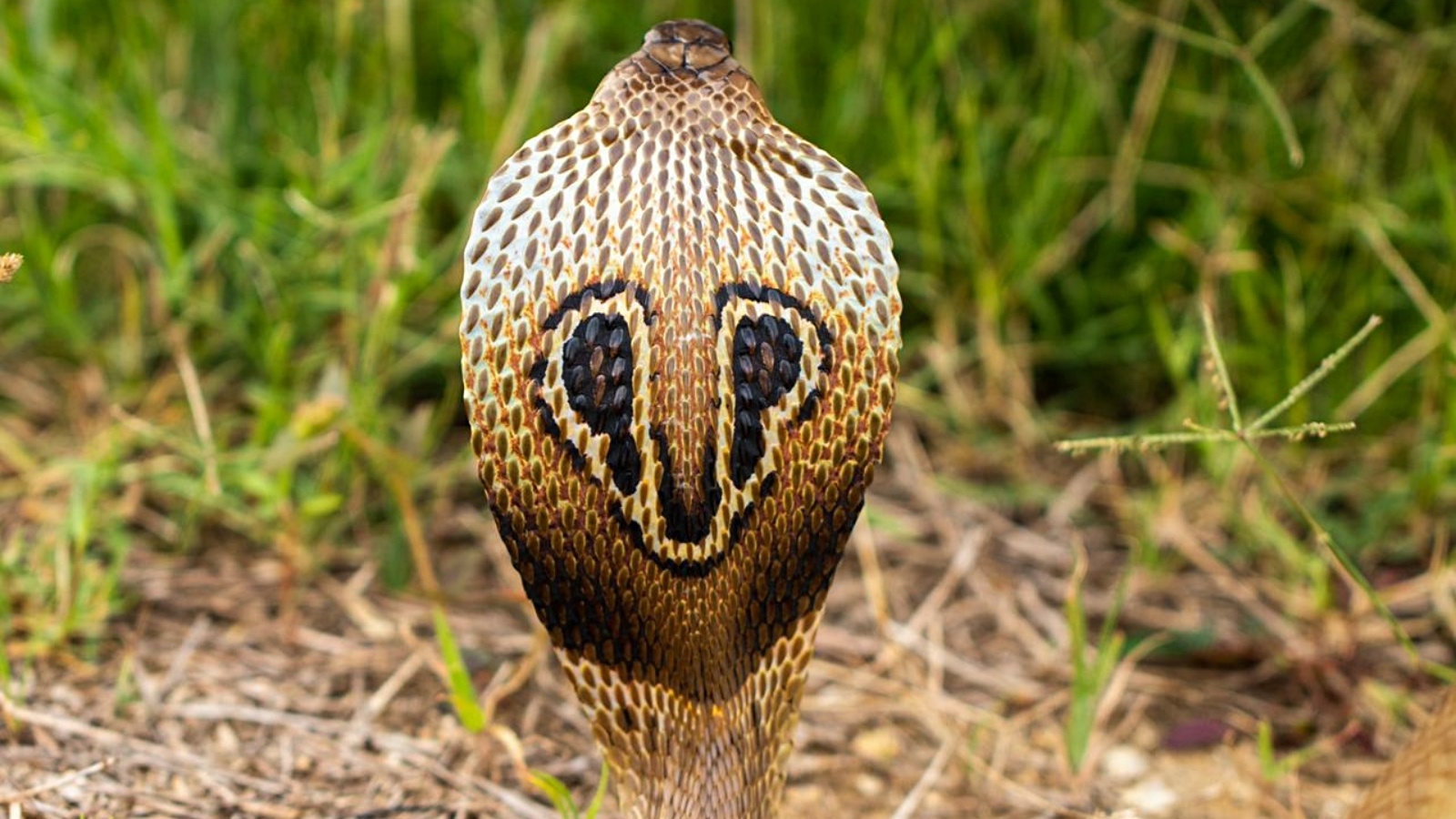
The Indian cobra (Naja naja) expands its hood when it feels threatened, making itself appear larger to deter potential aggressors. This article details the anatomical mechanism, purpose, and safety guidelines for encountering a hooded cobra.
- The cobra’s hood is a warning signal
- The hood forms by expanding neck ribs and skin
- Even with a hood, the snake may not strike immediately – keep distance
What Exactly Is the Cobra’s Hood?
The Indian cobra (Naja naja) lifts the front part of its body, spreads several neck ribs, and stretches the loose skin between them, creating a broad, unmistakable hood. According to The Journal of Experimental Biology, this is "an active lateral expansion of their neck skin and underlying musculature and ribs."
The Anatomy Behind the Display
Contrary to popular belief, the cobra does not possess a separate “hood” flap. The hood is simply the result of the ribs spreading apart, causing the narrow neck to transform into a wide, intimidating shape that is hard for any predator to ignore.
Why Does the Cobra Do It?
Primarily, the hood serves as a visual warning. By appearing larger, the cobra discourages predators or perceived threats from approaching, reducing the likelihood of a physical confrontation.
Does a Hooded Cobra Mean an Imminent Attack?
No. While hood expansion is part of the cobra’s defensive repertoire, it does not automatically precede a strike. Cobras usually prefer to hide or flee. However, if the threat persists, the snake may progress to striking, making it unsafe to corner or chase a hooded cobra.
Why This Matters
BozokMedia analysis shows that understanding the defensive behavior of venomous snakes like the Indian cobra can reduce human‑snake conflicts in densely populated regions, potentially saving lives and preserving biodiversity.
"The hood is a brilliant evolutionary adaptation that allows the cobra to avoid costly fights while still protecting its territory," Dr. Maya Patel, herpetology expert.
Frequently Asked Questions
What should I do if I encounter a hooded cobra? Keep a safe distance, do not provoke, and allow the snake an escape route.
Do all cobra species have the same hood pattern? No, hood size, color, and markings differ across cobra species, aiding in species identification.
