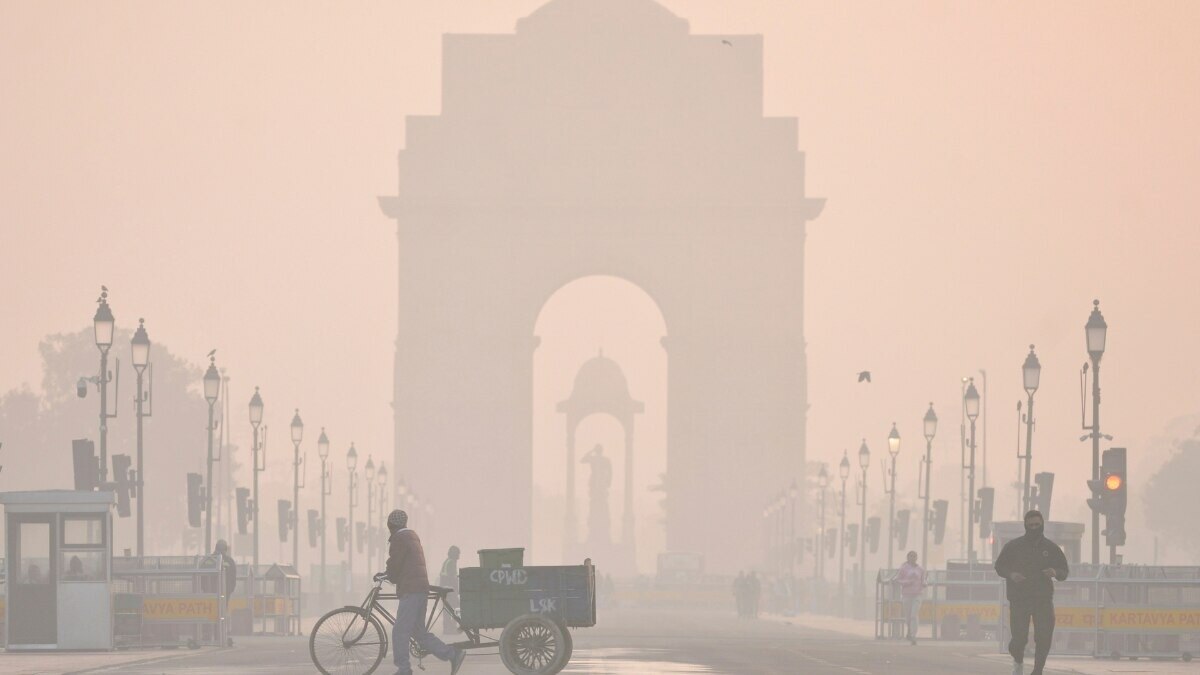
Despite facing hazardous air quality, Delhi has secured a higher rank than Srinagar and Bengaluru in the Centre's Swachh Vayu Sarvekshan 2026 due to its pollution-control implementation scores.
- Delhi secured 21st rank in the category of cities with over 10 lakh population.
- The survey rewards pollution-control efforts and implementation rather than just air quality.
- Lucknow emerged as the top-ranked city in the million-plus category.
- Srinagar and Bengaluru ranked 26th and 32nd, respectively.
In a surprising turn of events, Delhi, a city frequently plagued by toxic smog and hazardous air quality, has ranked ahead of cities like Srinagar and Bengaluru in the Centre's Swachh Vayu Sarvekshan 2026. While the national capital's Air Quality Index (AQI) often breaches the 'severe' category, its administrative measures have earned it the 21st position among cities with populations exceeding 10 lakh.
The Union Environment Ministry's survey operates on a unique metric. Unlike standard AQI reports, this assessment evaluates cities based on their proactive measures to combat pollution. Key parameters include road-dust control, solid-waste management, curbing vehicular and industrial emissions, and construction-waste management. This explains how a city with high particulate matter can outscore cities with cleaner ambient air.
Why This Matters
BozokMedia analysis shows that these rankings highlight a critical distinction between environmental reality and administrative compliance. While Delhi's PM2.5 and PM10 levels remain significantly higher than national standards, the documented implementation of the National Clean Air Programme (NCAP) protocols has bolstered its official standing.
The gap between administrative scoring and actual breathable air remains the most significant challenge for Indian urban planning.
The rankings saw Lucknow taking the top spot with 198 points, narrowly defeating Indore. Patna performed exceptionally well, securing the 16th rank with 178 points. In contrast, Bengaluru struggled, landing at 32nd place with a score of 152.6, while Srinagar followed at 26th.
Historical Background
Delhi's battle with air pollution is a perennial crisis. During the 2025-26 winter season, air quality deteriorated so sharply that authorities had to invoke Stage IV of the Graded Response Action Plan (GRAP). Despite being described as one of Delhi's 'best' years for pollution since the pandemic, the annual average concentrations of PM10 and PM2.5 still vastly exceed the safety limits set by the Ministry.
| City | Rank (10L+ Pop) | Score |
|---|---|---|
| Lucknow | 1 | 198 |
| Patna | 16 | 178 |
| Delhi | 21 | 172 |
| Srinagar | 26 | 162.6 |
| Bengaluru | 32 | 152.6 |
Frequently Asked Questions
Q1: Why did Delhi rank higher than cleaner cities?
A: The ranking is based on the implementation of pollution control measures and management strategies, not just the current AQI levels.
Q2: Which city topped the list in 2026?
A: Lucknow topped the million-plus population category in the Swachh Vayu Sarvekshan 2026.

