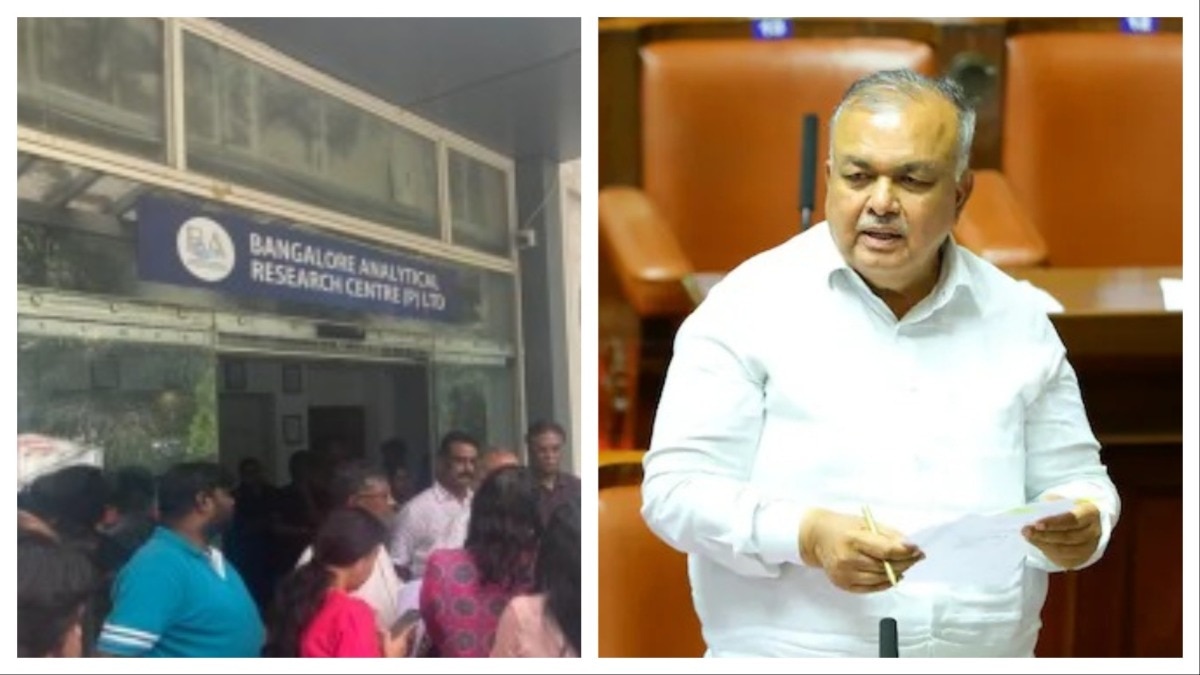
A surprise inspection by Karnataka Minister Ramalinga Reddy at a private environmental laboratory in Bengaluru has exposed massive discrepancies, including data tampering, expired permits, and improper waste disposal.
- Data discrepancies and suspicious analysis reports found in a private lab.
- Operating without valid KSPCB consent; establishment permit expired in 2025.
- Improper waste disposal via open pits instead of managed systems.
- Significant gaps between CPCB standard rates and laboratory charges.
Bengaluru: Karnataka Minister for Forest, Ecology, and Environment, Ramalinga Reddy, has ordered a high-level investigation into a private environmental testing facility, 'Bengaluru Analytics and Research Laboratory Private Limited,' following a surprise inspection. Accompanied by senior officials from the Karnataka State Pollution Control Board (KSPCB), the minister uncovered a series of regulatory violations and operational lapses.
The inspection revealed that while the laboratory had obtained permission from the Ministry of Environment, Forest and Climate Change (MoEF) based on the employment of three analysts, only one was actually present. The other two analysts had reportedly been absent for the last five months. Furthermore, the facility was operating without valid consent, as its 'Consent for Establishment' had expired in 2025.
Environmental Hazards and Waste Mismanagement
One of the most alarming findings was the laboratory's method of waste disposal. Instead of utilizing a scientific and regulated waste management system, the facility was allegedly discharging hazardous laboratory waste into an open pit, posing a severe risk to the local ecosystem and groundwater safety.
Minister Ramalinga Reddy stated that the laboratory's analysis reports are highly suspicious and warrant a complete investigation.
Why This Matters: BozokMedia Analysis
BozokMedia analysis shows that the financial discrepancies found during the inspection point toward a systematic attempt to undercut regulatory standards. The laboratory's billing for sample analysis showed massive deviations from the Central Pollution Control Board (CPCB) rate charts. For instance, while the CPCB rate for analyzing sewage treatment plant (STP) water samples is ₹5,000, the lab was charging only ₹1,000. Similarly, air pollution sampling for factories, which should cost ₹13,000 per CPCB guidelines, was recorded at a mere ₹650 at the facility.
The investigation also flagged discrepancies between field-collected noise-level data and the final figures presented in the laboratory's official reports, casting doubt on the integrity of their entire analytical process.
Historical Background
Environmental laboratories in India play a critical role in monitoring industrial compliance. Over the years, the integrity of these labs has been under scrutiny due to instances where falsified data helped polluting industries avoid penalties. This recent discovery in Bengaluru highlights the ongoing need for stringent oversight by state pollution boards.
Frequently Asked Questions
1. What were the primary violations found at the lab?
The primary violations included operating with expired permits, improper waste disposal, staffing shortages, and tampering with analytical data.
2. What is the next step for the Karnataka government?
The Minister has directed the KSPCB to conduct thorough inspections of all approximately 50 environmental laboratories operating across the state.


