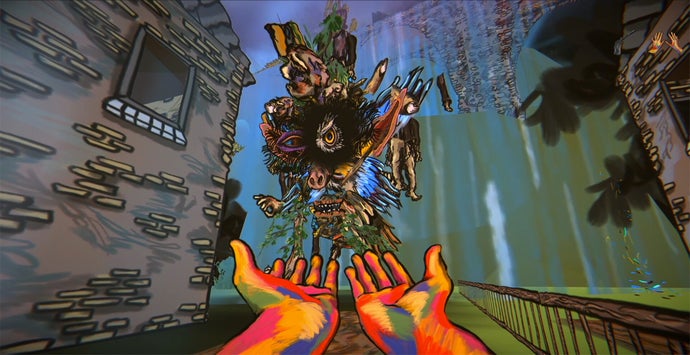
Indie title ‘Sketchy Fables’ lets players reshape the world with butterflies or shotguns, turning it brighter or darker. The game also relies on AI‑generated translations to reach a global audience.
Key Takeaways
- Hand‑drawn visuals react to player weapon choice
- Butterflies create beauty, shotguns breed darkness
- AI‑driven localization expands reach but varies in quality
‘Sketchy Fables’ is a first‑person explorathon where the method of killing determines the world’s aesthetic. Using homing butterflies brightens the environment, while shotguns slowly drape it in “dark layers filled with loss, decay, and the end of lives”. This duality is woven through hundreds of hand‑animated props that pulse like living art, making each encounter feel both charming and slightly unsettling.
The game also offers a “stickerbook” inventory filled with bizarre artefacts that can be battered against enemies. While the exact mechanic of turning inventory into weapons is not fully explained, it reinforces the game’s diegetic design philosophy—one the developer hopes to see in titles like *Kingdom Come: Deliverance 2*, where even menus are crafted from solid wood.
Historical Background
Indie development has long championed handcrafted aesthetics over big‑budget polish. Since the late 1990s, small studios have used hand‑drawn graphics to carve out unique identities, often sacrificing mainstream exposure for artistic freedom. In recent years, AI‑based translation tools have emerged as a cost‑effective solution for multilingual releases, but they bring concerns about consistency, cultural nuance, and reliance on potentially stolen data. ‘Sketchy Fables’ sits at this intersection, marrying artisanal visuals with machine‑generated localisation.
Why This Matters
BozokMedia analysis shows that the game’s mechanic of choosing beauty or darkness through weaponry subtly educates players about environmental impact and personal responsibility. When players opt for butterflies, they witness an immediate visual uplift, reinforcing positive feedback loops that could translate to real‑world awareness.
Simultaneously, the use of AI for localisation democratizes access, allowing a solo developer to reach audiences across continents. However, the trade‑off in translation fidelity highlights a broader industry dilemma: how to balance speed and cost with cultural authenticity.
“The marriage of hand‑crafted visuals and AI‑driven translation marks a pivotal moment for indie game innovation.”
Comparison Table
| Aspect | Hand‑crafted Localization | AI‑Generated Localization |
|---|---|---|
| Quality | High, culturally nuanced | Variable, occasional errors |
| Speed | Slow | Fast |
| Cost | Expensive | Low |
Frequently Asked Questions
Q1: Will ‘Sketchy Fables’ be available on consoles?
A1: Currently only a PC demo is released on Steam; a full launch may include console ports.
Q2: How reliable is the AI‑generated translation?
A2: The developer admits occasional inconsistencies across languages, but considers broader accessibility a net positive.