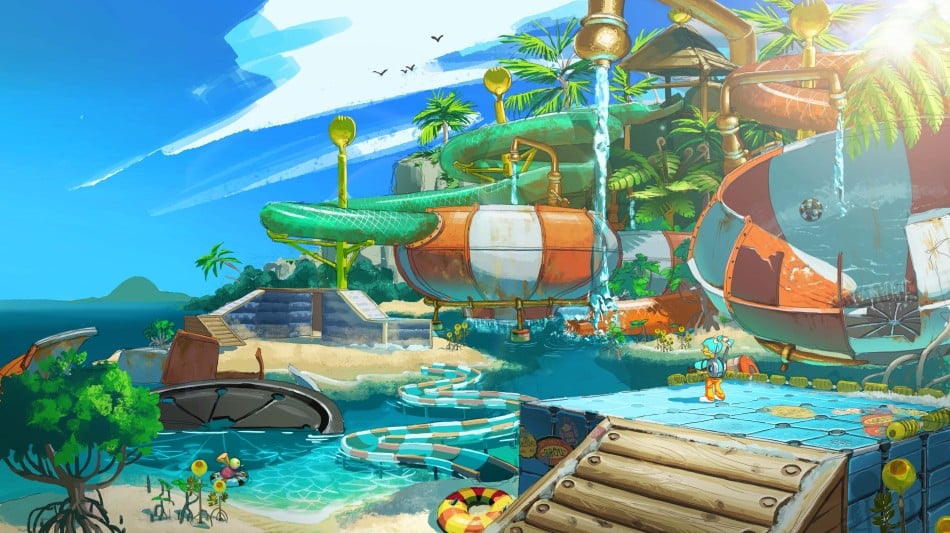
Nintendo developers reveal that the early prototype of Splatoon Raiders caused players to feel sympathy for the Salmonids, leading to a moral crisis in game design.
Key Takeaways
- Early Splatoon Raiders prototypes felt overly aggressive and predatory.
- Players expressed deep sympathy for the 'Salmonids' characters.
- Developers felt they were playing the role of the 'bad guys' during testing.
- This feedback led to a significant shift in the game's moral design.
The development of Nintendo's iconic Splatoon franchise is filled with fascinating pivots, but none quite as ethically complex as the early stages of Splatoon Raiders. According to recent developer insights, the initial prototype of the game created an unintended psychological effect: instead of feeling like heroes or competitors, players felt like common criminals.
The core issue lay in the interaction between the players and the Salmonids, the game's signature non-player characters. The early mechanics involved attacking the Salmonids and forcibly seizing their most cherished treasures. The feedback from testers was immediate and striking—instead of excitement, they felt pity. The recurring sentiment was, "Poor Salmonids!"
Why This Matters (इसके मायने क्या हैं)
BozokMedia analysis shows that this development pivot is a masterclass in player psychology. In modern gaming, the line between 'fun combat' and 'unethical behavior' is thin. If a player feels genuine guilt for their actions in a game, it can break the immersion and create a negative emotional association with the brand.
For the industry, this highlights the importance of 'empathy-driven design.' By listening to players who felt like they were 'basking in spoils' at the expense of others, Nintendo was able to refine the game's tone, ensuring that the combat felt competitive and thrilling rather than predatory and cruel.
"The transition from a 'looter' mentality to a 'competitor' mentality is what ultimately saved the game's emotional core."
Historical Background
Splatoon has revolutionized the shooter genre by replacing bullets with ink. Since its debut, the series has focused on a vibrant, post-apocalyptic world inhabited by anthropomorphic sea creatures. The Salmonids have long been a staple of the series, often appearing in the chaotic 'Salmon Run' mode. Understanding the evolution of these characters is key to understanding how Nintendo balances high-stakes action with a world that players actually want to inhabit.
| Aspect | Early Prototype | Final Version |
|---|---|---|
| Player Identity | Aggressive Raiders/Villains | Competitive Inklings/Octolings |
| Salmonid Role | Victims of theft | Challenging adversaries |
| Emotional Tone | Guilt and Predation | Excitement and Competition |
Frequently Asked Questions (अक्सर पूछे जाने वाले प्रश्न)
Question 1: Why did players feel bad for the Salmonids?
Answer: Because the early game mechanics focused on forcibly taking their treasures, making the players feel like thieves.
Question 2: Did this change the final game?
Answer: Yes, it led the developers to rebalance the gameplay to ensure players felt like adventurers rather than villains.