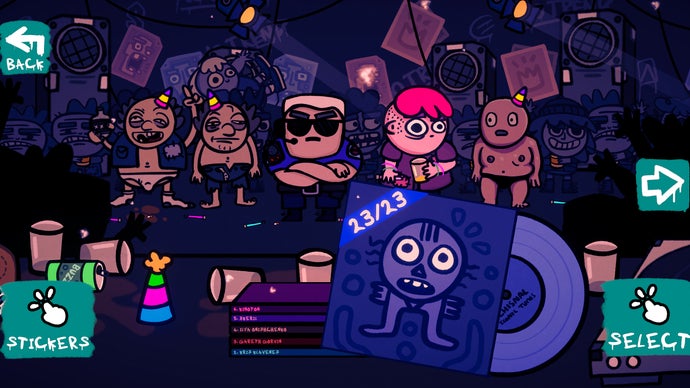
Club Soko reimagines the classic Sokoban block-pushing mechanic within the chaotic, neon-lit setting of a nightclub. It combines challenging spatial puzzles with a unique, cartoonish aesthetic.
Key Takeaways
- Reimagines classic Sokoban mechanics in a vibrant nightclub setting.
- Features a distinct, dark cartoonish art style with felt-pen outlines.
- Introduces character-based obstacles like bouncers and metallers to increase complexity.
- Offers hidden levels and secret exits for exploration enthusiasts.
Sokoban games have long been known as some of the most fiendishly difficult spatial puzzles, traditionally centered around moving crates in a warehouse. However, the latest iteration, Club Soko, shifts the setting to a dark, sticky, and wonderfully chaotic nightclub. This inspired choice of location transforms a sterile grid into a living, breathing environment.
The presentation of Club Soko is nothing short of masterful. Using goofy cartoon characters with thick felt-pen outlines, the game creates an atmosphere that feels both oppressive and exhilarating. As you navigate through various dance floors, you can almost hear the thud of music echoing through the walls, pulling you deeper into the complex through trap doors and hidden hatches.
Why This Matters
BozokMedia analysis shows that the success of Club Soko lies in its ability to use personification to simplify complex mechanics. In most Sokoban games, players struggle to remember the functions of different grid elements. By turning obstacles into characters—such as bouncers who push you away or metallers who collide with you—the game makes its rules intuitive and memorable.
Club Soko breathes new life into a decades-old genre by replacing cold logic with sweaty, rhythmic energy.
The gameplay requires intense strategic planning. Because you can push obstacles but never pull them, players must often work backward from the exit hatch. Navigating a crowd of unpredictable dancers, where one person might grab you and move you left while another rushes you across the screen, provides a level of kinetic tension rarely seen in the puzzle genre.
Historical Background
The Sokoban genre originated in the 1980s, focusing on the fundamental challenge of logistics and spatial management. While many modern versions have attempted to update the graphics, few have successfully overhauled the entire thematic experience as effectively as Club Soko does by moving from the warehouse to the dance floor.
Frequently Asked Questions
1. Is Club Soko difficult for beginners?
While it can be challenging, the compact level design helps prevent players from feeling overwhelmed.
2. Are there secrets to find in the game?
Yes, players can find secret exits by navigating through the crowd to reach hidden levels.
.png?width=690&quality=85&format=jpg&auto=webp)