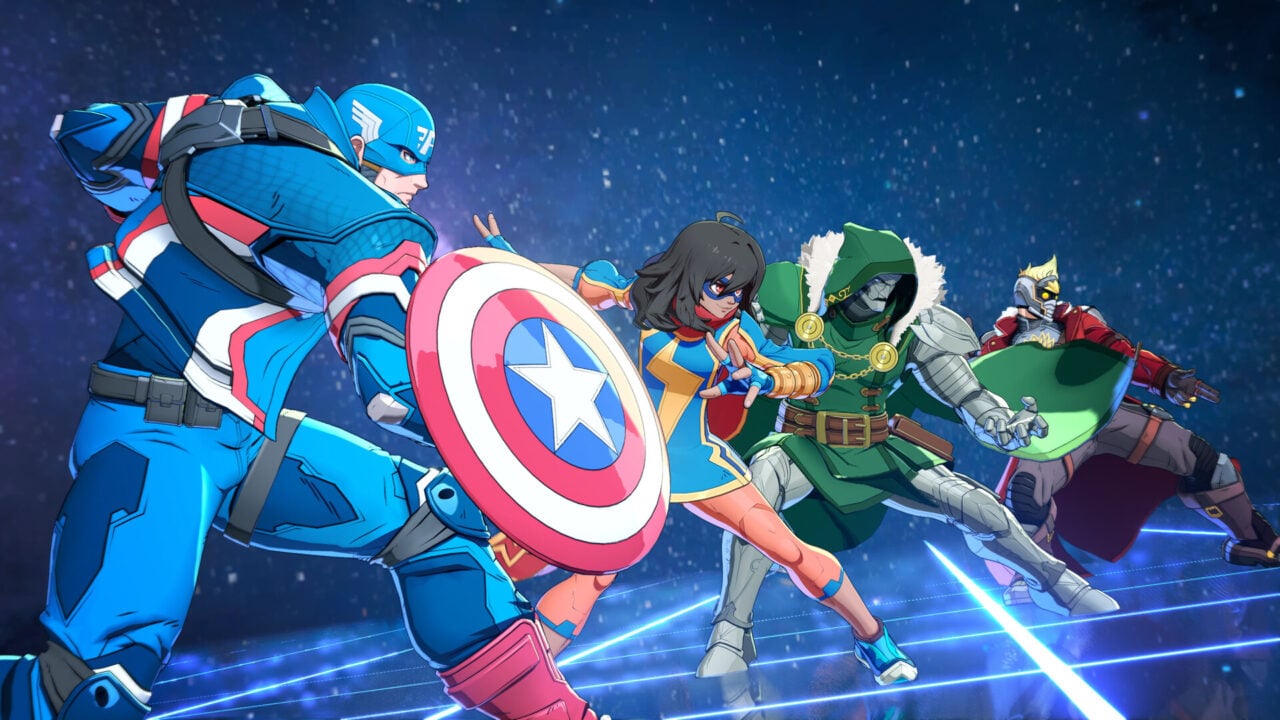
A massive controversy has erupted as reports suggest the cracked version of Marvel Tōkon: Fighting Souls offers significantly smoother gameplay than the official Sony release. The discrepancy is being linked to heavy-handed anti-cheat software.
- Cracked versions utilize significantly less CPU power than the retail version.
- Heavy DRM and anti-cheat layers are identified as the primary cause of performance issues.
- Users report stable 60fps on pirated copies compared to stuttering on official copies.
The PC port of Arc System Works and Sony’s highly anticipated Marvel Tōkon: Fighting Souls has been mired in controversy due to subpar performance. However, a startling development has emerged: a cracked version of the game has surfaced online, and early testers claim it performs drastically better than the legitimate retail version.
The CPU Discrepancy
Technical data shared by users on X (formerly Twitter) highlights a massive gap in resource consumption. User JustinSGX reported that while the retail version of the game consumed over 57% of their i7 6700K CPU, the pirated version required only about 34%. The root cause appears to be the complex encryption process used by the official version, which decrypts game data in 64kb chunks on a single CPU core in real-time.
This constant decryption process creates a massive bottleneck, leading to the frame rate drops and sluggishness that have frustrated the community since launch.
Why This Matters
BozokMedia analysis shows that this situation presents a paradoxical crisis for the gaming industry. When anti-piracy measures, such as Sony’s SDK runtime applications and aggressive anti-cheat software, actively degrade the experience for paying customers, it undermines the very purpose of digital rights management.
The heavy reliance on real-time decryption and kernel-level anti-cheat is turning a high-end fighting game into a resource-heavy struggle.
Prominent members of the fighting game community have corroborated these findings. Content creator ShaudL noted that the memory usage dedicated purely to anti-cheat is staggering, while user bar_barXII highlighted that the unofficial version runs a flawless 60fps, whereas the retail version struggles to maintain 45fps even at lower resolutions.
Historical Context
This is not an isolated incident in gaming history. Historically, high-profile titles protected by intrusive DRM, such as certain Denuvo-protected games, have often seen better performance in their cracked counterparts, sparking ongoing debates about the balance between security and usability.
Frequently Asked Questions
Question 1: Why is the official version lagging?
Answer: It is likely due to the intense CPU overhead caused by real-time decryption and multiple layers of Sony's anti-cheat software.
Question 2: Has Sony addressed the performance issues?
Answer: While ArcSys released a patch recently, the community suggests that the underlying DRM architecture remains the core problem.