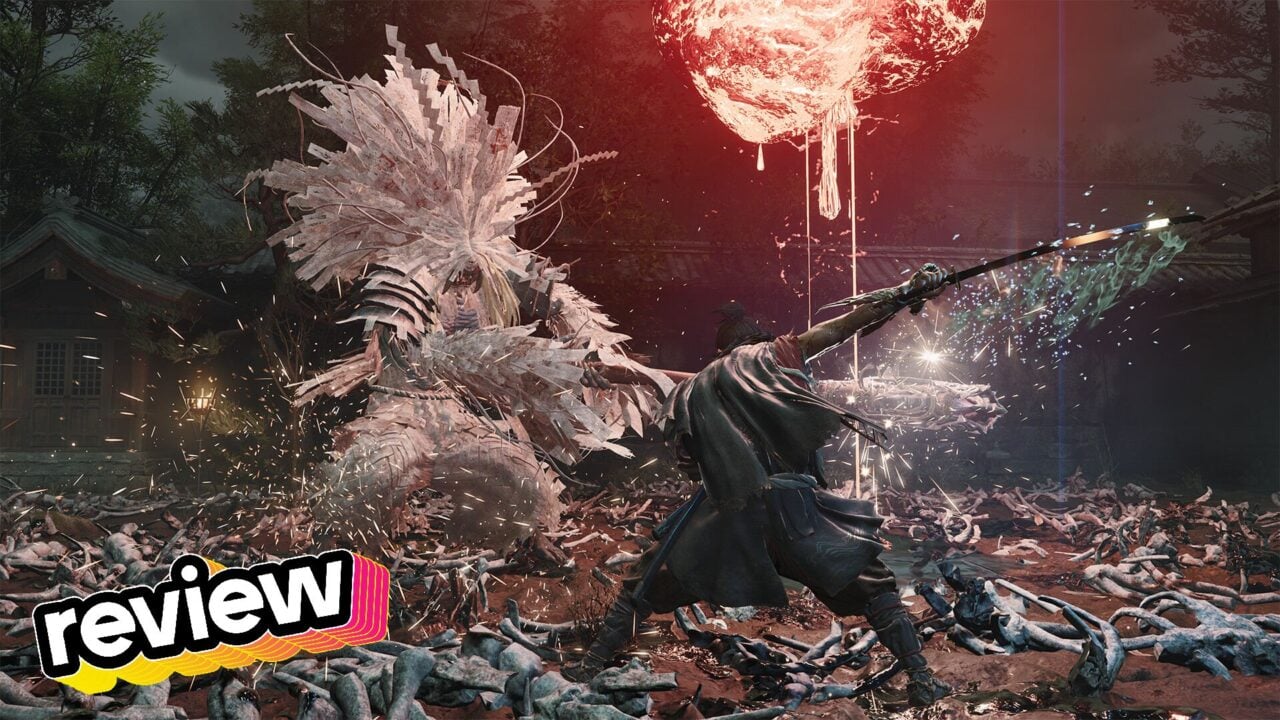
Capcom attempts to revive the cult classic Onimusha series with 'Way of the Sword,' blending cinematic ambition with modern open-world tropes. However, the result is a conflicting experience that strips away the series' core identity in favor of current trends.
- Revival of the Onimusha franchise after 20 years with a focus on Miyamoto Musashi.
- Retains the iconic 'Issen' counter mechanic but replaces traditional survival-horror design with an open world.
- Praised for challenging boss encounters but criticized for bland storytelling and clunky mob fights.
Capcom has long navigated the delicate balance between innovation and nostalgia. With Onimusha: Way of the Sword, the developer attempts to resurrect a franchise that served as the missing link between the spatial tension of Resident Evil and the high-octane action of Devil May Cry. After a two-decade hiatus, the series returns not as a focused experience, but as a sprawling cinematic odyssey.
The game leans heavily into its tradition of 'digital Jidaigeki,' employing the likeness of the legendary Toshiro Mifune to portray the warrior-poet Miyamoto Musashi. While this adds a layer of prestige and cinematic legitimacy, the game struggles to reconcile its historical roots with modern gaming expectations. Where the original titles focused on resource management and deliberate movement, Way of the Sword opts for a massive open world filled with side missions and incremental RPG upgrades.
Why This Matters
BozokMedia analysis shows that Capcom is currently in a phase of 'franchise experimentation,' attempting to see which legacy IPs can be scaled into the 'Live Service' or 'Open World' era. By stripping Onimusha of its restrictive design—the very thing that made it unique—Capcom risks turning a specialized action-horror hybrid into a generic open-world brawler. The tension between the rigid 'Issen' parry system and the fluid, magnetic movement of modern combat creates a jarring dissonance.
The tragedy of Way of the Sword is that it keeps the soul of the combat (the Issen) but discards the body that made that soul necessary.
The combat remains the centerpiece. The 'Issen'—a perfectly timed counter-attack—is still present and satisfying. However, the risk/reward dynamic has shifted. In the original games, positioning was everything. In the new entry, heavy lock-on magnetism and tracking make movement almost irrelevant during one-on-one encounters. To compensate for this loss of depth, Capcom has introduced five different timing-based reaction mechanics, which often feel like clutter rather than evolution.
While the boss fights are highlights—pushing players to master strict mechanics in high-stakes duels—the 'mob fights' feel misplaced. The rigid, parry-heavy system does not translate well to fighting groups of enemies in an open environment. Coupled with a narrative that fails to provide a strong emotional hook, the game often feels like a collection of great ideas that don't quite fit together.
| Feature | Classic Onimusha | Way of the Sword |
|---|---|---|
| World Design | Interconnected Spaces | Open World |
| Movement | Deliberate/Tank Controls | Magnetic Lock-on |
| Progression | Soul-based Resource Mgmt | Multi-currency RPG Upgrades |
| Combat Core | Issen Counter | Expanded Reaction Suite |
Frequently Asked Questions
Is Onimusha: Way of the Sword suitable for newcomers?
Yes, the open-world elements and RPG systems make it more accessible than the originals, though the combat difficulty remains steep.
Which platforms is the game available on?
It is available on PS5, Xbox Series X/S, PC, and the upcoming Switch 2.