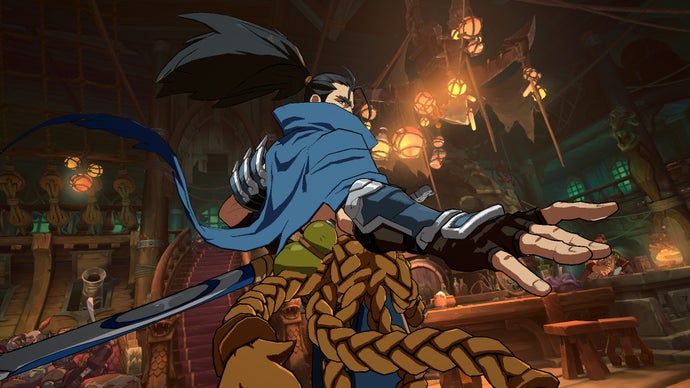
Riot Games CPO Marc Merrill has addressed the future of the studio's highly anticipated MMO, describing it as 'the grail' following the controversial end of development for 2XKO.
- Riot Games' upcoming MMO is internally referred to as 'the grail.'
- CPO Marc Merrill acknowledges the high risk and difficulty of the project.
- The announcement follows the sudden end-of-development for the fighting game 2XKO.
- The MMO is expected to release before the year 2030.
In a candid and intense discussion at Pax West 2026, Marc Merrill, co-founder and current CPO of Riot Games, shed light on the studio's most ambitious undertaking yet: their unannounced MMO (Massively Multiplayer Online) game. Describing the project as 'the grail,' Merrill emphasized the monumental scale and the inherent risks involved in bringing such a massive vision to life.
Merrill's comments came during a lengthy session with Greg Miller, where he touched upon both the studio's storied history and its uncertain future. "We know what players' hopes and dreams are," Merrill stated. "It's just on us as a team and as people to succeed in the execution. What a worthy quest. We jokingly call it the grail internally because we're like 'f*ck it, many a brave knight are going to die'." This metaphor highlights the studio's high-stakes approach to development.
Why This Matters
BozokMedia analysis shows that Riot Games is currently navigating a period of significant strategic recalibration. While titles like League of Legends remain juggernauts, the recent sunsetting of 2XKO and the struggles of Legends of Runeterra have created a crisis of confidence among the player base. The success of the upcoming MMO is not just about a single game; it is about validating Riot's ability to sustain long-term live-service ecosystems.
"Riot Games is attempting to pivot from being a genre-specific leader to a global platform powerhouse, but the cost of failure is higher than ever."
The announcement has met with a polarized reaction from the gaming community. On social media platform X, skepticism is rampant. Many players are questioning Riot's ability to maintain long-term support for new titles, especially after the sudden decision to end development on 2XKO. Critics argue that the 'optics' of shutting down a recently released game make it difficult to trust future promises of longevity.
Historical context is vital here. The MMO genre is dominated by titans like World of Warcraft and Final Fantasy XIV. For a new entrant to succeed, they must overcome massive barriers to entry. Interestingly, the Riot MMO project has seen leadership shifts, including the involvement of former Blizzard lead Greg Street, signaling that the studio is pulling out all the stops to ensure quality.
| Metric | 2XKO Status | Upcoming MMO Status |
|---|---|---|
| Development Stage | End-of-Service/Sunset | Active Development |
| Primary Genre | Fighting Game | MMO |
| Community Sentiment | Skeptical/Frustrated | Cautiously Optimistic/Skeptical |
Addressing the 2XKO situation, Merrill clarified that the game was not a 'mistake' but a casualty of an incredibly competitive market. He noted that in an era where thousands of games are released annually, capturing and sustaining 'critical mass' is an immense challenge. He assured fans that the intention to serve the fighting game community was sincere, even if the project didn't reach sustainability.
As Riot Games moves forward, the pressure is immense. They must prove they can build a world deep enough and a community strong enough to withstand the scrutiny of a global audience. Whether they find the 'grail' or fall victim to the 'brave knights' who die along the way remains to be seen.
Frequently Asked Questions
1. What is the current status of Riot's MMO?
The project is in active development, though no official name, concept art, or specific release date has been revealed yet.
2. Why did Riot Games stop development on 2XKO?
Merrill cited the extreme difficulty of competing for attention in the modern live-service market and the inability to reach a sustainable player base.