Marvel's Wolverine offers a refreshing take on Logan's personality but struggles to break free from the repetitive patterns of modern AAA action games. While the narrative experiments with an alternate universe, the gameplay feels like a throwback to older formulas.
- Strong, emotive characterization of Logan that deviates from the 'gruff loner' trope.
- Narrative set in an alternate universe featuring 'Team X' and the Essex Institute.
- Gameplay relies heavily on established PlayStation first-party formulas, leading to repetitiveness.
- Linear structure fails to provide the compactness needed to avoid a feeling of slog.
Marvel's Wolverine arrives with the heavy burden of expectation. For years, gaming enthusiasts have argued that Logan is the perfect candidate for a modern AAA title—possessing a built-in healing factor for gameplay longevity and a sensory suite for environmental navigation. However, the actual experience is a mixed bag of brilliant character writing and underwhelming mechanical execution.
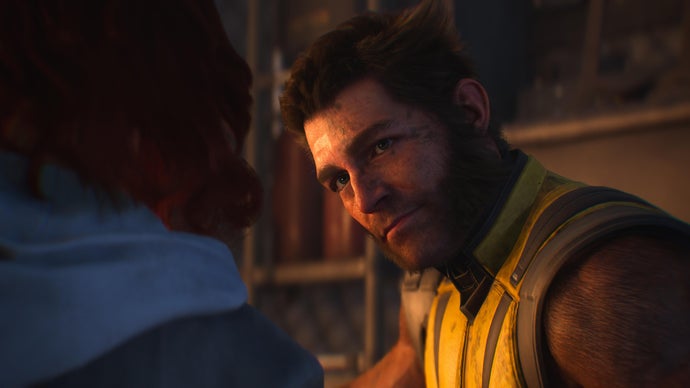
The game's most significant triumph is its portrayal of Logan. Rather than the typical crusty, battle-worn shell of a man, this version of Wolverine is openly vulnerable, emotive, and surprisingly kind. This deviation from the standard 'angry middle-aged man' trope breathes new life into the character, making him a charming protagonist who feels human despite his mutant abilities.
Why This Matters
BozokMedia analysis shows that the industry is currently suffering from 'formula fatigue.' Many Sony-developed titles have converged into a single design language: grapple hooks, skill trees, and rage meters. By sticking too closely to this blueprint, Marvel's Wolverine risks becoming indistinguishable from other prestige action games, proving that a great IP isn't enough to mask generic game design.
The narrative takes a bold leap by ignoring the traditional X-Men setup. Instead, players are introduced to Team X, led by the mysterious Nathaniel Essex (voiced by Troy Baker). The Essex Institute serves as a sanctuary for mutants, creating a poignant atmosphere of resistance against systemic persecution. While the themes of 'found family' are powerful, the plot remains broad and predictable for those familiar with the comics.
The tragedy of Marvel's Wolverine is that its most innovative element—the character's emotional depth—is trapped inside a gameplay loop that feels a decade old.
From a technical standpoint, the game avoids the bloated open-world trap by opting for a linear format. Unfortunately, this doesn't translate to a tighter experience. The game often feels like a slog, with repetitive encounters that remind the player how far the action genre has evolved since the 'old-school romps' this game seems to emulate.
| Feature | Traditional Wolverine | Game Version |
|---|---|---|
| Personality | Gruff, Isolated | Vulnerable, Kind |
| Affiliation | X-Men | Team X / Essex Institute |
| World Design | Comic/Movie Lore | Alternate Universe |
Frequently Asked Questions
Does the game feature the X-Men?
No, the game takes place in an alternate universe where the X-Men as a team do not exist, focusing instead on Team X.
Is the gameplay open-world?
No, the game utilizes a linear format, though it still incorporates some common modern action-adventure mechanics.