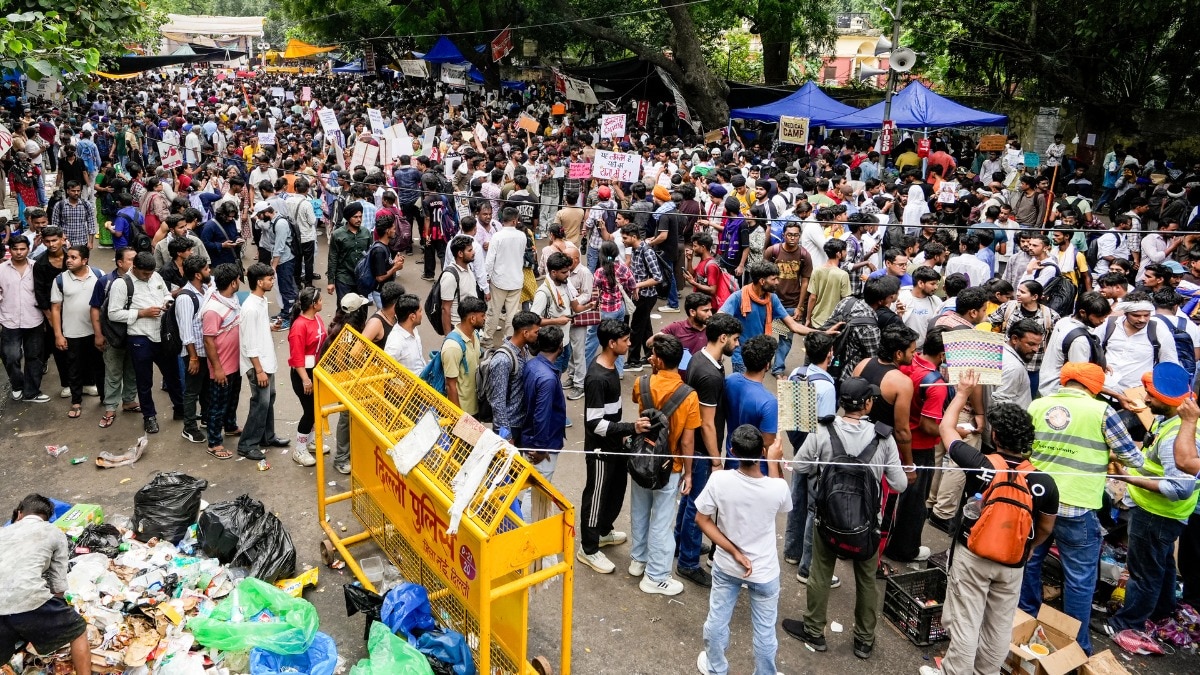
Delhi police have erected an iron‑sheet and nail barricade around Jantar‑Mantar, tightening security amid rising protests. The measure aims to curb unauthorized entry and protect the historic site.
Key Takeaways
- Iron‑sheet and nail barricade installed at Jantar‑Mantar.
- Police have heightened 24‑hour vigilance.
- Public and media reactions are intensifying.
In the past fortnight, Delhi Police deployed a robust barrier around Jantar‑Mantar after a spate of protests threatened public safety. The barricade consists of thick iron sheets, driven nails, and warning signage designed to prevent unauthorized access.
Historical Background
Jantar‑Mantar, built in 1724 as an astronomical observatory, has long been a focal point for social and political rallies. Since 2011, the site has witnessed numerous large‑scale demonstrations, some of which have escalated into security concerns, prompting continuous upgrades to its protective measures.
Barrier Specifications
| Component | Description |
|---|---|
| Material | 12 mm thick iron sheets with driven nails |
| Height | Approximately 2.5 meters |
| Surveillance | CCTV cameras and on‑duty officers 24/7 |
| Coverage | Main entrance and surrounding pathways of Jantar‑Mantar |
Why This Matters
BozokMedia analysis shows that such fortified barricades signal a shift in urban protest management, balancing civil liberties with heightened security demands. The move may set a precedent for other heritage sites facing similar challenges across India.
"Balancing security with civil freedoms is now the biggest test for policymakers," said security expert Dr. Anita Singh.
Frequently Asked Questions
Q1: Is the barricade temporary?
A: Police officials state the measure will remain until the security threat is clearly mitigated.
Q2: Can the public still visit Jantar‑Mantar?
A: General visitors are allowed through designated entry points, while restricted zones remain off‑limits.