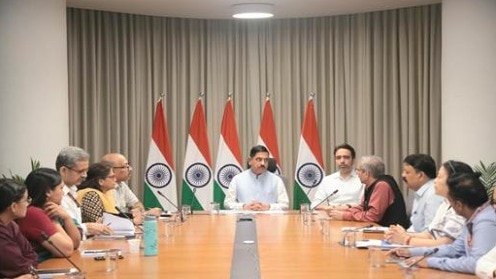
Union Minister Pralhad Joshi convened his first review meeting with senior Education Ministry officials, setting the agenda for major reforms. The session focused on policy priorities, implementation challenges, and a clear roadmap for the future.
Key Takeaways
- Pralhad Joshi led the inaugural review meeting
- Education reform priorities were defined
- A concrete implementation roadmap was drafted
Union Minister Pralhad Joshi chaired his first formal review with senior officials of the Ministry of Education today. The meeting aimed to assess progress on the National Education Policy (NEP) and chart the next steps for nationwide rollout.
Key discussion points included improving primary‑school quality, scaling digital learning, and boosting research in higher‑education institutions. Officials highlighted persistent hurdles such as teacher‑training gaps and inadequate infrastructure in rural areas.
Joshi asserted, “Our priority is to ensure every child receives quality education, whether in a city or a village. We will take decisive action to make this a reality.” He emphasized strengthening monitoring mechanisms and adopting data‑driven decision‑making at all levels.
Historical Background
India adopted the new National Education Policy in 2020, aiming to create a world‑class education system by 2030. While several state‑level initiatives have been launched, coordination gaps and delayed implementation have hampered progress. This first review meeting seeks to bridge those gaps.
Why This Matters
BozokMedia analysis shows that education improvements are directly linked to economic growth and social inclusion. The outcomes of this meeting will accelerate policy execution, giving India’s youth a stronger foothold in global competition.
"Sustained monitoring and localized execution are essential for education reforms to succeed," noted education expert Dr. Anita Sharma.
Frequently Asked Questions
Q1: What major decisions emerged from the meeting?
A1: Consensus was reached on expanding digital tools in primary schools, scaling teacher‑training programs, and increasing research funding for higher‑education institutions.
Q2: What are the next steps?
A2: Within the next two months, each state education department will submit a detailed action plan, and the central government will conduct quarterly reviews based on collected data.