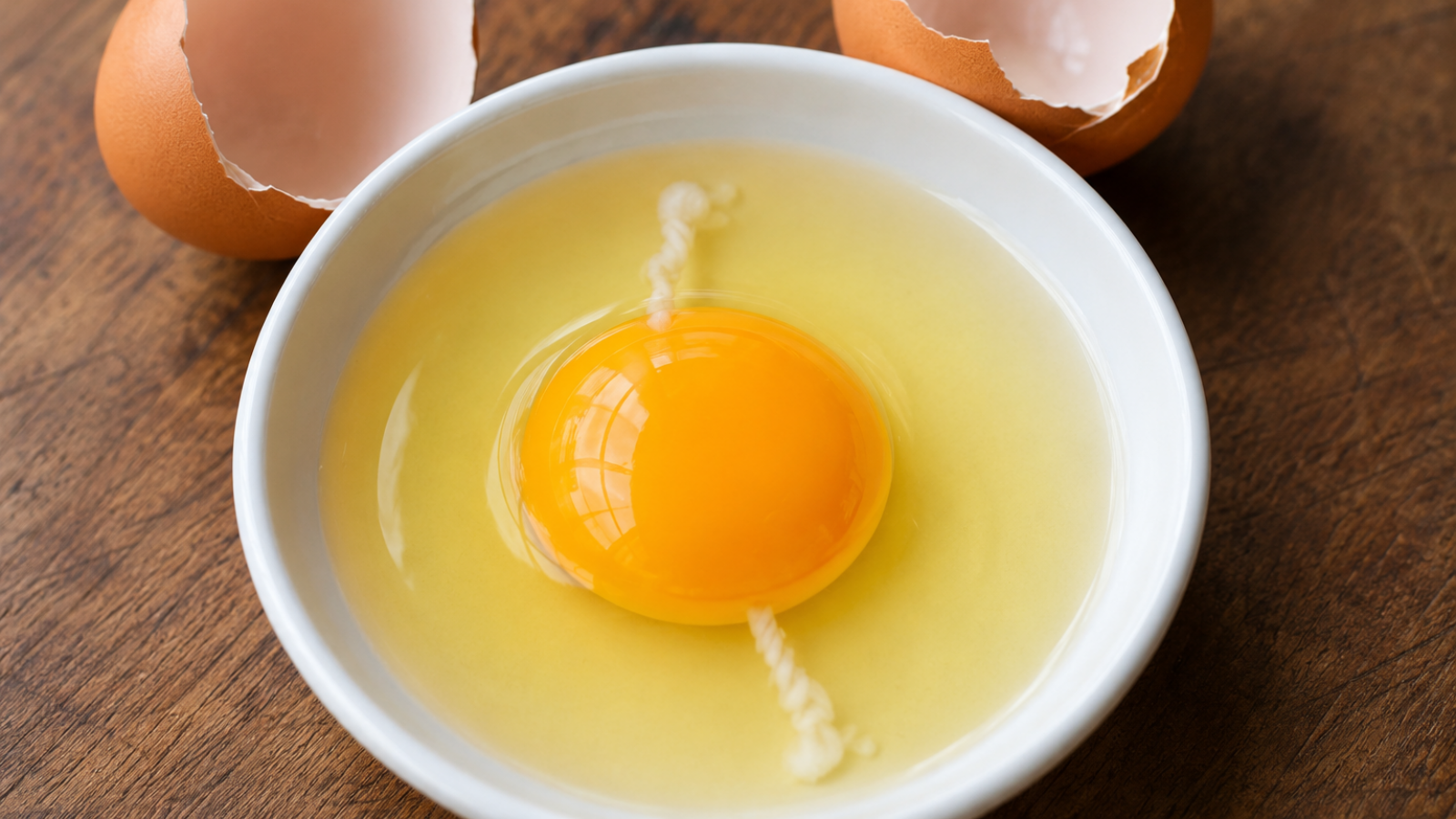
The white strand seen inside a cracked egg is the chalaza, a natural protein filament that keeps the yolk centered. Experts confirm it is completely safe to consume and often indicates the egg’s freshness.
मुख्य बिंदु (Key Takeaways)
- The chalaza is a natural part of the egg that anchors the yolk.
- It is safe to eat and does not alter taste or nutrition.
- A pronounced chalaza usually signals a fresh egg.
When you crack open an egg and spot a thin white thread attached to the yolk, many people assume something is wrong. That thread is the chalaza, a protein‑rich filament that functions as a tiny anchor, keeping the yolk centered within the albumen. According to Dr. Aarti Nath, a dietician at Paras Health, the chalaza is a normal, healthy component of the egg and poses no health risk.
Historical and Scientific Background
The chalaza was first described in the 19th century as scientists began dissecting egg anatomy. It consists of two twisted protein strands embedded in the egg white, designed to prevent the yolk from moving during handling and transport. Historically, eggs were prized not only as food but also for their supposed medicinal properties, and the chalaza was sometimes referenced as a symbol of “vital force.” Modern nutrition science confirms that the chalaza contains no harmful substances; instead, it helps preserve the egg’s structural integrity.
Indicator of Freshness
Egg freshness is traditionally assessed by floating tests or shell firmness, but the chalaza offers a visual cue: a fresh egg displays a clear, robust chalaza, while an older egg’s chalaza becomes weak and less visible. Therefore, spotting a distinct white strand often means the egg is relatively fresh, making it a handy, low‑tech freshness indicator for home cooks.
Food Safety and Nutritional Impact
From a safety standpoint, there is no need to remove the chalaza before cooking or eating. Dr. Nath emphasizes, “It is completely safe to consume and does not affect the taste or nutritional value of the egg.” The chalaza contributes marginally to the egg’s overall protein content, and its presence does not introduce any allergens or toxins.
Practical Tips for Consumers
The next time you notice a white string while cracking an egg, there is no reason to discard the egg or trim the filament unless you prefer a perfectly smooth texture for certain recipes. In fact, a visible chalaza can be taken as a sign of quality, confirming that the egg is fresh and structurally sound.

