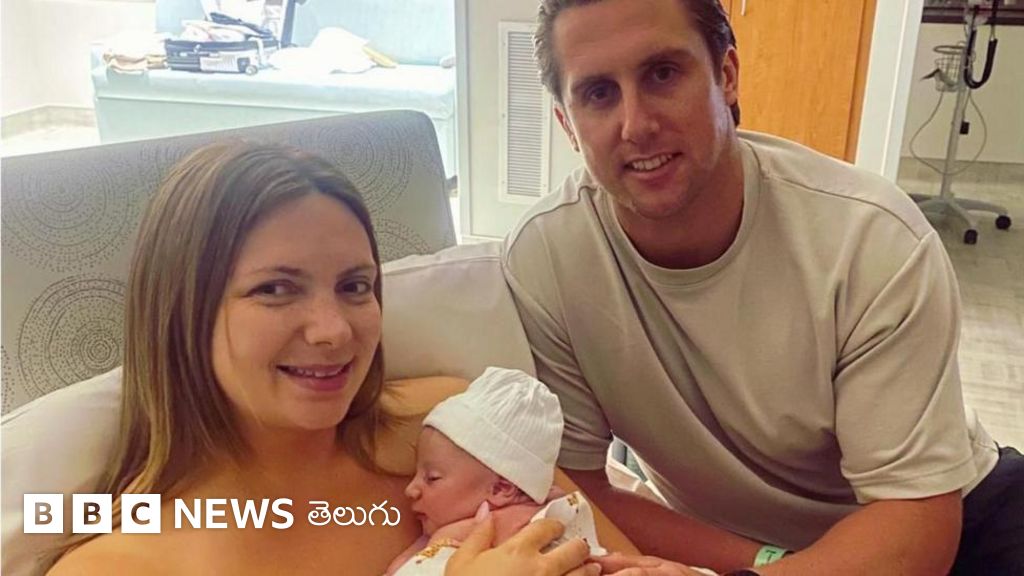
In a groundbreaking medical achievement, surgeons in the US successfully corrected a congenital defect in a fetus while still in the womb. The mother, Maisie Savage, safely delivered the baby three months after the procedure.
Key Takeaways
- Surgeons in the US successfully performed in-utero surgery on a fetus named Theo.
- The baby suffered from Gastroschisis, a condition where intestines protrude outside the abdomen.
- The procedure was part of a pioneering clinical trial led by Dr. Michael Belfort.
- The mother, Maisie Savage, experienced a successful natural delivery three months post-surgery.
In a stunning display of medical prowess, doctors have achieved a rare victory by correcting a congenital defect while the baby was still inside the womb. Maisie Savage, a resident of London, traveled to the United States when her 26-week-old fetus was diagnosed with a serious condition that required immediate intervention.
Why This Matters
BozokMedia analysis shows that this procedure marks a significant shift in fetal medicine. Traditionally, babies born with such defects face months in the NICU, multiple surgeries, and a high risk of mortality. By intervening in-utero, doctors are effectively bypassing the most critical and dangerous stages of early neonatal life.
This successful trial represents a paradigm shift in how we approach complex congenital anomalies.
The infant, Theo, was diagnosed with Gastroschisis, a condition where the intestines develop outside the abdominal cavity due to an underdeveloped umbilical area. A surgical team at Texas Children’s Hospital, led by Dr. Michael Belfort, utilized keyhole surgery to carefully reposition the organs back into the abdomen through a partial opening of the uterus.
Historical Background
Gastroschisis affects approximately one in every 3,000 infants in the UK. Historically, these infants required intensive care for weeks, tube feeding, and multiple corrective surgeries after birth, with a mortality rate of roughly 10% even with modern medical care. This new clinical trial aims to drastically improve those survival statistics.
Frequently Asked Questions
Question 1: What is Gastroschisis?
It is a birth defect where the baby's intestines extend outside of the body through a hole next to the belly button.
Question 2: How many babies have undergone this specific trial?
Theo is only the third child in the world to benefit from this specific clinical trial for gastroschisis.