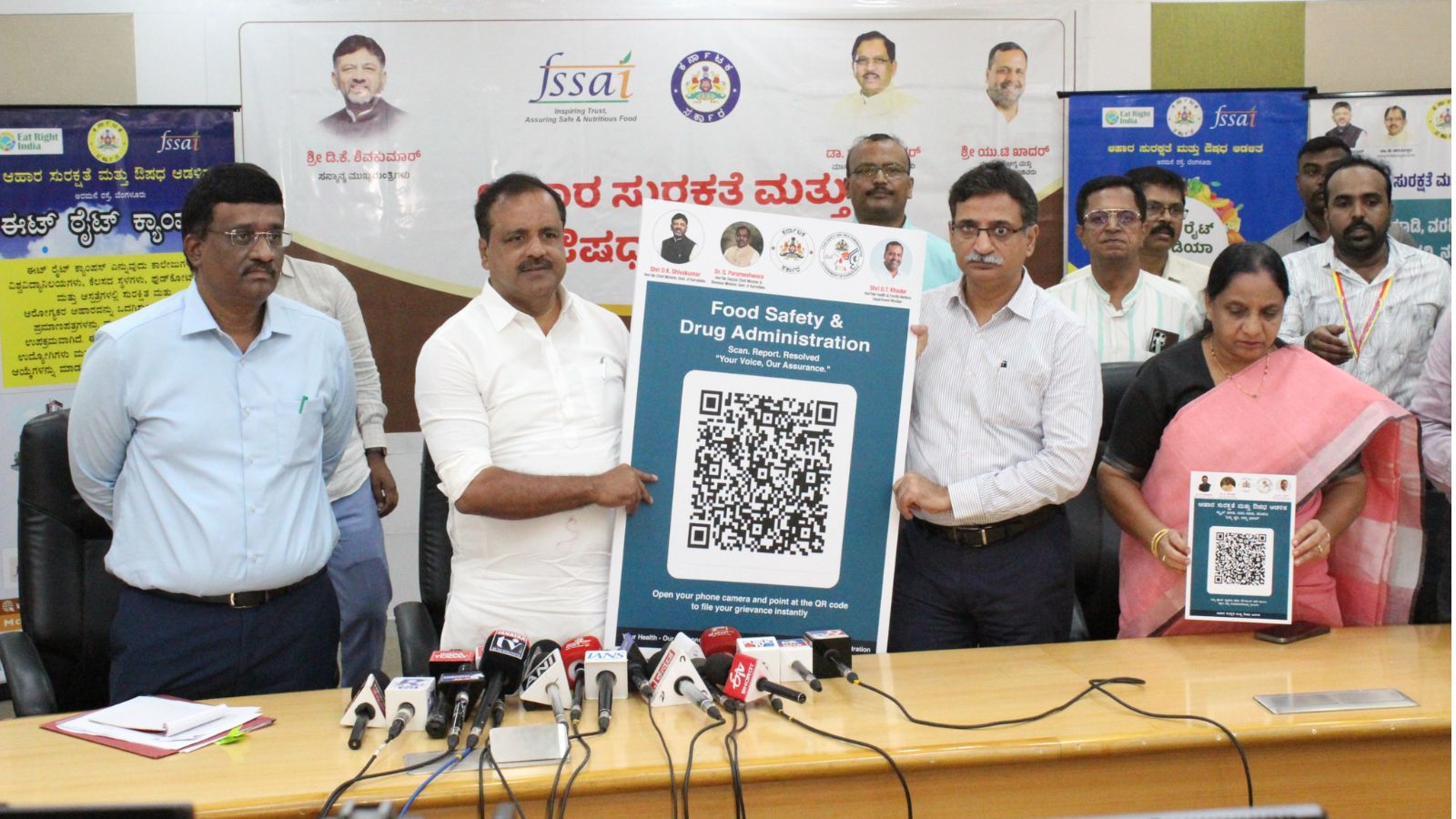
The Karnataka government has introduced the Integrated Public Grievance Redressal System (IPGRS), allowing citizens to instantly report food safety and drug violations via QR codes displayed at outlets.
- Karnataka launches India's first QR-based Integrated Public Grievance Redressal System (IPGRS) for food and drug safety.
- Citizens can report unhygienic food, expired medicines, and artificial colors by scanning codes at eateries and pharmacies.
- The state is planning to recruit senior citizens (60+) as volunteers to monitor safety violations.
In a pioneering move to safeguard public health, the Karnataka government has officially launched the Integrated Public Grievance Redressal System (IPGRS). Unveiled by Health Minister UT Khader in Bengaluru, this digital initiative empowers consumers to act as vigilantes against food adulteration and pharmaceutical malpractice. By simply scanning a QR code mandated for display at all eateries and drug stores, citizens can lodge real-time complaints regarding expired medications, overpriced drugs, or unsanitary food preparation.
The system is fully integrated with the government’s Centre for E-governance, ensuring that grievances are tracked and addressed systematically. Minister Khader emphasized that this is the first initiative of its kind in India, bridging the gap between regulatory bodies and the general public. The move comes at a critical time when the Food Safety and Drug Administration (FSDA) has been intensifying its crackdown on commercial establishments across the state.
Why This Matters
BozokMedia analysis shows that this transition from manual reporting to a QR-based system drastically lowers the barrier for public participation. By decentralizing surveillance, the government is effectively creating a 'citizen-led audit' of the food and drug industry. This not only increases the risk for unscrupulous vendors but also forces a higher standard of hygiene across both luxury and street-side establishments.
"Digital integration of public grievances is the only way to scale food safety monitoring in a rapidly urbanizing state like Karnataka."
The urgency of this system is highlighted by recent FSDA raids. In Bengaluru alone, inspections of over 60 three- and five-star hotels revealed shocking lapses. Officials seized 429 kg of spoiled mutton and chicken, 203 kg of fish, and 76 kg of moldy vegetables. Furthermore, the department found instances where vegetarian food was stored alongside non-vegetarian items, violating basic food safety protocols.
The scope of the crackdown extends beyond luxury hotels. The FSDA has inspected 629 Backward Classes hostels and 331 Social Welfare hostels, collecting over 2,400 samples. Additionally, 99 highway dhabas were fined a total of ₹3.67 lakh for various violations. A specific focus was placed on popular street foods like shawarma and kebabs, where several samples were found to be 'unsafe' due to the use of artificial colors and unhygienic handling.
To further strengthen the monitoring network, the government plans to involve experienced volunteers, particularly those aged 60 and above. This strategy aims to leverage the time and civic-mindedness of senior citizens to ensure that food and drug safety laws are upheld in their local neighborhoods.
| Sector | Inspection Volume/Action | Key Findings/Penalties |
|---|---|---|
| Luxury Hotels | 60+ Hotels | 429kg spoiled meat, 76kg moldy veg |
| Highway Dhabas | 99 Establishments | ₹3.67 Lakh in fines |
| E-commerce Warehouses | 236 Warehouses | 44 proceedings initiated; ₹1.97 Lakh fine |
| Hostels | 960+ Hostels | 2,400+ samples collected |
Frequently Asked Questions
Q1: Where can I find the QR codes to report violations?
The QR codes are mandated to be displayed prominently at all eateries, restaurants, and drug stores across Karnataka.
Q2: What specific issues can be reported through the IPGRS?
Users can report unhygienic food, use of artificial colors, expired or overpriced medicines, and adverse drug reactions.
