Gujarat's Food and Drugs Control Administration (FDCA) recently seized 700 kg of alleged adulterated red chutney in Palanpur, Banaskantha district. The Food Safety and Standards Authority of India (FSSAI) confirmed the action, with samples sent for laboratory analysis to determine the exact nature of adulteration and potential health risks. This incident highlights critical concerns regarding food safety, especially in the popular street food sector.
- Gujarat FDCA seized 700 kg of suspected adulterated red chutney from Palanpur.
- Samples are undergoing laboratory analysis to confirm adulteration and identify substances.
- Consumers are advised to look for proper labeling, FSSAI details, and avoid unhygienic sources.
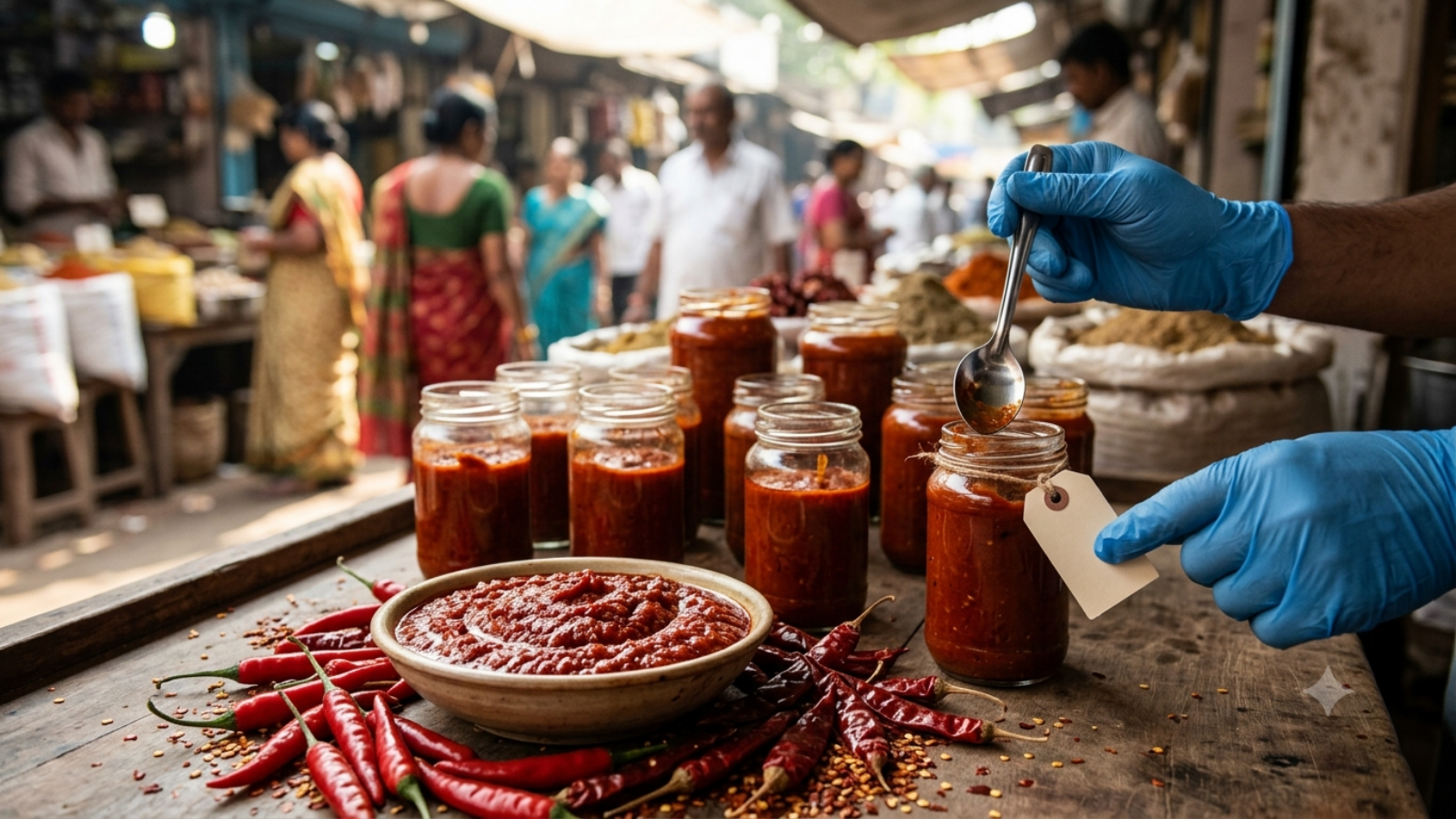
In a significant crackdown on food adulteration, the Gujarat Food and Drugs Control Administration (FDCA) recently confiscated a substantial quantity of red chutney, weighing approximately 700 kilograms, from a provision store located in Palanpur's bustling vegetable market in Banaskantha district. This large-scale seizure, involving 140 unlabeled jars each containing 5 kg of the condiment, valued at Rs 20,940, has sent ripples of concern through public health circles and among street food enthusiasts across the region.
The incident was swiftly acknowledged by the Food Safety and Standards Authority of India (FSSAI), which confirmed the seizure on its official X (formerly Twitter) handle. FSSAI stated that the "adulterated red chilli sauce" was confiscated during a targeted inspection drive, emphasizing that laboratory analysis is currently underway. Strict legal action is anticipated against those responsible, pending the conclusive results from these tests.
Red chutney is an indispensable component of India's vibrant street food culture, accompanying everything from momos and parathas to pakoras and chowmein. Its widespread consumption makes any threat of adulteration a serious public health issue. Dr. Shankar Zanwar, a senior consultant gastroenterologist at Gleneagles Hospital, Mumbai, highlighted common adulterants such as artificial colors (including potentially harmful Sudan dyes), non-food-grade coloring agents, starch, or other fillers. These substances are often added to enhance visual appeal, increase quantity, improve texture, or drastically reduce production costs.
Why This Matters
BozokMedia analysis shows that food adulteration remains a persistent challenge in developing economies, driven by economic motives and sometimes weak enforcement. This particular seizure in Gujarat underscores the ongoing vigilance required by regulatory bodies like the FDCA and FSSAI. The unlabeled nature of the seized product is a critical red flag, as it deprives consumers of vital information regarding ingredients, manufacturing details, and expiry dates, making it impossible to ascertain safety or origin. The potential health ramifications, ranging from acute gastrointestinal issues to long-term organ damage from industrial dyes, make this a significant public health concern.
While an unnaturally bright red color or unusual smell might raise suspicion, only comprehensive laboratory testing can definitively confirm food adulteration and identify the specific harmful substances involved.
Consumers often look for visual cues, such as an unnaturally bright or uniformly red color, as potential indicators of adulteration. Other suspicious signs include a chemical-like smell, a gritty texture, excessive oil separation, or an abnormal bitter or metallic taste. However, Dr. Zanwar cautions that these sensory observations, while helpful in raising suspicion, cannot reliably confirm adulteration. The scientific rigor of laboratory analysis is indispensable for definitive identification of adulterants and their concentrations.
The health risks associated with consuming adulterated food are varied and depend on the type and quantity of the substance ingested. Regular consumption of products containing non-permitted colors or unknown adulterants can lead to immediate symptoms like gastrointestinal irritation, nausea, vomiting, or abdominal discomfort. More alarmingly, repeated exposure to certain industrial dyes can have severe long-term effects, potentially impacting the liver and other vital organs, underscoring the gravity of such food safety breaches.
To safeguard against such risks, consumers are advised to exercise caution when purchasing food products. Key recommendations include avoiding chutney sold in unlabelled or unhygienic containers lacking manufacturer details, ingredients list, batch number, or expiry date. For packaged chutneys, it is crucial to check for a valid FSSAI license or registration details, intact and properly sealed packaging, and clear manufacturing and expiry information. Opting for products from reliable manufacturers or freshly prepared homemade options remains the safest choice.
Frequently Asked Questions
- What are the common signs of adulterated red chutney?
Common signs include an unnaturally bright red color, a chemical-like smell, a gritty texture, excessive oil separation, or an abnormal bitter/metallic taste. However, these are only indicators, and laboratory testing is required for confirmation. - What are the potential health risks of consuming adulterated chutney?
Health risks can range from immediate gastrointestinal irritation, nausea, and vomiting to more severe long-term effects like liver damage or other organ impairment, especially from repeated exposure to industrial dyes or non-permitted chemicals.