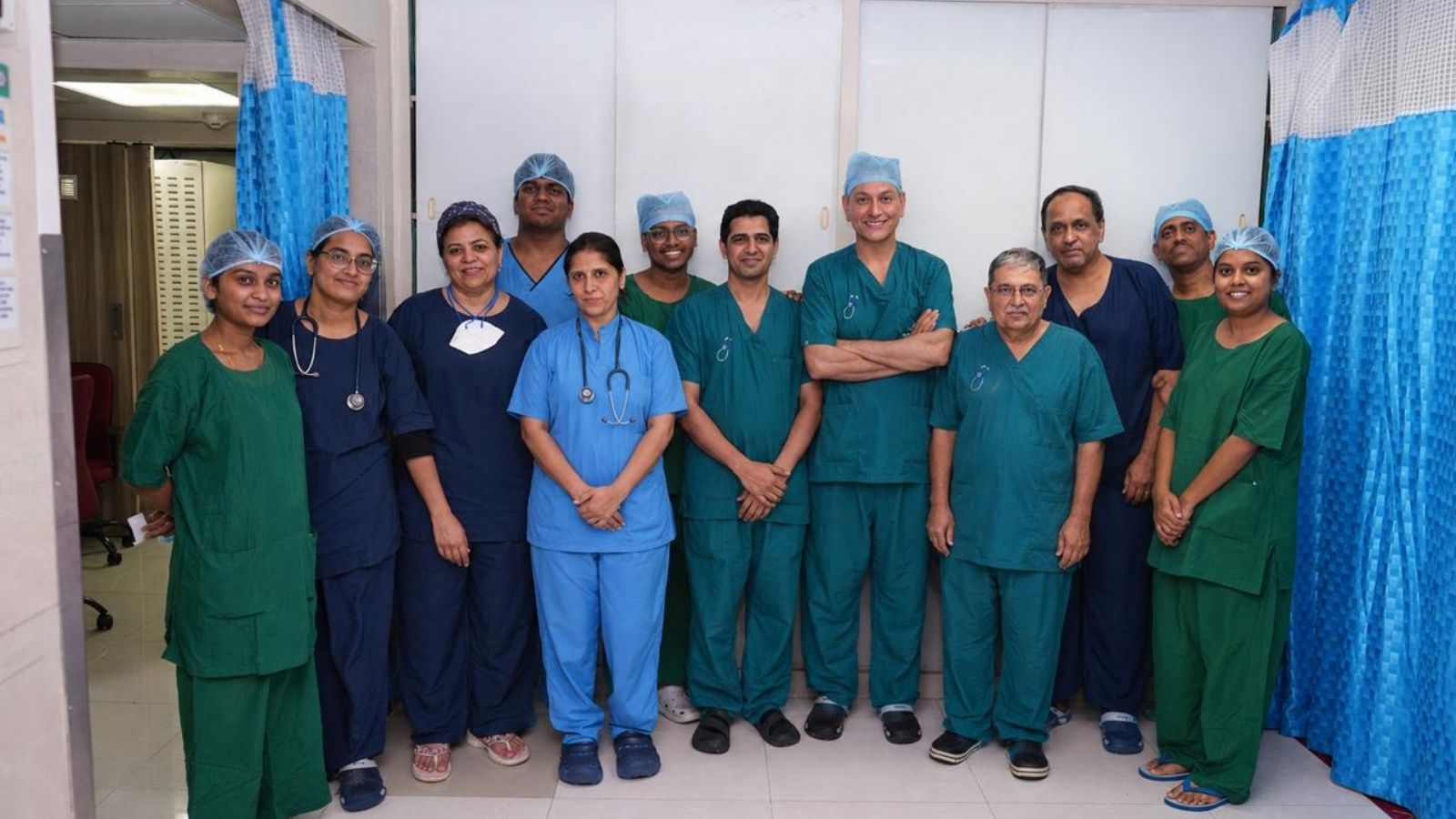
In a rare medical feat, doctors at Lilavati Hospital combined two advanced catheter procedures to treat atrial fibrillation and prevent stroke in a patient unable to tolerate blood-thinning medication.
- 77-year-old patient suffered from Atrial Fibrillation (AF) and severe bleeding risks.
- Doctors combined LAAO and PFA procedures in a single 90-minute session.
- Patient is now completely free from life-long blood-thinning medication.
For 77-year-old Jagdip Shah, a resident of Juhu, Mumbai, the very medicine intended to save him from a stroke had become a lethal risk. Having a history of heart failure following bypass surgery, Shah developed repeated episodes of atrial fibrillation (AF)—a condition characterized by an irregular and often rapid heart rate. While blood thinners are the standard treatment to prevent clots, Shah suffered severe stomach ulcer bleeding, necessitating multiple blood transfusions.
The medical team faced a critical dilemma: stopping the medication increased the risk of a catastrophic stroke, while continuing it risked internal hemorrhaging. This precarious situation led the team at Lilavati Hospital and Research Centre, led by cardiologist and electrophysiologist Dr. Dhiraj Gupta, to employ a rare dual-procedure strategy.
The Technical Breakthrough
The first phase of the intervention was Left Atrial Appendage Occlusion (LAAO). Using a catheter inserted through the groin, doctors accessed the left atrium and deployed a collapsible, plug-like device to seal the left atrial appendage. This pouch is the primary site where blood pools and clots form in AF patients; by sealing it, the risk of a clot traveling to the brain is virtually eliminated.
The second phase involved Pulsed Field Ablation (PFA) to treat the root cause of the irregular heartbeat. Unlike traditional thermal ablation, which uses extreme heat or cold, PFA utilizes short, high-voltage electrical pulses to create irreversible pores in the membranes of targeted cardiac cells. This creates a precise barrier of scar tissue that blocks the abnormal electrical signals originating from the pulmonary veins.
Why This Matters
BozokMedia analysis shows that this case highlights a shift toward integrated, minimally invasive cardiology. By combining two distinct procedures into one session, the medical team reduced the patient's surgical trauma and recovery time. This approach provides a vital alternative for elderly patients with comorbidities who are ineligible for long-term anticoagulant therapy.
"Jagdip Shah presented a unique challenge with his age and multiple risk factors for stroke; episodes of bleeding made it difficult for him to remain on blood thinners for life." - Dr. Dhiraj Gupta
The entire combined procedure took approximately one and a half hours. Following the intervention, Mr. Shah has successfully transitioned off all blood-thinning medications, with follow-up imaging confirming the perfect placement of the occlusion device.
Frequently Asked Questions
1. What is the purpose of LAAO?
LAAO seals off the left atrial appendage to prevent blood clots from escaping into the bloodstream and causing a stroke.
2. How does PFA differ from traditional ablation?
While traditional methods use thermal energy (heat/cold), PFA uses electrical fields to selectively target heart cells, reducing the risk of damage to surrounding tissues.