Ever noticed 'INS 552' on your spice or salt packet? Discover why calcium silicate is used as an anti-caking agent and whether it poses a risk to your long-term health.
- Calcium Silicate (INS 552) acts as an anti-caking agent to prevent powder clumping.
- It provides zero nutritional value and is not a source of dietary calcium.
- The European Food Safety Authority (EFSA) notes very low absorption rates in the human body.
If you have scrutinized the ingredient list of your table salt or seasoning powders, you likely encountered Calcium Silicate, often listed as INS 552. While the word 'calcium' suggests a nutritional benefit, the reality is purely functional.
According to Himanshi Sharma, Chief Clinical Nutritionist at ISIC Multispeciality Hospital, this additive is used to improve the texture and shelf life of dry foods. By preventing particles from sticking together due to moisture, manufacturers ensure that the product remains free-flowing and easy to dispense.
Where is it commonly found?
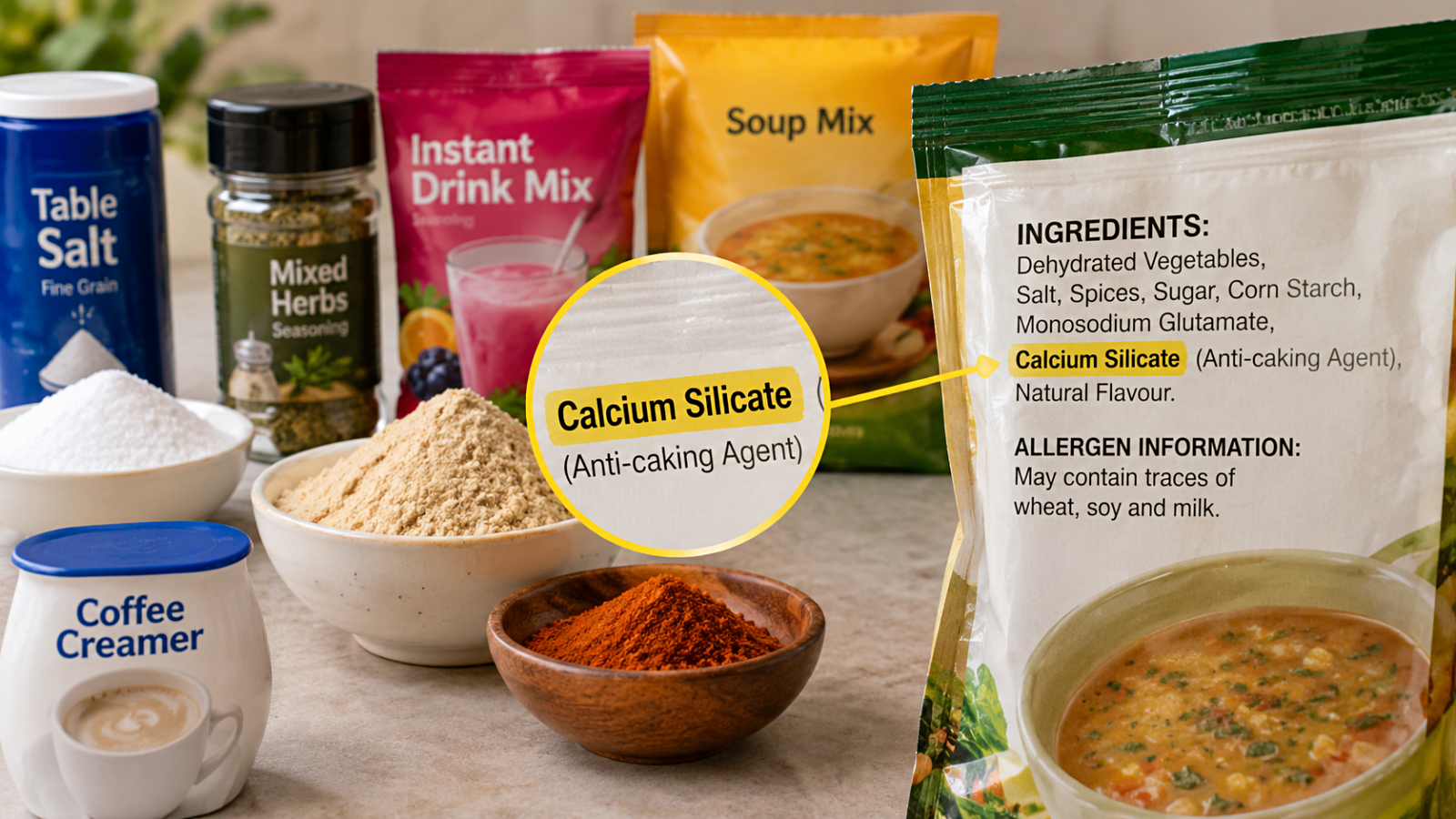
Calcium silicate is prevalent in dry, powdered, or granular food products. This includes refined salts, spice blends, powdered drink mixes, instant soup preparations, and non-dairy coffee creamers. While common, its presence varies by brand and manufacturing process.
Why This Matters
BozokMedia analysis shows a growing trend of relying on chemical stabilizers to maintain the aesthetic and functional quality of food. While regulatory bodies permit these additives, the lack of comprehensive long-term human toxicity data—as highlighted by the EFSA—suggests that consumers should prioritize whole, unprocessed foods over highly engineered alternatives.
"Its role is primarily functional—it improves texture, handling, and shelf life without adding nutritional value."
From a biological perspective, calcium silicate is not easily absorbed. When ingested, it dissociates only slightly in the gastrointestinal tract. Most of the substance passes through the digestive system and is excreted, meaning it rarely enters the bloodstream in significant quantities.
However, caution is advised regarding extreme exposure. Some animal studies have indicated silicon accumulation in the liver and kidneys at exceptionally high doses. While these levels are far above what is found in typical kitchen spices, it underscores the importance of a balanced diet.
Frequently Asked Questions
Q1: Should I avoid foods containing INS 552?
A: Generally, no, as it is approved for use. However, those with chronic digestive issues should consult a professional.
Q2: Does calcium silicate help in strengthening bones?
A: No. It is a chemical compound used for stability, not a bioavailable nutrient for bone health.