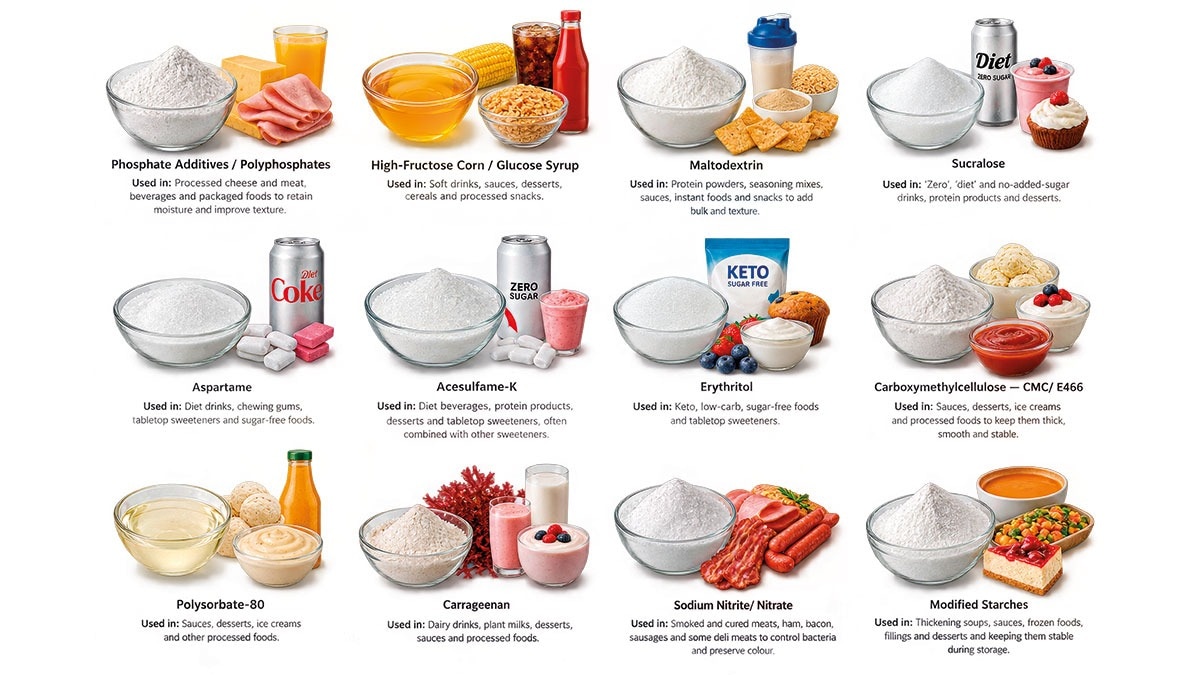
Beyond the marketing claims of 'no added sugar' and 'multigrain' lies a hidden world of harmful chemical additives. This investigation reveals how the 'New Dirty Dozen' is infiltrating our daily diets.
- Hidden chemicals like maltodextrin and emulsifiers are masking themselves as healthy alternatives.
- The shift from refined sugar to synthetic additives poses new metabolic risks.
- Reading ingredient labels is now a critical necessity for long-term health.
For years, the dietary villains were obvious: refined flour (maida), excessive sugar, and trans fats. Most health-conscious parents, like Rashmi Mukherjee, a boutique hotel manager from Gurugram, successfully purged these from their children's diets. However, the replacement—granola bars, protein products, and 'no added sugar' treats—introduced a more insidious threat.
Upon closer inspection of the packaging, Mukherjee discovered a cocktail of complex chemicals: maltodextrin, glucose-fructose syrup, protein isolates, emulsifiers, and modified starches. These substances are designed to extend shelf life and mimic natural textures, but they often bypass the body's natural regulatory systems.
Why This Matters
BozokMedia analysis shows a disturbing trend in the food industry: the 'Health Halo' effect. Companies use terms like 'multigrain' or 'protein-rich' to distract consumers from a list of synthetic additives that can disrupt gut microbiota and trigger insulin spikes. This is a systemic failure in food labeling transparency.
"The modern food industry has replaced caloric density with chemical complexity, making 'healthy' labels a dangerous facade."
Historically, dietary guidelines focused on macronutrients. However, the emergence of the 'New Dirty Dozen' shifts the focus to micronutrient interference and chemical toxicity. These additives are no longer limited to junk food; they have permeated the 'wellness' sector, targeting fitness enthusiasts and parents alike.
| Traditional Villains | The New Dirty Dozen |
|---|---|
| Refined Flour (Maida) | Modified Starches |
| Excessive Sugar | Maltodextrin / Artificial Sweeteners |
| Trans Fats | Emulsifiers & Protein Isolates |
Frequently Asked Questions
1. Are all food preservatives dangerous?
Not all, but synthetic additives used in ultra-processed foods are linked to inflammation and metabolic syndrome.
2. What should I look for on a food label to avoid these?
Avoid products containing maltodextrin, high-fructose corn syrup, and complex emulsifiers if you are seeking a truly clean diet.

