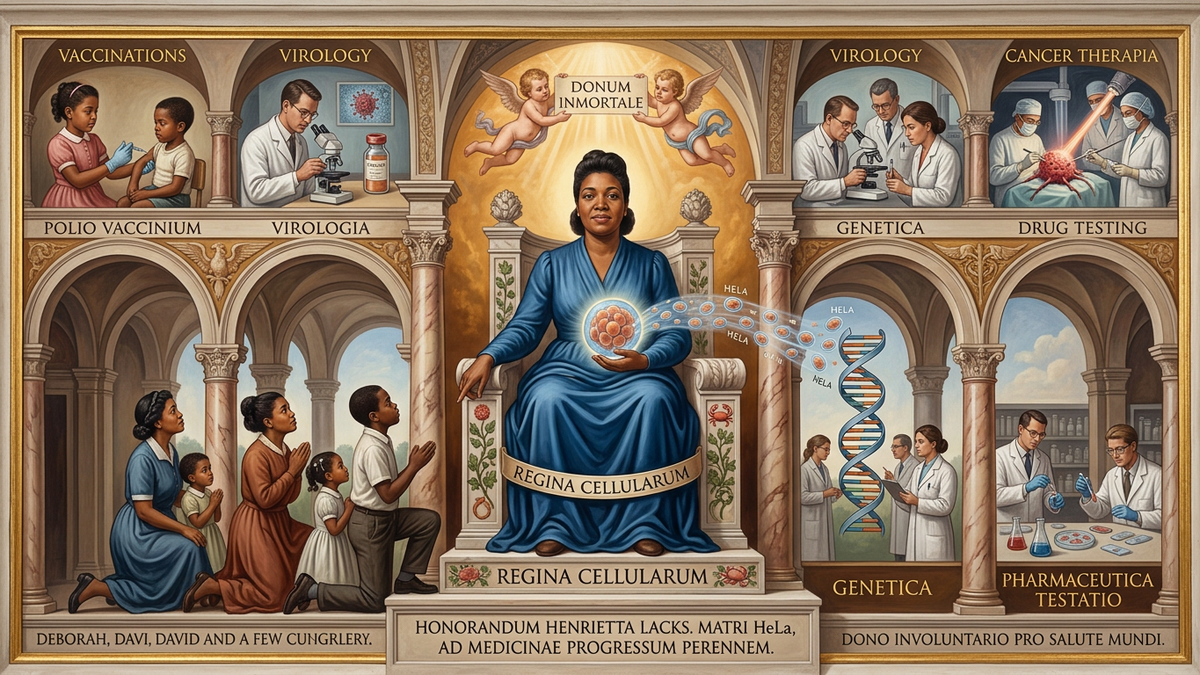
The story of Henrietta Lacks, whose cells revolutionized medicine without her consent, has finally moved toward justice. Her family's fight has paved the way for stricter ethical regulations in global biomedical research.
- Henrietta Lacks provided the first immortal human cell line, known as HeLa.
- Her cells were harvested without her knowledge or consent in 1951.
- HeLa cells have been instrumental in developing vaccines and cancer treatments.
- Decades of activism led to landmark settlements and improved bioethical standards.
In the annals of scientific achievement, few stories are as profound or as troubling as that of Henrietta Lacks. While the medical community celebrated the discovery of the 'HeLa' cell line—the first human cells to survive and divide indefinitely outside the body—the woman behind the miracle remained a ghost in the scientific record for decades. This intersection of monumental progress and profound exploitation marks a turning point in how we view medical ethics.
The Miracle of Immortal Cells
In 1951, Henrietta Lacks, an African American tobacco farmer, sought treatment for cervical cancer at the Johns Hopkins Centre. During her treatment, doctors extracted cells from her tumor without her permission. These cells, later named HeLa, possessed an extraordinary ability to replicate, providing scientists with a standardized tool to study human biology like never before. This discovery underpinned breakthroughs in virology, genetics, and the development of life-saving vaccines.
Why This Matters
The HeLa phenomenon represents a massive epistemic injustice where institutional power overrode individual autonomy. BozokMedia analysis shows that while the biotech industry reaped immense financial and academic rewards from the HeLa line, Lacks' own family lived in systemic poverty, unaware that their mother's biological legacy was fueling global medical revolutions.
True scientific advancement must never come at the cost of human dignity and the fundamental right to informed consent.
The exploitation was compounded by the racial segregation prevalent in the southern United States during the 1950s. Lacks was treated in a 'colored ward,' and the lack of consent was a byproduct of an era where marginalized individuals were often viewed as biological resources rather than patients with rights.
Historical Background: The Evolution of Bioethics
Before the mid-20th century, the concept of informed consent was poorly defined. The medical community operated under a paternalistic model where doctors made decisions deemed 'best' for science or the patient without explicit dialogue. The outcry following the exposure of the Lacks case helped catalyze the modern bioethical movement, leading to strict regulations regarding patient autonomy and tissue ownership.
A Path Toward Reparation
The silence was finally broken by Rebecca Skloot's seminal work, 'The Immortal Life of Henrietta Lacks', which brought the injustice to the global stage. After a 75-year battle, the Lacks family has finally achieved a form of closure through landmark settlements with institutions like Johns Hopkins. These agreements serve as both financial recompense and a formal acknowledgment of the harm caused, ensuring that Lacks' contribution is finally etched into history with the respect it deserves.
Frequently Asked Questions
1. What makes HeLa cells unique?
Unlike normal human cells, which die after a certain number of divisions, HeLa cells are 'immortal' and can divide indefinitely in a laboratory setting.
2. How did the Lacks family obtain justice?
Through decades of legal battles and public advocacy, leading to settlements that acknowledge the ethical breach and provide compensation.


